



H5N1 mutation detected in US dairy herds prompts caution on pandemic potential









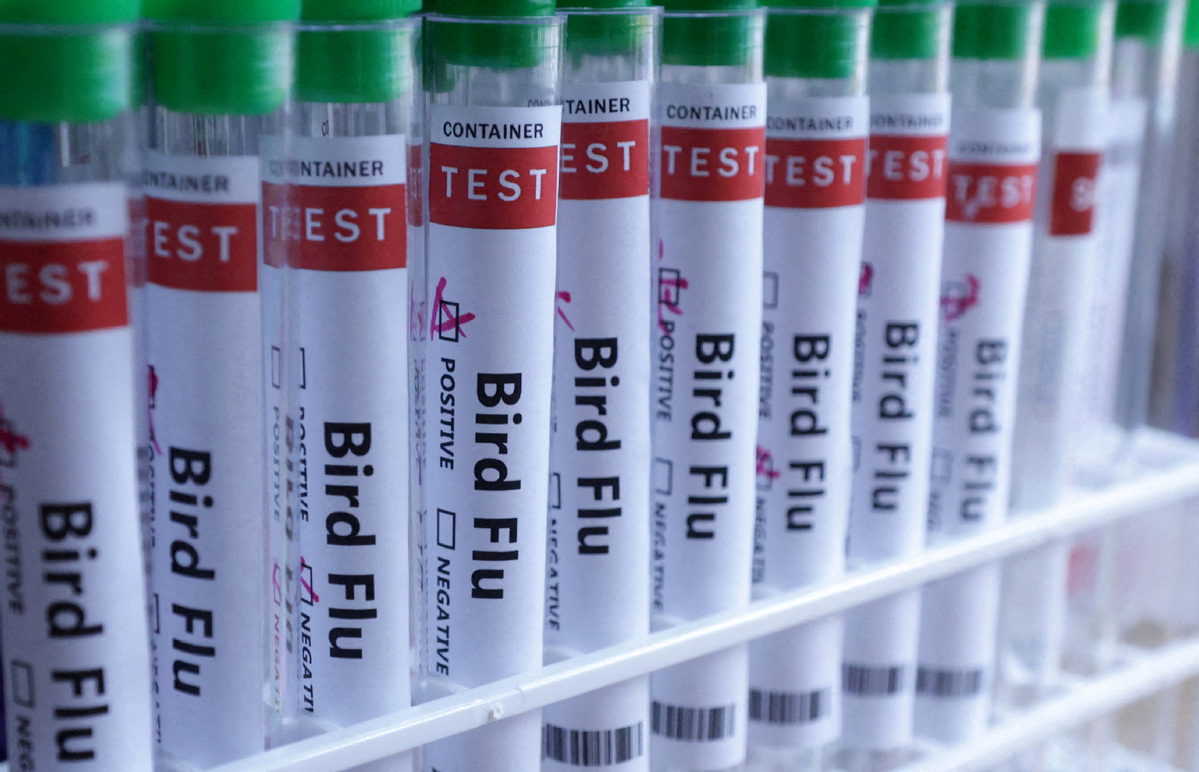
SACRAMENTO, the United States -- Scientists are sounding the alarm about a concerning genetic mutation of the H5N1 bird flu virus, recently identified in four dairy cow herds, as this mutation could increase the risk of mammal-to-mammal transmission and disease severity.
The mutation, known as PB2 E627K, was detected in sequence data uploaded by the US Department of Agriculture (USDA) on Tuesday, according to evolutionary molecular biologist Henry Niman, whose findings were reported by the Los Angeles Times.
"That is the mutation found in the first human case, which was extremely pathogenic in ferrets," Yoshihiro Kawaoka, an infectious disease expert at the University of Wisconsin-Madison and the University of Tokyo, told the Los Angeles Times. "Finding the same mutation in cows is significant."
The mutation was previously seen in a Texas dairy worker last March but was not detected again until the latest sequences were uploaded to the Global Initiative on Sharing All Influenza Data (GISAID), a Germany-based public genetic repository.
The discovery comes nearly a year after H5N1 was first reported in Texas dairy cattle. Since then, the virus has spread significantly, with the USDA reporting 985 infected dairy herds across the United States, including 754 in California.
In laboratory tests last summer, Kawaoka found that ferrets exposed to the viral strain with this mutation could transmit the virus through respiratory droplets, with a 100-percent mortality rate among infected animals. The new sequence data likely originates from recently infected California herds with the more common B3.13 strain, which has been linked to dairy cows since last year.
Human cases are also on the rise. According to the USDA, 70 people have been infected with H5N1, with one death reported. The US Centers for Disease Control and Prevention (CDC) confirmed these cases through genome sequence analysis.
In three human cases, scientists identified an amino acid substitution, NA-S247N, which may slightly reduce susceptibility to oseltamivir (Tamiflu), an antiviral medication. The CDC also identified a different change in the polymerase acidic protein of a virus from a recently confirmed human case in California.
Most infected farm workers have developed mild eye and respiratory symptoms, though the mammalian adaptation marker (E627K) has been noted in only one worker.
Scientists and public health officials express varying levels of concern about the virus's pandemic potential. At a Harvard Medical School discussion on March 5, experts rated their worry level between four and seven on a scale of one to ten.
"I think we are living next to a volcano, and it may erupt, or it may not. But we need to prepare for the possibility of a pandemic," said Jacob Lemieux, assistant professor at Harvard Medical School and an infectious disease specialist at Massachusetts General Hospital.
The origin and transmission pattern of the virus in dairy cattle remains mysterious. The current outbreak validates the unpredictability of Highly Pathogenic Avian Influenza (HPAI) viruses, as the route of exposure in dairy cows and mode of virus transmission remains unknown, according to GISAID.
Scientists have also found high concentrations of viral RNA in raw milk, raising concerns about potential transmission pathways.
The CDC has released data from the first human fatality -- a patient from Louisiana who had been exposed to backyard poultry and wild birds -- as well as from farm workers in Iowa and Wisconsin who had been exposed to infected commercial poultry.
According to Kathryn Stephenson, an infectious disease expert at Beth Israel Deaconess Medical Center and associate professor at Harvard Medical School, most human cases of H5N1 since 2022 have been mild, with conjunctivitis (pink eye) as a common symptom. However, in the past few months, three patients have developed severe or critical illness, with one death.
Public health officials recommend testing for H5N1 in anyone with influenza-like symptoms and high-risk exposure, as well as in all patients hospitalized with avian influenza A. The United States has stockpiled three licensed, pre-pandemic H5N1 vaccines, but they do not match the current strains circulating in animals and humans.
Jonathan Runstadler, a professor at Tufts University's Cummings School of Veterinary Medicine, expressed concern about cuts to US federal funding for surveillance efforts.
"The reality is that we can't prepare for what we don't know is there. A critical aspect of surveillance is understanding what is circulating and what is a potential threat for spreading to other species," Runstadler noted.










