



'Dragon-elephant tango' gives dynamic boost to the region









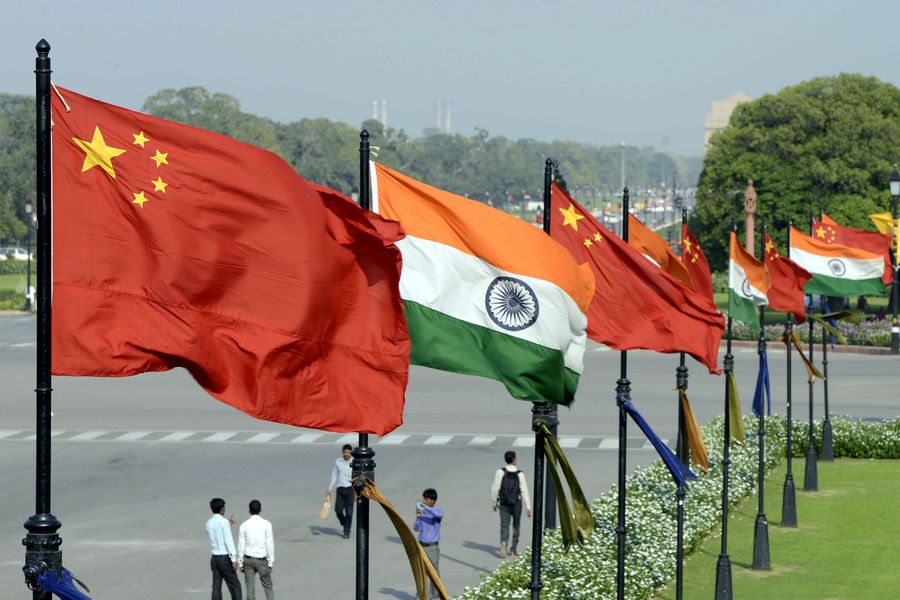
On the occasion of the 75th anniversary of the establishment of their diplomatic relations, China stands ready to work with India to advance the sound and stable development of bilateral relations.
That is the core idea Beijing has expressed in the congratulatory message it sent to New Delhi to mark the occasion on Tuesday. It is good to see India actively echoed that with Indian President Droupadi Murmu and Indian Prime Minister Narendra Modi making similar proposals on India's part in their messages to Beijing on the same day.
It serves both countries' common interests, as well as those of the region, that China and India should find ways to unleash the potential of their win-win cooperation, and strengthen communication and coordination in major international affairs.
The overall development of China-India relations demonstrates that it is the right choice for China and India to be friendly neighbors. The remarkable progress the two sides have made in their efforts to resolve their border disputes through negotiations indicates they have the wisdom to settle their differences, as well as the shared willingness to not only repair their once strained relationship but also make it better than before.
Under the guidance of heads of state diplomacy, the two countries' special representatives on the boundary question held the first meeting of its kind in five years in Beijing in December, and reached a six-point consensus, agreeing to seek a solution to the boundary question that is fair, reasonable and acceptable to both in accordance with the political guiding principles proposed in 2005.
Unlike previous border talks, these were followed up by a meeting of the two sides in January in Beijing that carried forward the positive momentum by extending it to people-to-people exchanges. The series of specific measures to that effect, including carrying out media and think tank exchanges, resuming direct flights between the Chinese mainland and India, and resuming the mutual dispatching of journalists between the two countries were unimaginable just two to three years ago after New Delhi decided to shut the door to exchanges.
Notably, their common understandings also include the resumption of Indian pilgrimages to the sacred mountain and lake in China's Xizang autonomous region this year, and the plan to formulate an expert-level mechanism on cross-border river cooperation. Two previously knotty issues that some external forces have tried to take advantage of to drive a wedge between the two countries. By engaging each other on these issues, the two neighbors have sent a clear signal that they are confident that their differences can be handled properly through consultations and communications under a bilateral framework.
It is clear both Beijing and New Delhi now adopt an open and constructive attitude to actively promote dialogue, exchanges and practical cooperation, guide public opinion and popular support in a positive direction, enhance trust and remove suspicion, properly handle differences, and promote China-India relations to move forward on a sound and stable track.
Through their candid and in-depth exchanges of views on issues of respective concern, the two neighbors can develop a rational perception on each other's development, and therefore consolidate mutual trust.
As the two largest developing countries, there is every reason for the two neighbors to support each other rather than undercut each other, and work with each other rather than guard against each other. This serves the fundamental interests of the two countries and peoples.
As two ancient civilizations, they should have enough wisdom and capability to maintain peace and tranquility in the border areas pending a fair and reasonable solution. They should never allow bilateral relations to be defined by the boundary question, let specific differences affect the overall picture of bilateral ties or allow other countries to drive a wedge between them.
As important members of the Global South, China and India must not only safeguard the legitimate rights and interests of their own, they also have the responsibility to take the lead in opposing hegemonism and power politics, and to uphold the basic norms governing international relations.
When China and India join hands for a "dragon-elephant tango", the dynamism of bilateral ties will brighten the prospects of not only their own relations, but also regional common interests and greater democracy in international relations.





