ASEAN unity seen as key against levies









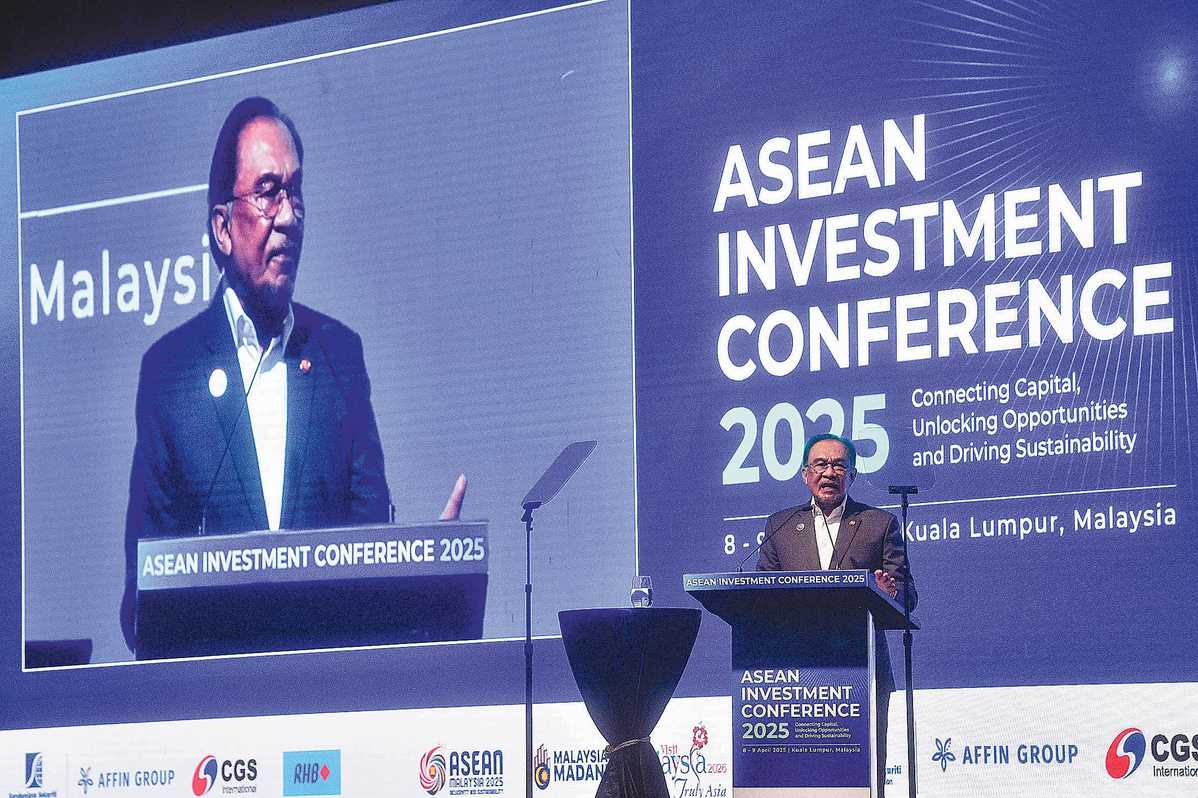
The Association of Southeast Asian Nations must harness its "collective bargaining power" to counter the potentially harsh impact brought by the higher United States tariffs, analysts said, as was urged by Malaysian Prime Minister Anwar Ibrahim.
Southeast Asian economies, which have long thrived on export growth and free trade, are expected to be hard hit by the so-called reciprocal tariffs that US President Donald Trump unveiled on April 2.
Malaysia, as this year's rotating chair of ASEAN, responded quickly. In a social media address, Anwar said he will "continue to coordinate efforts to present a united regional front, maintain open and resilient supply chains, and ensure that ASEAN's collective voice is heard clearly and firmly on the international stage".
Malaysia is hosting an ASEAN economic ministers' meeting on Thursday and Anwar said he is "constantly in touch" with other ASEAN leaders to "have a common position" on US tariffs.
Indonesia's President Prabowo Subianto made a one-day state visit to Malaysia's capital Kuala Lumpur on Sunday, where he and Anwar discussed the tariff issue.
Anwar has also had similar discussions over the phone with the leaders of Brunei, the Philippines, Singapore and Vietnam.
"ASEAN, by design, is a consensus-based organization, not a negotiating bloc with bite," said Wan Suhaimie Wan Mohd Saidie, head of economic research at Malaysia's Kenanga Investment Bank.
But he added, "The era of polite diplomacy may be over."
'Seismic change'
Singapore Prime Minister Lawrence Wong on Friday warned that the US tariff move was a "seismic change in the global order" that ends the era of rules-based globalization and free trade.
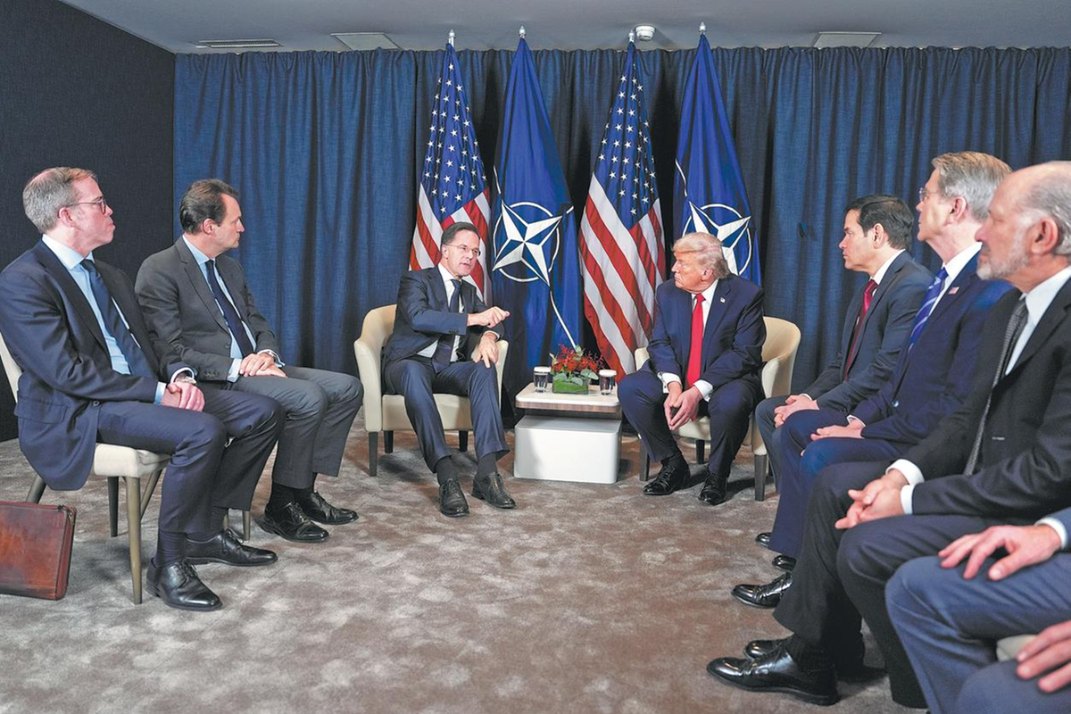
Malaysian Foreign Minister Mohamad Hasan received a phone call from US Secretary of State Marco Rubio on Friday, with both parties agreeing to continue trade negotiations, according to local media reports.
Some individual ASEAN countries have initiated high-level discussions with Trump and his administration.
To Lam, general secretary of the Communist Party of Vietnam Central Committee, held a phone conversation with Trump on Friday. On the call, he proposed that Vietnam would reduce its import tariffs on US goods to zero in exchange for a similar tax rate by the US on products imported from Vietnam.
Wan Suhaimie from Kenanga Investment Bank said individual ASEAN countries do not have the leverage to negotiate with the US.
He noted that ASEAN is a $3.6 trillion economy with over 650 million people, so negotiating as a bloc "can command more attention".
"Now is the time to shift from fragmented bilateral deals to collective bargaining power," he said.
Chin Yew Sin, president of the Asia-Pacific Strategy Research Center, a Kuala Lumpur-based think tank, said negotiating as a trade bloc will also help less-developed ASEAN economies. Chin noted the examples of Cambodia, Laos and Myanmar — which do not have much bargaining power and "are basically at the mercy of the US".
"Their economies will be badly hit by these tariffs," he added.
James Chin, a professor of Asian studies at the University of Tasmania in Australia, said one of the challenges of negotiating as a bloc is that different ASEAN countries have been slapped with different rates.
The US is imposing a 10 percent "minimum baseline tariff" on all imports and higher rates against other trading partners.
In ASEAN, a 10 percent tariff was imposed on Singapore, but other countries face higher rates: Cambodia (49 percent), Laos (48 percent), Vietnam (46 percent), Myanmar (44 percent), Thailand (36 percent), Indonesia (32 percent), Brunei (24 percent), Malaysia (24 percent), and the Philippines (17 percent).
The varied rates also mean that the tariff hike will have a different impact on individual ASEAN economies. Japanese investment bank Nomura said in its April 3 report that it has cut 2025 GDP growth forecasts by 0.1 to 0.6 percentage points across the region.
Nomura said it is "most cautious" about the impact of reciprocal tariffs on Thailand and Indonesia, where the tariff rates "were much higher than expected".
Yang Han and Vivien Xu in Hong Kong contributed to this story.
prime@chinadailyapac.com