



Chinese philosophy offers antidote to protectionism









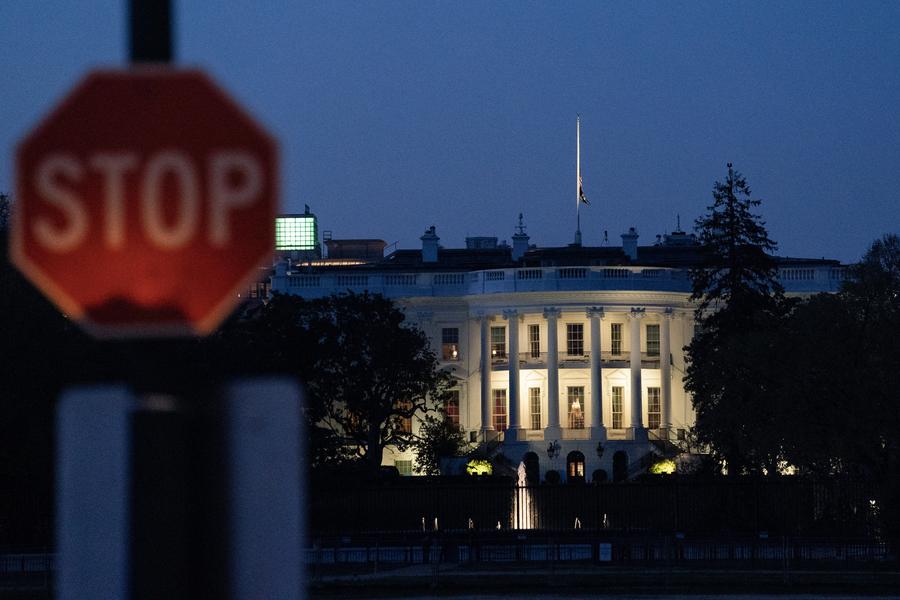
The Trump Doctrine, which has sent shock waves through the international community, is not a new phenomenon. Rather, it represents a resurgence of 19th-century imperialist traditions in the United States, echoing the theory of Manifest Destiny and the Monroe Doctrine. At its core, the Trump Doctrine seeks to maximize US' national interests with little regard for diplomatic niceties. Its focus on securing resources, controlling strategic trade routes, and even contemplating territorial expansion — evidenced by the peculiar remark on seizing control of Greenland — harks back to an era of brutal power politics.
Indeed, the US administration's preferred method of engagement is the blunt instrument of power politics. It has wielded the threat of trade wars and military action with alarming frequency, eschewing the cooperative approach. This strategy, however, is not without its perils. The imposition of tariffs on imports from China, Europe and other countries risks triggering a contraction in global trade, potentially precipitating a worldwide economic downturn.
Moreover, Washington's steadfast commitment to fossil fuels threatens to exacerbate climate change, with its attendant catastrophic consequences. By consistently favoring unilateralism, the current US administration is pushing the world toward a neo-19th century paradigm. This new world order is characterized by incessant conflict and dominated by unbridled competition between a handful of major powers.
In this geopolitical landscape, China emerges as a major power capable of challenging US brutality. As the world's second-largest economy and leading in technological innovation, China is uniquely positioned to offer an alternative to the Trump Doctrine, although it faces a significant hurdle: the persistent ignorance of Western elites regarding Chinese culture. Sadly, many remain ensnared by the antiquated and racist "yellow peril" myth, viewing China primarily through the lens of threat and danger.
Contrary to Western perceptions, the desire for a peaceful world order is deeply ingrained in the culture of "the Central Kingdom". Its self-perception as a grand civilization engenders a quiet confidence that precludes the need for aggressive expansion. The traditional concept of tianxia — all under heaven — embodies an ideal of harmony that profoundly influences Chinese foreign policy. While not ignoring the realities of power, China seeks to extend its influence through cultural soft power and trade expansion rather than military might. This strong preference for harmony explains why, from a Chinese perspective, the use of force is seen as a failure. The truly efficient strategist, according to China's ancient militarist Guiguzi's School of Diplomacy, achieves victory without resorting to violence — a mentality almost incomprehensible from the US viewpoint, which tends to glorify brute force.
China's alternative vision for global order is already manifested in initiatives such as the Belt and Road Initiative and the New Development Bank. These endeavors aim to construct a multipolar world order based on harmony amid diversity. In the face of US' protectionism and unilateralism, China has the opportunity — and perhaps the duty — to champion major cooperative multilateral initiatives, particularly in addressing global challenges such as climate change.
In this context, fostering Sino-European convergence on key issues could prove crucial. This is why China must counter Western misunderstandings by redoubling its soft power efforts in Europe. While the China Global Television Network and the Confucius Institutes represent progress, the establishment of a European network of think tanks that can look at China rationally and fairly could more effectively introduce the idea of a tianxia world into European public discourse.
The author is a political scientist and professor of international relations at the Paris campus of Schiller International University in France.










