Going back to her roots









Costa Rican filmmaker explores her Chinese identity through her late grandmother's life
Descendants of Chinese immigrants in Latin America often straddle two cultures: the one they live in and the one their parents or grandparents brought with them.
For Nicole Chi Amen, a filmmaker in Costa Rica, this has meant a cultural journey deep into the life and culture of her grandmother, and her life far away from her home.
Chi is one of several filmmakers in Costa Rica who have set out to understand the cultural divide that has shaped their families and the challenges they overcame in the decades after emigrating from China to the Latin American country.
"The beauty of making films is how the process evolves and how one evolves through it. I never expected to feel so empowered by the duality of my identity," said Chi. "I also didn't anticipate the connections I would make with people who've seen the film."
Chi's film, Guian, explores the themes that often define the lives of Chinese families that have emigrated to Latin America while highlighting the importance they place on their roots and traditions. Guian was what Chi and her relatives called her grandmother, whose Costa Rican name was Maria Funk.
The 76-minute film, which tells the story of Chi's journey to rediscover her Chinese grandmother's culture, premiered at the Mulan International Film Festival, held in Toronto, Canada, in August 2024.
It offers an intimate portrait of her grandmother's journey, which started in the county-level city of Enping, in the Chinese province of Guangdong.
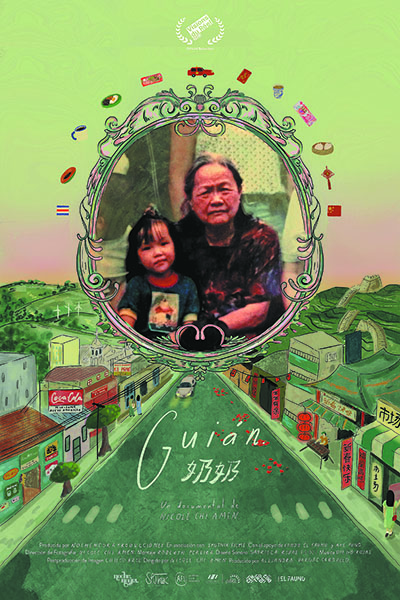
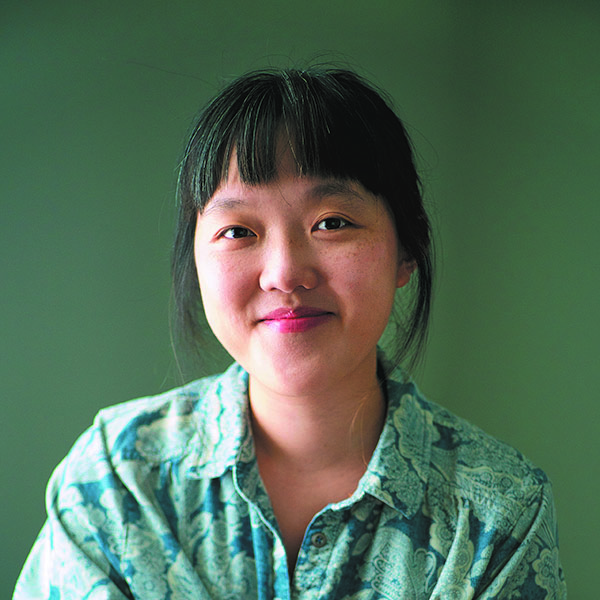
"Guian is a film born from a strong and unique bond with my Chinese maternal grandmother, with whom I was never able to have a conversation because we didn't share the same language," Chi, 32, said.
To make the film, Chi spent about a year and a half in China, meeting people who had been close to her grandmother, including her best friend, her younger brother, and a grandmother from her father's side.
The 2023 film not only provides a glimpse of life in China but also shines a spotlight on the lives of the Chinese-Costa Rican community.
"When I arrived in China, I thought I knew about Chinese culture because of my family," Chi said.
Instead, she experienced "a major culture shock" in Beijing. "Even the language didn't seem like Chinese to me. I had never heard Mandarin before," she said. Her grandmother and family spoke Cantonese.
"It wasn't until I got to (Guangdong) … that I started to feel more 'at home', as the food and the sounds seemed much more familiar.
"Everyone thought I was Chinese, and one of the first things I learned to explain was that I came from Costa Rica, a small country in Central America, because most people didn't know about my country," she said.
Chi's grandmother traveled some 15,000 kilometers from China to Costa Rica long before direct flights or fast global travel.
Her journey took place around the time the People's Republic of China was founded in 1949, marking the end of a conflict that had torn the country apart. At that time, there were only a few dozen Chinese people in Costa Rica. By 1963, the number had risen to more than 666 China-born residents.
Chi's grandmother owned a small grocery store in Alajuela's central market, but despite a lifetime of working in Costa Rica, she never learned Spanish. Instead, she spoke mostly Cantonese or her local dialect. The grandchildren, like Chi, never knew their grandmother's dialect.
As a result, all communication was conveyed through gestures or relying on Chi's parents and others of their generation as translators.
Grandmother "dedicated herself to raising her children, so she communicated with the outside world through them," Chi said.
The older woman was not alone in this approach to the language. Chinese immigrants of her generation in Costa Rica tended to speak either Cantonese or their hometown dialects. Their descendants, immersed in the local Spanish, rarely learned them.
These personal, but often significant, idiosyncrasies drive Chi's documentary. While the film centers on a deeply personal story, Chi believes that the documentary is "universal" due to its exploration of themes and connections to the past, and its quest to discover the roots that shape a person's identity.