Opportunities thrive for Northeast China, Russia's Far East










Cooperation at the local level is an important aspect of Sino-Russian collaboration, such as deepening the alignment of Russia's Far East development policy with China's Northeast revitalization policy. Trade between Russia's Far East and China's northeastern provinces — Heilongjiang, Jilin and Liaoning — is growing rapidly, and cross-border transportation infrastructure is improving apace.
According to Russian media, between 2014 and 2023, trade between Russia's Far East and China's northeastern provinces saw rapid growth, doubling over the decade to reach approximately $27 billion in 2023. Particularly notable is the significant trade volume between China's Heilongjiang province and Russian regions such as Khabarovsk Krai and Amur Oblast, accounting for 70 percent of the northeastern Chinese provinces' trade with Russia.
The completion of key projects such as the Tongjiang-Nizhneleninskoye Railway Bridge and the Heihe-Blagoveshchensk Highway Bridge, as well as the Skovorodino-Mohe crude oil pipeline and the China-Russia East Pipeline, has deepened the two sides' cooperation, while local governments have established cooperation mechanisms such as the Intergovernmental Commission for Cooperation of Northeast China and the Far East and Baikal Region of Russia, as well as the Business Council of the Far East and Baikal Region of Russia and Northeast China. These mechanisms serve as organizational safeguards and communication platforms, facilitating project alignment, information exchange and issue resolution.
Besides, industry parks have played an increasingly prominent role in regional cooperation between China and Russia. In terms of promoting investment, cross-border industry parks have leveraged policy incentives to create a scale effect in attracting investment. For example, the Sino-Russian Silk Road Innovation Park has attracted more than 50 international enterprises and institutions, boosting regional economic activity.
As for industry chain synergy, these parks have restructured the allocation of Sino-Russian resources through vertical integration and cross-border coordination. For instance, the China-Russia Tomsk State Wood Industry and Trade Cooperation Zone has built a comprehensive timber industry chain, from forest harvesting and processing to sales.
These parks have also fostered a collaborative innovation ecosystem through technology sharing and standard alignment. For instance, research teams from both countries in the China-Russia joint laboratory on polar technology and equipment share data and technological achievements with each other.
Similarly, Heihe in the northwestern part of Heilongjiang on the China-Russia border has set up an incubator and offshore warehouse in Blagoveshchensk to promote technological exchanges in business operations and financial services, enabling the two sides to share expertise in risk management and financial product innovation. Through such exchanges, enterprises and research institutions in both countries have worked on aligning industry standards, further improving the Sino-Russian technological collaboration ecosystem.
As China's Northeast revitalization policy and Russia's Far East development policy continue to advance, Sino-Russian policy coordination, trade growth, infrastructure connectivity, financial cooperation and people-to-people exchanges will deepen, leading to even more fruitful outcomes in local cooperation.
However, the two sides still need to boost high-quality cooperation in the following areas.
The two countries should take measures to expedite the transformation of innovation parks from single-industry platforms into hubs for cross-border technology transfer, and encourage universities and research institutions to deepen their collaboration to establish more targeted Sino-Russian science and technology industry parks, and explore strategic emerging fields such as AI, biomedicine and new energy.
More efforts should be made to integrate industry, academia, research and application in these parks, establishing regular communication and coordination to facilitate resource sharing, and establish a Sino-Russian technology innovation partnership to increase exchanges and enhance industrial competitiveness.
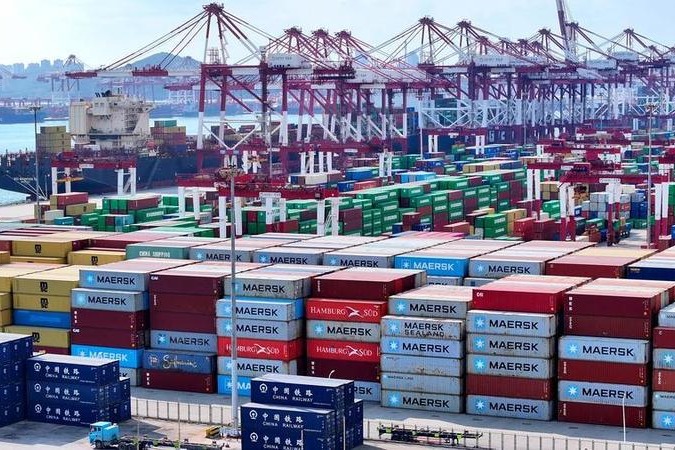
Moreover, the two sides should build a resilient cross-border logistics network, including upgrading railways and highways in China's Heilongjiang and Jilin provinces that are near Russia's Far East and introducing an intelligent traffic management system, to improve network efficiency.
They can jointly develop green and smart ports by incorporating automated terminal equipment and blockchain-based logistics information platforms, and link ports and inland regions to further facilitate the efficient flow of resources.
More specifically, Heilongjiang should sign agreements with Russia's Amur Oblast region to promote cross-border e-commerce and ecological conservation, and establish regular communication mechanisms. As for Jilin, it should develop cooperation plans with Russia's Primorsky Krai in sectors such as new energy, modern agriculture and winter tourism, forming joint task forces to implement projects. Liaoning, leveraging its port and industry strengths, can ink agreements with relevant Russian regions in advanced equipment manufacturing and the marine economy to take local cooperation to new heights.
In this way China's northeastern provinces and Russia's Far East can fine-tune their institutionalized cooperation agreements and expand the scope and depth of bilateral collaboration.
Zhou Xueren is director of the Institute for Northeast Full Revitalization at Dongbei University of Finance and Economics. Zhang Yue is an assistant researcher at the same institute. The views don't necessarily reflect those of China Daily.
If you have a specific expertise, or would like to share your thought about our stories, then send us your writings at opinion@chinadaily.com.cn, and comment@chinadaily.com.cn.