



Colombia joins Belt and Road for a more equitable global economy









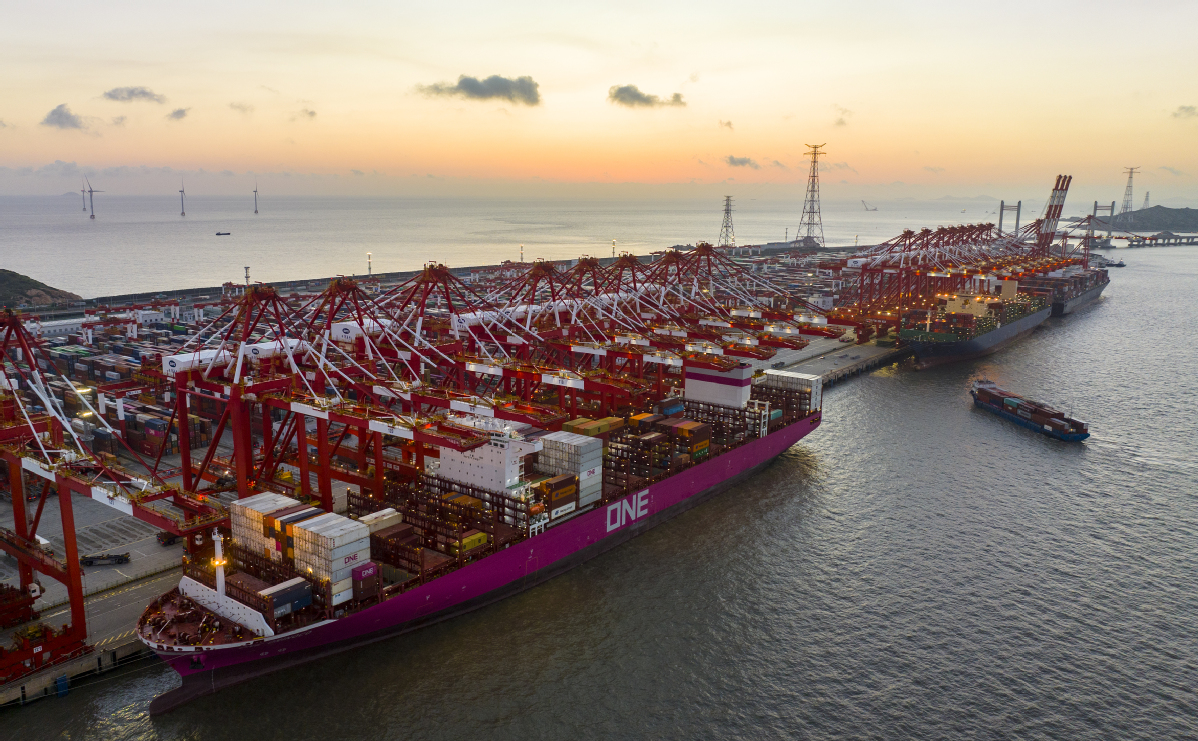
Colombia's participation in the China-proposed Belt and Road Initiative on Wednesday marks another milestone in the deepening partnership between China and Latin America. Following fruitful outcomes at the fourth ministerial meeting of the China-Community of Latin American and Caribbean States Forum and the landmark Beijing Declaration, this development underscores the growing recognition that cooperation with China is a gateway to sustainable development and shared prosperity.
The Beijing Declaration, adopted by participating countries at the meeting on Tuesday, outlines concrete steps for collaboration in green development, digital transformation and poverty alleviation. By emphasizing open and inclusive cooperation, the declaration aligns with Latin America's quest for autonomous development paths, free from the conditionalities often attached to Western-led initiatives.
Colombia, long considered a traditional ally of the United States in Latin America, has made a decisive pivot toward China by joining the Belt and Road Initiative, a move that reflects broader geopolitical and economic recalibrations in the region.
Colombian President Gustavo Petro's administration, advocating for a multipolar foreign policy, has recognized the limitations of over-reliance on US markets and security frameworks. The country's entry into the Belt and Road Initiative signals a strategic realignment toward diversification, particularly in infrastructure, energy and technology, areas where China holds a competitive edge.
China's expertise in large-scale projects, such as the ongoing Bogota Metro Line 1, Colombia's largest infrastructure project to date, demonstrates how Belt and Road investments can address Latin America's chronic infrastructure deficits. Once operational in 2028, it will cut travel time between terminal stations from the existing around three hours to 27 minutes.
China encourages value-added exports from Latin America, moving beyond the traditional commodity-for-loans model. Colombia, for instance, aims to expand shipments of coffee, flowers and even high-tech goods to China, reducing its dependence on volatile raw material markets. In fact, China has long been Colombia's second-largest trading partner, with bilateral trade hitting 149.63 billion yuan ($20.75 billion) in 2024, up 13.1 percent year-on-year.
Colombia's inclusion in the initiative is particularly significant given its geographical position as a bridge between Central and South Americas, with access to both the Pacific and Atlantic oceans. This makes it a crucial node for China's vision of a transcontinental logistics network, including potential rail and port projects that could reshape regional trade flows.
Moreover, the Belt and Road Initiative offers Latin America an alternative to the debt-trap narratives often pushed by Western critics. Unlike past models of foreign investment, China's approach emphasizes joint ventures, technology transfers and long-term industrial partnerships. For example, Chinese companies are not only building Bogota's metro but also investing in local manufacturing, such as medical equipment and telecommunications.
Colombia's accession to the Belt and Road Initiative is a bellwether for Latin America's future. As the region seeks to reduce inequality and boost competitiveness, China's role as a financier, builder and market provider presents a compelling case for deeper integration.
The Beijing Declaration, with its emphasis on mutual benefit, stands as a transformative manifesto of the Global South. This landmark document demands serious engagement from all who seek to understand the aspirations of developing nations.
The road ahead will require careful navigation of geopolitical tensions and domestic reforms. Yet the direction is clear. Latin America is embracing a multipolar world where development, not alignment, is the priority. With Colombia's entry, the Belt and Road Initiative's vision of a connected Global South moves closer to reality, one where shared growth defines the future.
In this new era of cooperation, China and Latin America are not just building infrastructure; they are laying the foundations for a more equitable global economy.


















