China-built water project revives Kenya's farmlands









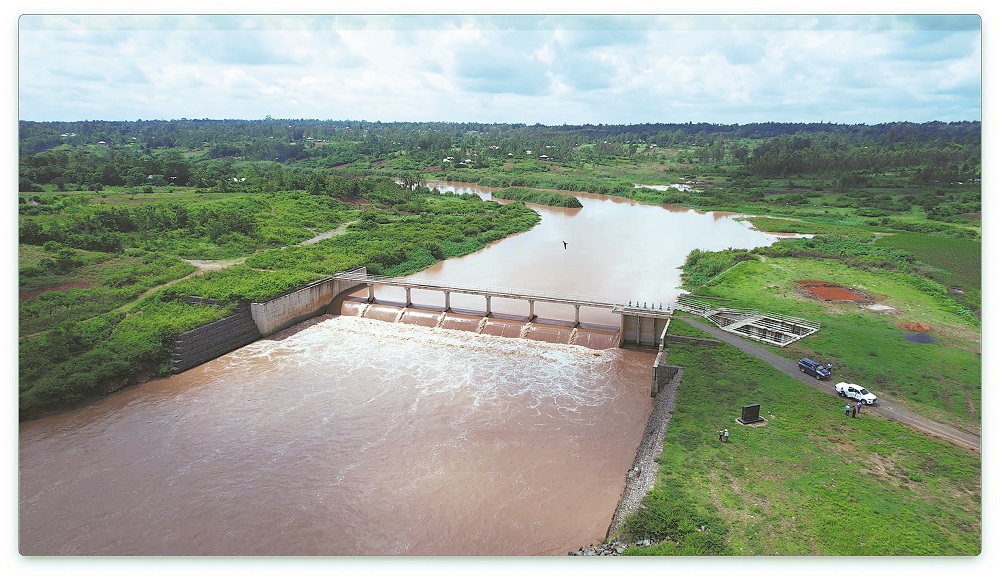
Along the sun-drenched banks of River Nzoia in western Kenya, a quiet transformation is taking root. Fields that once lay bare, scorched by droughts and battered by unpredictable floods, now flourish with rows of thriving crops, nurtured by the steady waters of newly built irrigation canals.
At the heart of this change is the Lower Nzoia Irrigation Project, the biggest of its kind in Kenya, built by China's Sinohydro Corporation. The 250-kilometer Nzoia River is a major tributary of Lake Victoria and supports millions of people in western Kenya.
For local farmer Henry Odhiambo, these changes are more than visible — they are deeply personal. After years of working in South Sudan, he quit his job and returned to his home in Siaya County, drawn by the promise of this transformative project.
"I left my work in South Sudan to come home and do farming," Odhiambo says, standing amid neat rows of black nightshade vegetables. "This area, once bushy and neglected, is now alive. We have water, we have crops, and soon, we will have stable incomes."
For decades, communities along River Nzoia have lived with uncertainty. The land's potential was crippled by its reliance on rain-fed farming, with erratic weather patterns leaving families vulnerable. Today, thanks to global cooperation and modern infrastructure, hope is once again taking root in the soil.
The project is no ordinary infrastructure undertaking. It is a lifeline for more than 12,000 farming households, designed to irrigate 8,000 hectares of farmland — 4,000 in its first phase, scheduled to be completed by the end of this year, and another 4,000 to follow.
"This is the first crop," Odhiambo says, pointing to his vegetable fields. "After this, we'll rotate to other crops to improve the soil and increase our earnings. This is not just farming; it's a business now."
In many other African countries also, lack of irrigation poses a major challenge to agricultural production and food security. Although agriculture is a pillar sector in Kenya, only 5 percent of the country's total arable land is under irrigation, says Eric Mugaa, Kenya's cabinet secretary for water, sanitation and irrigation.
With the implementation of the irrigation project, many farmers in Siaya along the river shared their optimism with Odhiambo.
"Before this project, we had to buy vegetables and other food," Florence Aoko Oduor says. "Now, we can grow our own. It's feeding our families and our livestock. The water has changed everything."
Oduor says that with abundant water, the Chinese-built canal near her home will enable her to transition from subsistence to a profitable farming venture.
Peter Onyango Okola, a village official in Siaya, leads a group of more than 650 farmers who have felt the project's effects.
"We now have access to water through the canal, which has changed everything," he says. "Our fields are no longer at the mercy of the weather. This will improve food security and create employment for many families."
At the core of the project's success is a comprehensive approach to modern agriculture. Miriam Otipa, the project's senior agronomist, explains that this is not just about increasing food production — it is about connecting farmers to sustainable markets.
"For the past five years, we've educated farmers and organized them into groups," she says. "They now select crops based on soil suitability, ensuring higher yields."
Market opportunities
To create dependable market opportunities, the project has partnered with an off-taker who supplies farmers with seeds, fertilizers and crop protection products — and will later purchase the harvest for sale in nearby Kisumu city.
"Farmers are no longer growing just to eat. They're growing to earn," Otipa says. "With irrigation, they can harvest up to three times a year, compared to just once with rain-fed farming. That means more food, more income and more opportunities."
For the project that started in 2018 aiming to mitigate floods and increase the acreage of land under irrigation in western Kenya, the technical backbone was no small feat. Francis Mburu, the resident engineer for the irrigation project, recalls the obstacles faced during construction.
Drainage posed one hurdle in project implementation. The original design included just nine drainage canals, which proved inadequate.
"We increased that number to 76," Mburu says. "This has solved water-logging issues and protected the canal infrastructure."
Wang Jianfei, a Chinese engineer for the project, says it has created jobs, increased local incomes and even reduced crime. "We're seeing a safer, more hopeful community emerge."