



Closer China-Central Asia partnership brings greater certainty to global peace, development









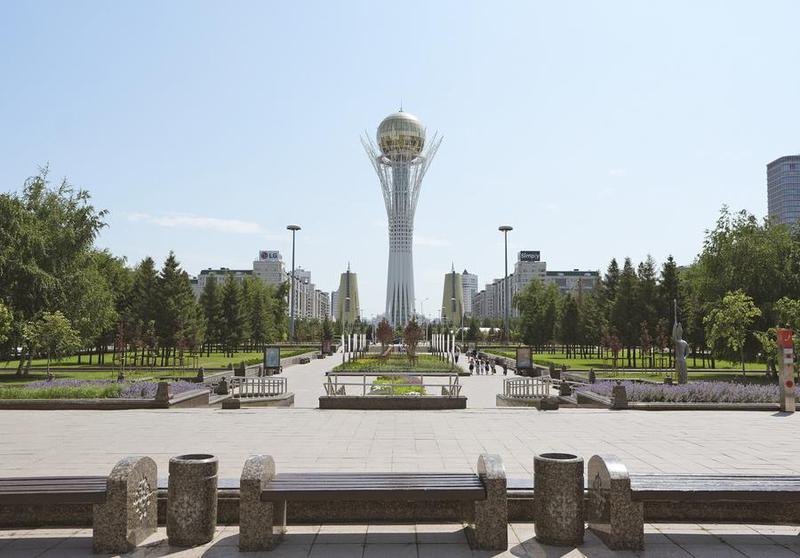
This photo taken on June 14, 2025 shows the Baiterek Tower in Astana, Kazakhstan. [Photo/Xinhua]
In a world increasingly fractured by geopolitical tensions and economic headwinds, the deepening cooperation between China and Central Asian nations stands as a key stabilizing force -- one that fosters both regional peace and sustainable development.
Anchored in millennia of the ancient Silk Road exchanges and fortified by three decades of contemporary partnership, the China-Central Asia relationship has matured into a new paradigm of international relations -- one that is built on mutual respect, synergistic development and strategic trust.
As the second China-Central Asia Summit convenes on June 16-18, anticipation grows that this gathering will inject fresh momentum into regional development, economic connectivity and cross-border understanding, and serve as a compelling example of how regional cooperation can help address global challenges and foster a more inclusive international order.
China was among the first countries to set up diplomatic ties with the five countries following their independence. Over the years, they have firmly supported each other's independence, sovereignty and territorial integrity, and respected the countries' exploration of their own development paths.
Development and prosperity remain elusive without stability and security. In their shared pursuit of regional peace and security, China and the Central Asian countries have stood in solidarity against the "three forces" of terrorism, separatism and extremism as well as drug trafficking and transnational organized crime, thereby fostering a favorable environment for economic growth and improving people's well-being in the region.
Connectivity and win-win cooperation remains a cornerstone of the China-Central Asia relationship. It was in Kazakhstan back in 2013 that Chinese President Xi Jinping proposed the building of the Silk Road Economic Belt, a component of the landmark Belt and Road Initiative.
Over the years, Belt and Road cooperation has unfolded with a number of landmark projects, notably the China-Central Asia Gas Pipeline, Central Asia's largest wind farm in Kazakhstan and the China-Europe freight trains transiting through the region.
Take the China-Central Asia Gas Pipeline. Stretching across Turkmenistan, Uzbekistan and Kazakhstan, it has delivered more than 500 billion cubic meters of natural gas to China since it was put into service in 2009, ensuring energy security for both sides while generating significant revenues for Central Asian economies.
Around the globe, rising protectionism and attempts to fragment the global economy are risking undermining global economic recovery. China-Central Asia economic and trade cooperation stands out as a fine example of how mutually beneficial partnerships can foster shared development.
In 2024, trade between China and Central Asia soared to almost 95 billion U.S. dollars, up by 5.4 billion dollars from the previous year. This sustained growth demonstrates not only the robust complementarity between the economies of China and Central Asia but also their shared commitment to an open global economy and a rules-based multilateral trading system.
Equally important is the cultural and people-to-people dimension. Educational exchanges, language programs, cultural initiatives and tourism cooperation have brought the peoples of China and Central Asia closer than ever.
In an era marked by geopolitical turbulence and widening governance deficits, the call for a fairer and more inclusive global order has grown ever more urgent.
As key members of the Global South, China and Central Asian countries are committed to genuine multilateralism, mutual respect for sovereignty and choosing their own development paths, as well as solving global hot-button issues via dialogues. Their shared commitment reflects a growing consensus among developing nations for a fairer and more equitable global governance, as well as for sustainable world peace and shared development.
Through cooperation within platforms such as the United Nations, the Shanghai Cooperation Organization and the Conference on Interaction and Confidence Building Measures in Asia, they are not only defending their core interests but also amplifying the voice of the Global South in the push for a fairer international order.
With shared vision and concrete action, China and Central Asian countries are pioneering a model of inclusive and mutually beneficial development -- a path grounded in mutual respect and offering valuable insights for an international community grappling with growing divisions and uncertainties.





