



Tariff worries weigh on US retail sector
Auto sales plunge as consumers brace for higher prices amid trade uncertainty









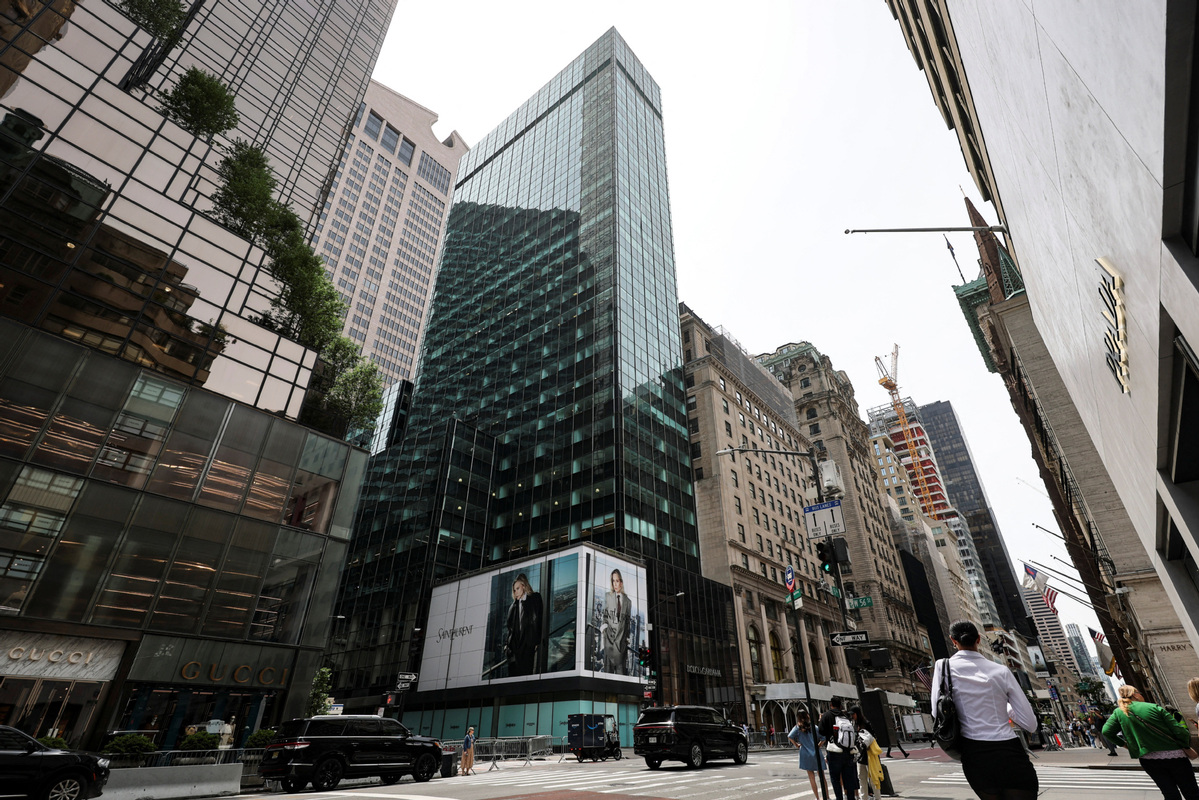
The United States' retail sales fell more than expected in May for the second month in a row, as consumers showcased their anxiety over spending — particularly on cars — amid a period of uncertainty over tariffs, economists say.
Sales, not adjusted for inflation, dropped 0.9 percent last month — the most since the start of the year, the Commerce Department's Census Bureau reported last week. This, followed by a downwardly revised 0.1 percent drop in April, made it the second time there was a month-on-month decline since the end of 2023.
"Consumers are seeing their way through the uncertainty with trade policies, but I expect the inflation associated with tariffs to be felt later this year," Jack Kleinhenz, chief economist for the National Retail Federation, said in a statement.
"Consumers remain very price-sensitive, and those costs are likely to weigh heavily on consumer budgets."
Despite easing inflation and low unemployment, US consumers tightened their belts last month. Earlier in the year, particularly in March, they had driven a 1.5 percent jump in retail sales, including cars, in anticipation of higher prices driven by new tariffs.
Darren McMillan, 56, from the Bedford-Stuyvesant neighborhood in New York, said he chose to get ahead of looming tariffs by stocking up on just the basics within his limited budget in late March.
"I heard prices might be higher because of the tariffs and I got nervous. So, yes, I went out and bought more stuff — tinned food, clothes. Now I'm not spending at all because we don't know what's to come."
Economists have long warned that tariffs would hit US consumers' spending habits, especially if businesses raise prices.
"Lower-income US consumers will face the biggest consequences from the new tariff hikes," Thomas Fullerton, a professor of economics at the University of Texas at El Paso, told China Daily.
"That's because they purchase more merchandise goods than services and many of those goods are produced in China."
The Commerce Department's retail report showed that sales declined in seven out of 13 categories, including motor vehicles, building materials and gas.
Consumers even showed restraint in going out and having fun, as dining out at restaurants and bars fell by 0.9 percent — the lowest in the service category in two years.
Economists at financial services company Wells Fargo said in a note that the report "is not a terribly encouraging report card in terms of how spending is holding up amid tariffs". The data showed "some signs of caution", it added.
Core retail sales, excluding automobiles, gas, building materials and food services, increased 0.4 percent last month. Clothing store sales rose 0.8 percent, while furniture store sales climbed 1.2 percent.
By contrast, auto and parts dealers saw a 3.5 percent drop in receipts, with car sales also falling 3.5 percent.
Industrial production slipped for the second time in three months, signaling weaker manufacturing output. Production at factories, outside motor vehicle assembly, also fell in May.
Low confidence
Meanwhile, homebuilder confidence dropped to its lowest level since 2022. The confidence index from the National Association of Home Builders and Wells Fargo fell two points to 32 this month.
Last year, the US imported $438.9 billion worth of goods from China, a 2.8 percent increase year-on-year, according to the US Trade Representative.
The brewing trade war with China got a reprieve this month after the two countries agreed to lower tariffs. However, uncertainty remains. US President Donald Trump has floated the possibility of further tariff hikes on autos, while levies on steel and aluminum remain in place.
Retail is the largest private-sector employer in the US, contributing $5.3 trillion to annual GDP and accounting for one in four US jobs, the National Retail Federation said.
With consumers spending cautiously, both major retailers and small businesses are weighing whether to raise prices in response to tariffs.
Jonathan Gold, vice-president of supply chain and customs policy at the National Retail Federation, told China Daily that while retailers have been working to mitigate the effects, including front-loading cargo, tariffs are likely to drive up prices, especially at small retailers.
Walmart and Target have both signaled possible price increases, and automakers such as Ford and Subaru may follow suit.
belindarobinson@chinadailyusa.com










