Its real value hidden in coal mines, sweltering steel mills









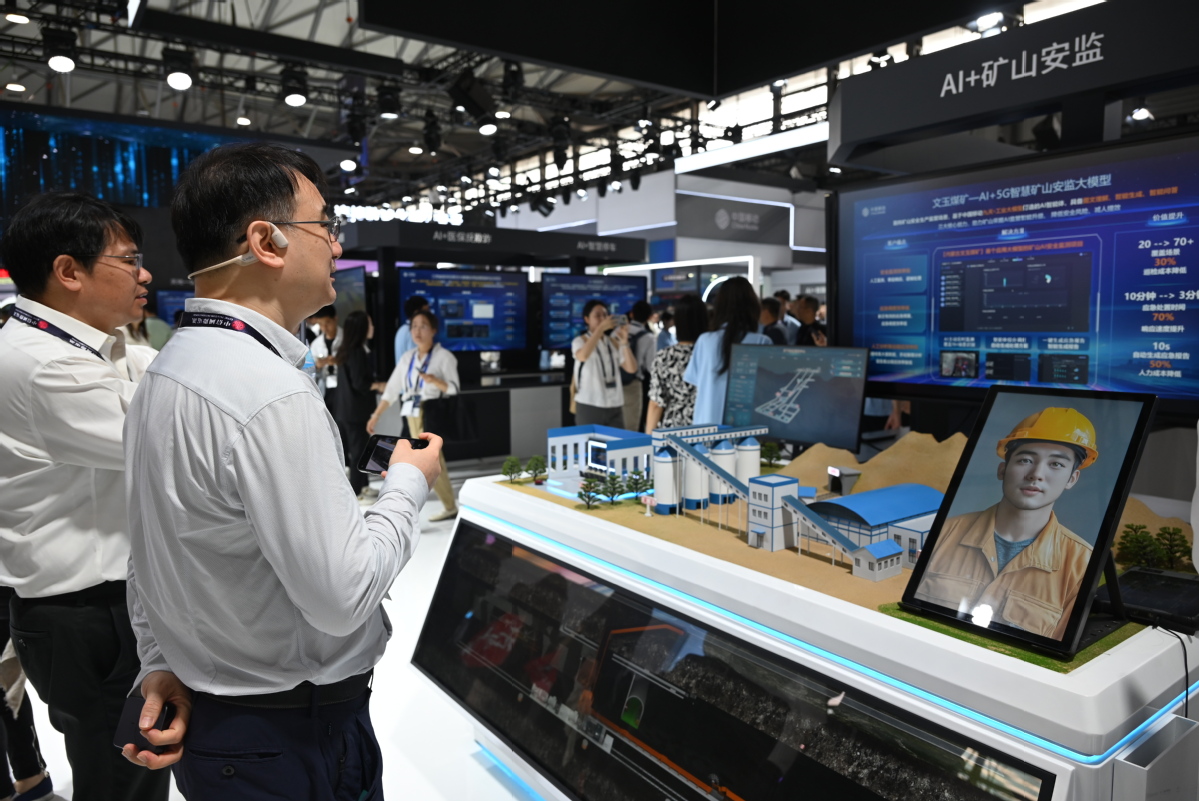
As a tech reporter, I have been bombarded with comments like "What's the point of 5G? 5G hasn't changed my life". But firsthand observation over the past six years has helped me realize that such a mindset reflects a fundamental misunderstanding of technological evolution.
While consumers rightly note the absence of flashy killer apps like those birthed by 4G (think WeChat and TikTok), they're missing the industrial revolution unfolding in mines, steel mills and factories across China — a transformation proving more profound than any consumer-facing application could ever be.
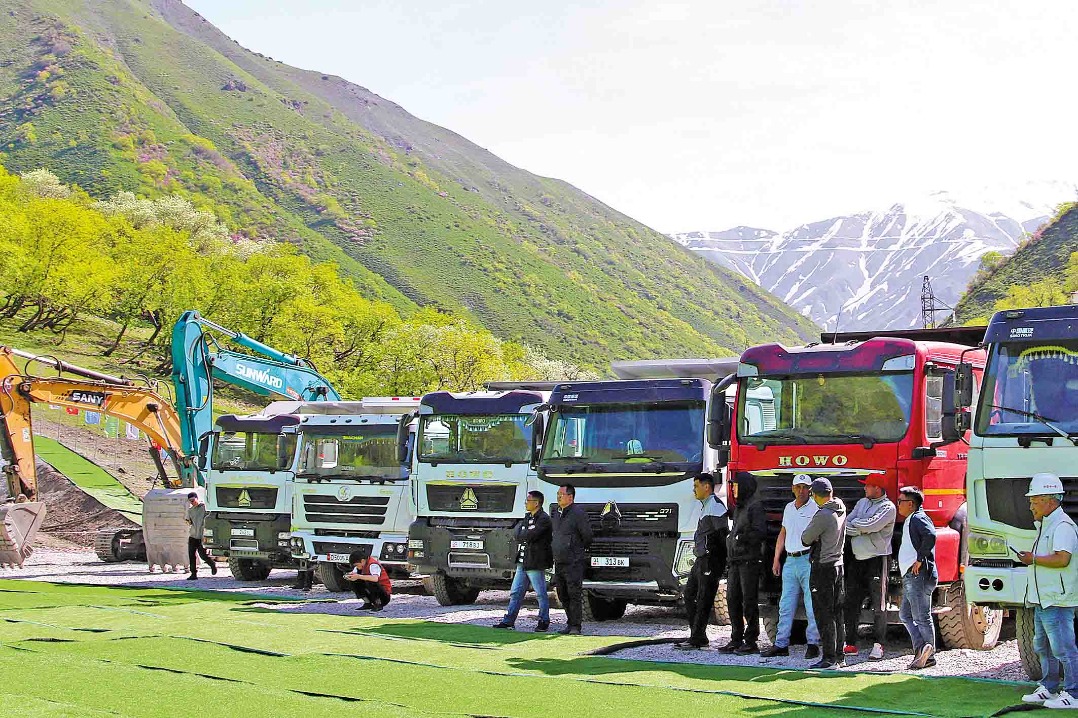
An open-pit coal mine in the Inner Mongolia autonomous region is a case in point. In May, a fleet of 100 autonomous electric mining trucks began operating at the mine, marking the largest-scale application of such vehicles globally.
As coal remains a key pillar of China's energy security, China Huaneng Group has partnered with Xuzhou Construction Machinery Group (XCMG) and Huawei Technologies to develop a low-carbon, unmanned, intelligent transportation system.
Huawei's 5G-Advanced network enabling 100 autonomous trucks to operate at — 40 C isn't just about efficiency gains — though the 120 percent productivity increase is staggering. It's about the safety and security of staff as the technology removes workers from hazardous environments where frostbite and accidents were frequent occupational hazards. This aligns perfectly with China's dual goals of maintaining energy security while advancing its carbon neutrality ambitions through electrified, intelligent mining operations.
Similarly, a steel plant in my hometown of Xiangtan, Hunan province, also showcases how 5G delivers human betterment to real lives. Its transformation since 1958 encapsulates China's industrial journey.
Where workers once endured conditions like deafening dins, lung-clogging dust and blistering heat, 5G's low latency now allows crane operators to work from climate-controlled rooms. The technical achievement — 20 millisecond latency enabling precise remote control — matters less than its human impact, which is that one technician can now safely oversee multiple formerly dangerous operations simultaneously.
What these cases reveal is 5G's role as an industrial "nervous system" — a connective tissue and/or neural network enabling other technologies like AI, cloud computing and autonomous machinery to function in demanding environments. Traditional Wi-Fi instability and fiber optic impracticality in harsh, dynamic industrial settings make 5G's reliability and flexibility game-changing. The technology shines where failure isn't measured in buffering video downtime, but in worker safety and national energy output.
The fixation on consumer-facing applications stems from 4G's visible impact. But comparing 5G to its predecessor is like comparing the horse and buggy to a high-speed train — both valid at the time yet fundamentally different in societal impact. While 4G connected people to content, 5G also connects machines to intelligence at scale. Its value emerges not in viral apps, but in preventing mining fatalities, reducing steelworker injuries and cutting global CO2 emissions through smart industry practices.
The mine in Inner Mongolia and Xiangtan's smart steel plant offer templates for heavy industries worldwide. As Huawei's collaboration with Huaneng demonstrates, the fusion of 5G-A, AI and edge computing creates systems where real-time data from 100 autonomous trucks — which will be upgraded to 300 trucks in the future — optimizes routes, cuts idle time and prevents collisions. All of these improvements would have been nearly impossible prior to 5G.
Liu Jiwen is a worker at the Xiangtan steel plant. Liu's testimony matters more than any corporate white paper. His account of transitioning from sweltering mills to air-conditioned control rooms embodies technology's highest purpose — not just economic growth, but human betterment. As AI ethics dominate tech discourse, these 5G implementations offer a counternarrative — showing how thoughtful technological integration can enhance human welfare.
The true value of 5G isn't whether it delivers faster movie downloads, but rather whether it makes inherently dangerous jobs obsolete, reduces industrial emissions and elevates workers from hard labor to skilled technical roles. By that metric, China's industrial 5G applications, though less visible than smartphone apps, represent one of the most socially consequential technological deployments of our decade. The revolution won't be televised in 4K streaming. Instead, it's happening where it matters most — in the places too dangerous for cameras to go.