Internal schism










The eurosceptic stance of CEE countries carries strategic importance for the rebalancing of China-Europe relations
In the course of European integration, euroscepticism has never been absent. From the Charles de Gaulle government of France to the Margaret Thatcher administration of the United Kingdom and the Mateusz Morawiecki government of Poland, the tension between the cession of the national sovereignty and the expanding powers of supranational institutions has repeatedly been evident within the European Union.
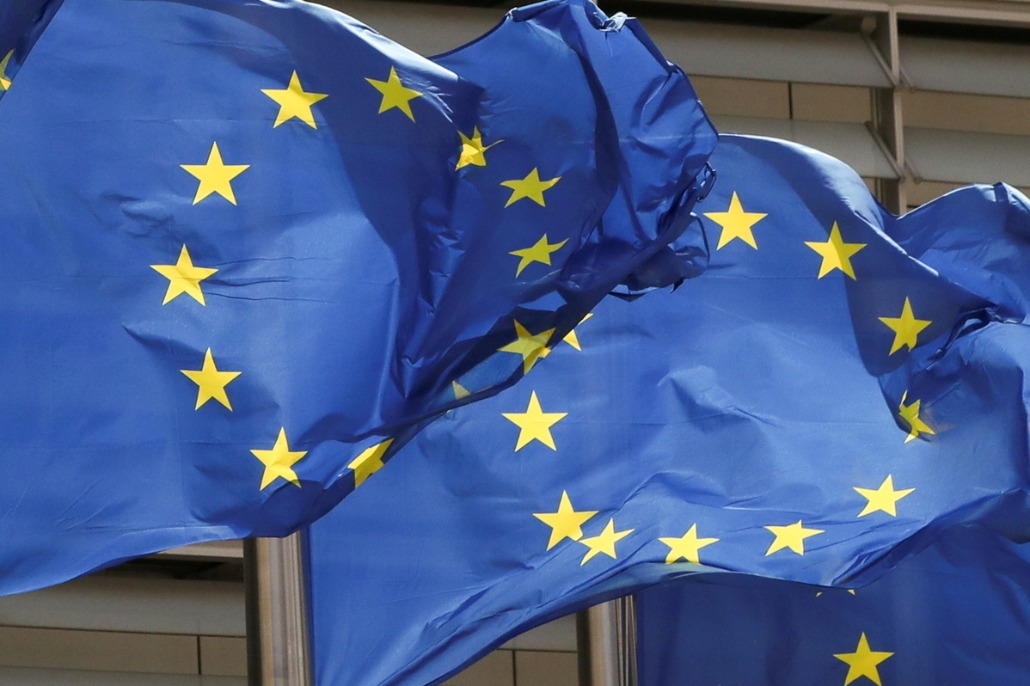
But the EU, which came into being through arduous negotiations and compromise, has never faced setbacks as severe as those it has been experiencing over the past decade. Brexit, like Pandora's box, unleashed a wave of disintegration. Another symbolic event occurred in 2021 when the Polish Constitutional Tribunal ruled that the country's laws have supremacy over those of the EU — a decision that sparked an uproar both within the EU and Poland itself. EU institutions and several member states condemned the ruling as an "unprecedented challenge" to the bloc.
From an economic perspective, the eurosceptic narratives of Poland and Hungary have exposed the inequality among EU member states in regional value chains. This inequality stems from both historical disparities and the current gaps in national strength.
From the sovereignty perspective, euroscepticism is a deep-rooted issue. For Central and Eastern European countries, euroscepticism manifests as a direct resistance to the EU's status as a security and political community — a stance rooted in traumatic memories of repeated invasions by powerful neighbors. Due to this historical legacy, most CEE countries remain wary of ceding any of their sovereignty rights to the supranational bodies.
From a cultural perspective, euroscepticism in CEE countries poses profound challenges to the future of European integration, eroding social cohesion within the bloc. While European integration was initially founded on economic cooperation, the EU's community building calls for a shared cultural identity. The rapid rise of eurosceptic parties in the CEE region in recent years highlights the cultural tension.
Despite ideological differences, these parties uniformly emphasize the preservation of national traditions and cultural identity, resisting the liberal and multicultural agendas promoted by key EU powers. For instance, in the presidential elections in Poland and Romania held in June, eurosceptic candidates Karol Nawrocki and George Simion framed the conservative rural social order as a bulwark of national spirit and cultural heritage.
The collective rise of eurosceptic parties in CEE countries not only has profound implications for the future of European integration but also has spillover effects on China-Europe relations.
Under the EU's foreign policy decision-making framework, any legislation related to the common foreign and security policy requires unanimous consent from all member states.
For instance, Slovakia vetoed the EU's 18th sanctions package against Russia this month, while Hungary refused to sign a statement on backing Ukraine in March. In comparison, most decisions in the economic domain are generally made through qualified majority voting, requiring the support of at least 55 percent of the EU population and 16 member states. This means that the 11 EU member states from Central and Eastern Europe hold significant sway over the decisions by the Council of the EU.
Since becoming the president of the European Commission in 2019, Ursula von der Leyen has led the efforts to build the EU into a major geopolitical force in the global arena. She labeled China as "a partner for cooperation, an economic competitor, and a systemic rival" of the EU, which has led to the increasing politicization of China-EU economic and trade cooperation. Under the impact of the Ukraine crisis, the EU has adopted a tougher stance in its relations with China since 2022, characterized by its de-risking approach and its framing of China as a competitor.
Under the pressure of the EU's China policy, the nearly decade-old China-Central and Eastern European Countries cooperation mechanism has suffered severe setbacks, and practical cooperation has suffered.
With the Ukraine crisis dragging on, transatlantic relations undergoing a structural shift and the collective rise of the Global South, the global order trend toward a multipolar world is accelerating. Against this background, some CEE countries have come to realize that they should not fall victim in the geopolitical rivalry between the United States-led West and Russia, and should instead pursue a development path that aligns with their national conditions and the interests of their people.
A case in point is that among the EU leaders who visited China in 2024, aside from Germany and Italy, most were from the CEE countries. Of the four countries casting opposing votes on EU's imposing countervailing tariffs on Chinese electric vehicles, three were from the CEE region: Slovakia, Slovenia and Hungary; and Poland, Croatia, Greece, Romania and the Czech Republic abstained.
The growing strategic autonomy displayed by the CEE countries within the EU and their practical diplomatic choices not only serve their own security and development needs, but also hold strategic value for the rebalancing of China-EU relations.
The current shifts in Europe are primarily reflected in two aspects: First, facing the rise of the Global South, Europe is rethinking its position in the global power landscape. Second, the increasing influence of conservative nationalist forces in some CEE countries is creating growing divergence in views on EU integration among member states.
The current situation is pushing China and Europe to meet each other half way. The two sides need to build more political consensus based on upholding multilateralism, transcend the narratives of civilizational superiority and conflict, and jointly build a balanced, equitable and sustainable new international order.
The author is an associate professor at the Central and Eastern European Studies Centre at Beijing Foreign Studies University. The author contributed this article to China Watch, a think tank powered by China Daily.
Contact the editor at editor@chinawatch.cn.