Defending the global order
Despite threats, the increasing influence of BRICS will support the rise of the Global South










The just-concluded 17th BRICS Summit in Rio de Janeiro, titled "Strengthening Global South Cooperation for a More Inclusive and Sustainable Governance", demonstrated the group's increasing influence and significance in global affairs. The group, which positions itself as a strong voice for the rising Global South, initially consisted of Brazil, Russia, India and China and then expanded to include South Africa. Now, it has admitted Ethiopia, Egypt, Indonesia, Iran, Saudi Arabia and the United Arab Emirates as full members.
Although BRICS lacks a formal charter, single currency, dedicated budget or supranational institutions, its member countries have expressed their willingness to institutionalize. Future steps will involve developing institutional mechanisms in finance and economics.
Ultimately, the key question is whether a larger, diverse BRICS can unify into a cohesive organization capable of influencing global affairs.
Many observers thought that the organization's significantly increased membership, which often hold diverse political opinions, would hinder member countries from agreeing on a consensus document. Nevertheless, the leaders' wisdom and political determination helped it adopt a strong final document.
The language regarding the reciprocal tariffs imposed by the United States on various countries was relatively mild, with explicit assurances about the dollar's significance. Reports about establishing an independent BRICS currency to challenge the global dominance of the US dollar were limited. Countries such as Brazil and India, which are actively negotiating tariffs with the US, likely wanted to avoid provoking the US administration.
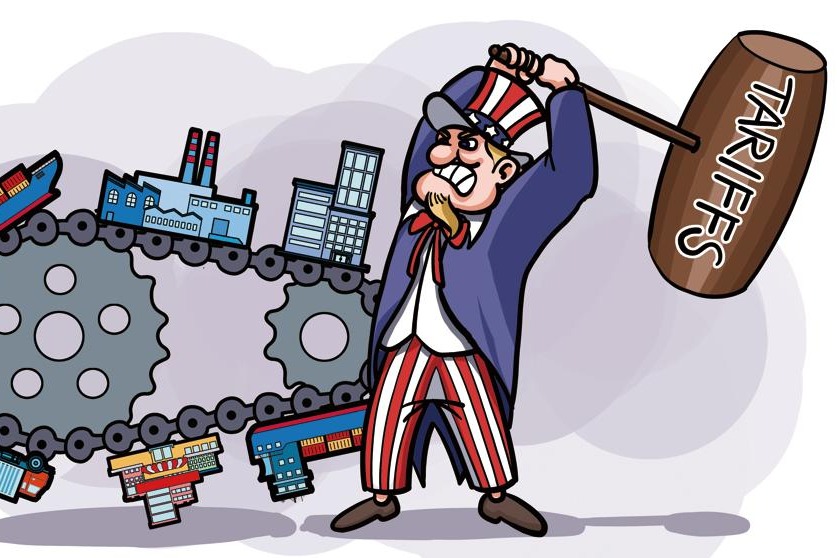
However, within hours of that modest mention, US President Donald Trump labeled the group's policies as "un-American" and threatened to impose a 10-percent tariff on goods. "Any country that adopts this policy will face an additional tariff, with no exceptions," Trump wrote on Truth Social on July 7.
The following day, Trump intensified his rhetoric, accusing the group of attempting to diminish the dollar's status as the world's reserve currency. "And if we lost the world standard dollar, that would be like losing a war, a major world war, we would not be the same country any longer. We're not going to let that happen," he emphasized during a Cabinet meeting.
In response, Brazilian President Luiz Inácio Lula da Silva sharply retorted: "The world has changed. We don't want an emperor." He added that if tariffs are imposed, BRICS nations reserve the right to retaliate.
Some other BRICS countries responded cautiously to Trump's threat. India opted not to escalate tensions with the US. Malaysia, a BRICS partner, highlighted its independent and pragmatic foreign policy, underscoring that the US remains a significant partner. Moscow issued a statement saying BRICS brings together countries with shared approaches to cooperation based on mutual interests and that this interaction is not targeted against any third party.
This is not Trump's first trade confrontation with BRICS. In November 2024, he threatened to impose 100-percent tariffs if the dollar was abandoned. The current threats emerge amid the implementation of basic tariffs on 185 countries in April, delayed until Aug 1 for negotiations.
It is widely believed that Trump's reaction to BRICS' plans was mainly for show, aiming to demonstrate he controls the situation. His threat of imposing a 10-percent duty on those who "support anti-American policies "is typical rhetoric. Trump's statements and actions are unpredictable and may not always be carried out.
Trump's broader trade strategy appears aimed at pressuring other nations into new agreements. Therefore, it is crucial for him that influential international economic groups, independent of the US, do not form globally, especially not those that include China and countries vital for US relations such as Brazil, India, Nigeria, Indonesia and Egypt.
Without the establishment of alternative payment systems, technological networks, and effective mechanisms for mutual investment, BRICS' influence faces challenges, and its economic ties with the US will continue to be significant.
New duties might speed up the de-dollarization trend and promote the use of national currencies for settlements within the bloc, though a complete rejection of the dollar remains unlikely.
BRICS' efforts are not aimed at opposing the dollar but at safeguarding their economic interests. The greater threat to the dollar isn't just competition from other currencies, but the unpredictability of US policies, which can quickly erode confidence in the US currency.
In the short term, Trump's threats are unlikely to drastically affect markets, as investors are used to his negotiating style. Nonetheless, experts agree that over the long term, such actions could boost de-dollarization and prompt the search for alternative financial solutions.
Trump's strategy of using intimidation and blackmail against nations will only succeed if those nations are entirely dependent on the US. For instance, at the recent NATO summit, Trump's aggressive pressure on its members led all 32 countries to increase their military spending to 5 percent of GDP by 2035.
Nevertheless, it is crucial to recognize that such tactics will not be effective with more independent countries of the Global South.
Consequently, closer ties, including within BRICS, are inevitable.
The author is former prime minister of the Kyrgyz Republic and a distinguished professor at the Belt and Road School at Beijing Normal University. The author contributed this article to China Watch, a think tank powered by China Daily.
Contact the editor at editor@chinawatch.cn.