Welcome extended to Modi, but prudence will prevail as India needs to lift restrictions: China Daily editorial









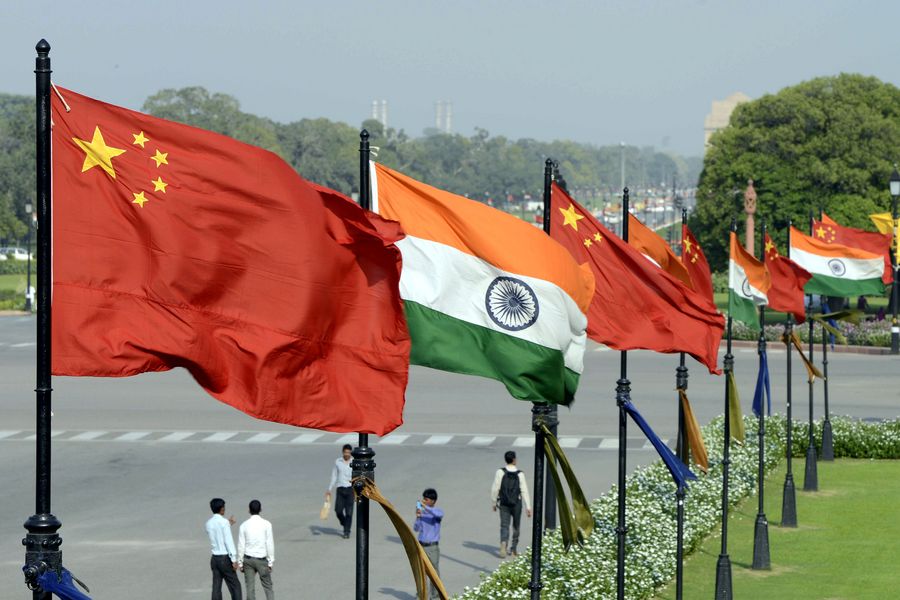
Two days after Indian media reported that Indian Prime Minister Narendra Modi will visit China on Aug 31 and attend the Shanghai Cooperation Organization Summit in Tianjin, the Chinese Foreign Ministry confirmed the first visit of the Indian leader in over seven years.
Welcoming Modi ahead of his visit to the country for the SCO Summit, Foreign Ministry spokesperson Guo Jiakun said at a regular news conference in Beijing on Friday: "We believe that with the concerted effort of all parties, the Tianjin summit will be a gathering of solidarity, friendship and fruitful results, and the SCO will enter a new stage of high-quality development featuring greater solidarity, coordination, dynamism and productiveness."
Although China and India have started making joint efforts to repair their ties, which had plunged to a low ebb following the border clash in 2020, it makes sense that China should be pragmatic and prudent in handling the relations with India. There remains a lot to be done, particularly on India's part, to better transform the important consensus reached by the leaders of the two countries in Kazan, Russia, in October last year into concrete actions.
Since the two leaders agreed that China and India are each other's development opportunity rather than being a threat, and partner rather than competitor, the Indian government should take more practical measures to ease, if not lift, its restrictive policies against Chinese technical personnel and Chinese capital if India really looks forward to deepening economic and trade cooperation with China.
Although India reopened the channel for Chinese citizens to apply for a tourist visa from July 24, which it suspended five years ago, the application thresholds remain much higher than five years ago. For instance, the applicants are required to submit their bank statements for the last six months showing a minimum balance of 100,000 yuan ($13,920) — India's per capita GDP was about $2,697 last year according to the World Bank — and must apply in person in Beijing, Shanghai, or Guangzhou.
In contrast, China has continued to issue visas to Indian nationals even after the border clash in 2020. Last year, the Chinese government issued about 280,000 visas to Indian nationals, including technicians, engineers, students and reporters, while India still strictly restricts the four kinds of Chinese visitors till now. And it hasn't reopened the direct flights between the two countries that it canceled five years ago.
The onus is on India to do more to facilitate the subdued people-to-people and cultural exchanges and smooth flow of talents, capital and know-how that serves the common interests of the two countries.
Modi's visit provides the Indian government with a good opportunity to markedly accelerate relevant moves to remove the irrational barriers that have suppressed the development potential of relations in various fields between the two most populous countries in the world.
Notably, one day before Modi's China trip was reported, in response to a media query at a news conference in Beijing regarding the Philippines-India joint exercises in the South China Sea last week, Chinese Foreign Ministry spokesperson Guo Jiakun stressed that disputes over territory and maritime rights and interests should be settled through negotiation and consultation by countries directly concerned, and no third party is in any position to interfere in that.
So given the Modi government's long-term ambiguity toward the US' "Indo-Pacific" strategy that targets China, if New Delhi really intends to make Modi's visit more than symbolic, it knows what to do and what not to do.
As Modi's visit is also coming amid rising tensions between India and the United States, the Indian leader is also obliged to prove his visit is not expedient.
This year marks the 75th anniversary of the establishment of diplomatic ties between China and India. Bearing the big picture in mind, China has always been consistent in its Indian policy that features principled and practical handling of both opportunities and challenges related to bilateral ties.
India should reciprocate China's openness for improved relations with equal sincerity, consistency and certainty.