



Strategic autonomy key to India improving relations with China: China Daily editorial









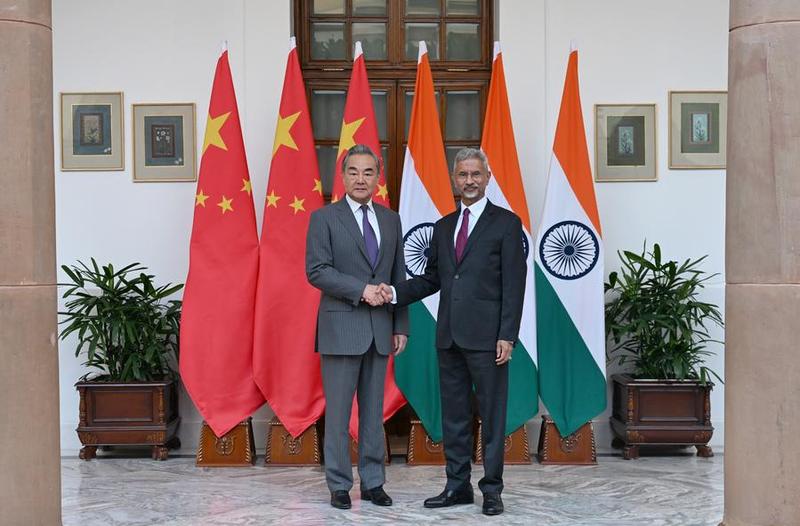
The consensus between China and India on maintaining the momentum of bilateral ties, reached during Foreign Minister Wang Yi's ongoing visit to New Delhi, is the latest manifestation of the two neighbors' efforts to deepen trust.
Both sides have been working to implement the consensus reached by leaders of the two countries when they met in Kazan, Russia, on the sidelines of last year's BRICS Summit. As a result, the two countries have gradually resumed exchanges and dialogue at all levels, and taken a number of concrete steps to ease tensions in their ties. India has resumed issuing tourist visas to Chinese citizens from July 24, after suspending doing so for five years, a beneficial move for easing cross-border travel and facilitating people-to-people exchanges.
Of course, much of the global attention on Beijing and New Delhi's rapprochement efforts is now focusing on Indian Prime Minister Narendra Modi's planned visit to China from Aug 31 to Sept 1 to attend the Shanghai Cooperation Organization Summit in Tianjin. It is through the prism of this that Wang's trip to India is being widely perceived as facilitatory preparation for Modi's visit.
To some extent, the push for reconciliation by Beijing and New Delhi is meaningful for the two countries to better navigate today's changing world dynamics, in particular, the rampant unilateral bullying practices of the United States and its severe challenges to free trade and the international order.
With the US administration waging a fierce tariff war against the rest of the world, New Delhi has been forced to recognize the hard truth that even cozying up to Washington has not spared it from the US' tariff bullying. And with New Delhi at loggerheads with the US administration because of its refusal to halt its purchases of Russian oil, New Delhi is realizing the importance of strategic autonomy and seeking to improve ties with Beijing in a bid to gain strategic leeway and policy flexibility.
As Wang rightfully pointed out in his meeting with his Indian counterpart Subrahmanyam Jaishankar on Monday, as this year marks the 75th anniversary of the establishment of diplomatic relations between China and India, appropriate lessons should be learned from the past, and the two sides should have correct perceptions of each other. Rather than regarding China as a rival or threat, Wang urged New Delhi to view it as a partner and China's pursuit of high-quality development as an opportunity. He called on both sides to invest their valuable resources in development and rejuvenation.
China is committed to the principles of amity, sincerity, mutual benefit and inclusiveness in its relations with other countries, including India.
It especially hopes that neighboring countries, including India, will join hands with it to build a peaceful, secure, prosperous, beautiful and friendly Asia-Pacific. The positive momentum that has been fostered should now be harnessed to forge more reciprocal cooperation between the two neighbors.
To that end, New Delhi should meet Beijing halfway, continue to remove barriers, do more to facilitate bilateral cooperation in trade and investment so as to bring real benefits to the two peoples and inject more certainty and stability into the dynamics of Asia and the world at large.
As the two largest developing countries, the healthy and stable development of bilateral relations between India and China is bound to promote regional peace and stability, which is conducive to the formation of greater economic development momentum and the realization of more resilient supply chains. Modi's participation in the SCO Summit provides an opportunity for the two neighbors to further stabilize relations to realize harmony between "the elephant and the dragon". By complementing and reinforcing each other's development, China and India can inject fresh vitality into regional development, contribute to the realization of a more multipolar and democratic international order, and bring greater prosperity to Asia and beyond.





