



Early warning systems critical for disaster response









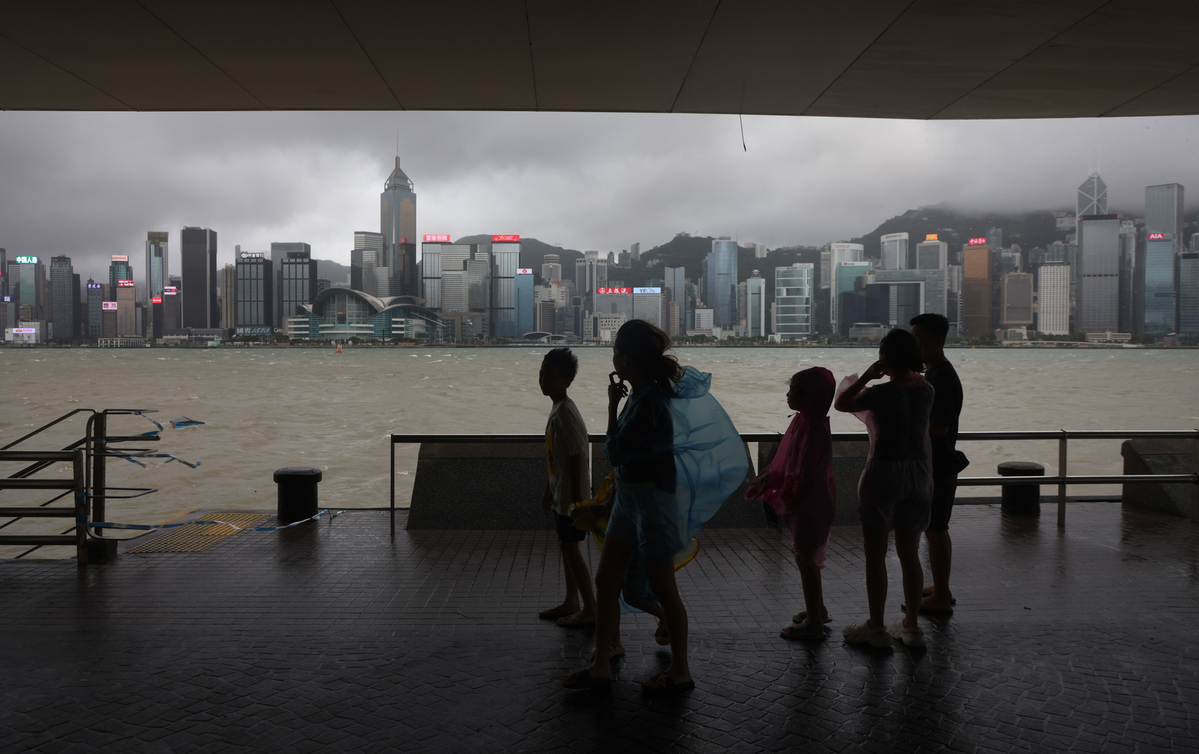
Editor's note: Super Typhoon Ragasa hit South China on Wednesday. It highlights that coordinating safety measures, mitigating risks, proactively adapting to climate change and strengthening the response system for major public emergencies are critical for Chinese modernization. Song Shanyun, deputy director of the China Meteorological Administration, spoke to Outlook Weekly news magazine on this issue. Below are excerpts from the interview. The views don't necessarily represent those of China Daily.
Several key measures need to be taken to enhance the national resilience against climate risks. Climate security needs to be incorporated into the core framework of the national security system. Preventing and addressing climate risks should be regarded as essential to safeguard the security of food, energy, water, ecology, the economy and society. Major strategies and projects must take into account these risk factors and institutional arrangements should be continuously improved. Forward-looking response strategies must be developed for regions that face such risks, and preparations should be made to withstand disasters of once-in-a-century magnitude.
It is also necessary to establish and improve institutional mechanisms to ensure climate security, thereby strengthening the overall resilience. An agro-ecological zoning system should be set up for a regular assessment and analysis of climate zoning. Efforts should be made to advance the institutionalization and standardization of this agro-ecological zoning.
A sound mechanism for assessing climate carrying capacity should also be established and feasibility studies must be included in the preliminary approval process of urban and rural planning, major strategies, large-scale projects and regional development plans to ensure they are resilient to extreme weather events. The adaptability of cities, new rural areas, major infrastructure projects, water resources and energy systems to future climate change should also be thoroughly evaluated.
It is necessary as well to establish and strengthen the meteorological disaster census and risk zoning systems. Greater coordination between meteorological and other departments is required, alongside improvements in early warning systems to enhance disaster prevention measures and response capabilities.
Cities should integrate climate resilience requirements and adaptation goals into their development plans, improve their disaster prevention capabilities and accelerate the adaptive retrofitting of urban infrastructure. The monitoring of meteorological disasters, early warning systems and climate risk assessment capabilities must also be strengthened. Urban preparedness for extreme weather events and the emergency response mechanisms need to be improved.
Rural areas must raise their disaster prevention standards based on the meteorological disaster risk zoning, while also advancing adaptive retrofitting. There is a need to raise public awareness about disaster prevention and improve the self-rescue capabilities of rural residents and communities.
Major infrastructure should be planned and constructed in such a way that their designs can adapt to climate change. Existing infrastructure should be thoroughly inspected and evaluated for climate adaptability, followed by renovations and upgrading if required. Insurance and financial support mechanisms for infrastructure should also be improved.
Strengthening monitoring, forecasting and early warning capabilities requires reinforcing basic research, enhancing the existing system and promoting deeper integration of artificial intelligence with meteorology. A scientifically designed, technologically advanced, intelligent and precise integrated meteorological observation network should be established, alongside a comprehensive climate impact monitoring system. Detailed climate impact and risk assessment technologies should be applied to key areas. National standards for early warning systems need to be established. A multi-sector, multi-industry early warning system should be built to improve the country's resilience against extreme weather events.
At the global level, efforts should be made to strengthen meteorological monitoring, forecasting and service capacities, and to provide global public goods in the form of meteorological disaster monitoring and early warning services. China will offer its early warning solutions to Global South countries, enhancing their capacity to adapt to climate change.





