How China's robotaxis jumped to top of ranks worldwide
Vast domestic development, favorable policies, tech prowess propel global reach









Roadblocks in US
While Chinese autonomous driving enterprises expand actively overseas, US companies have largely remained focused on domestic operations.
Waymo, owned by Alphabet, operates its Waymo One robotaxi service in Phoenix, Arizona, and San Francisco in California. It is testing logistics fleets under Waymo Via, but has yet to establish a commercial presence outside the US.
Similarly, Cruise, backed by General Motors, concentrates on California and Arizona, where regulatory frameworks and urban infrastructure are familiar and predictable.
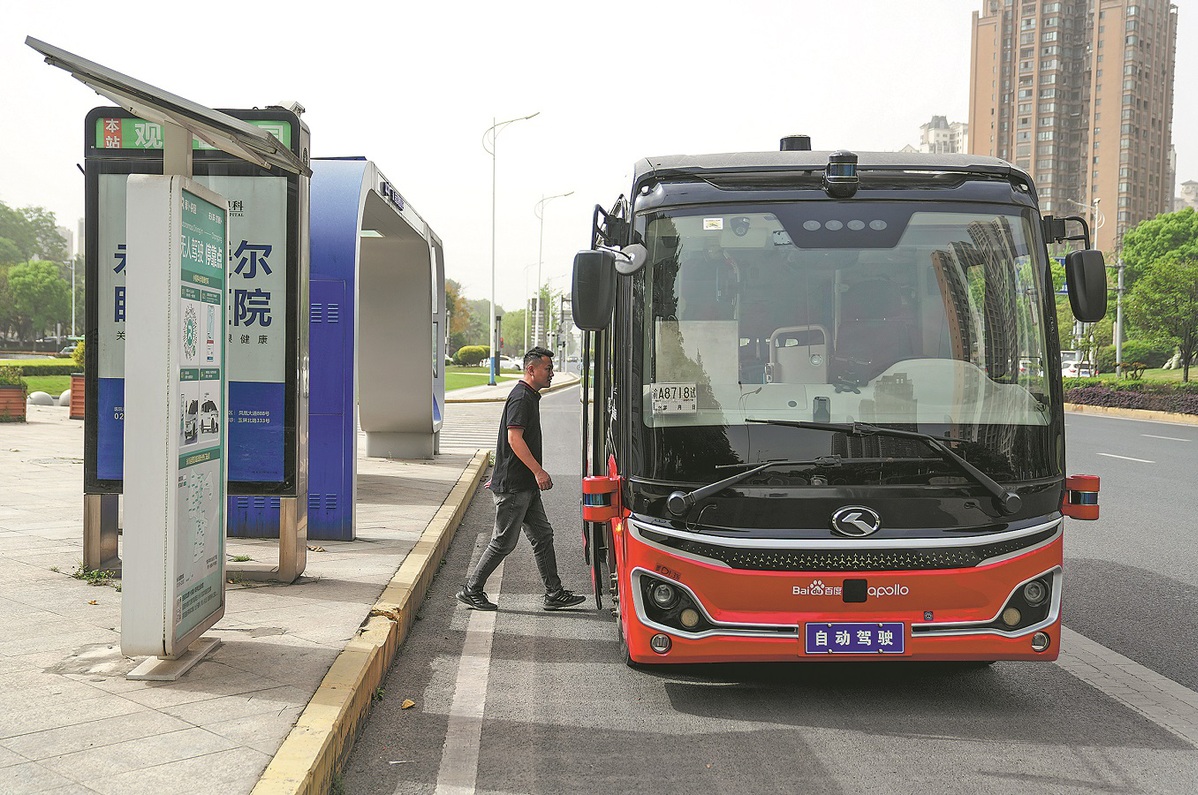
The contrast is striking. Chinese companies such as WeRide, Pony.ai and Baidu pursue a "dual track" strategy: maintain domestic leadership while entering selected foreign markets where pilot programs are feasible and government support is accessible.
This divergence stems from fundamental differences in market structure and strategic incentives.
In the US, the domestic market is fragmented, concentrated in a very limited number of cities including Los Angeles, Phoenix and Austin, Texas.
It is also hindered by complex, inconsistent state and local regulatory hurdles and concerns about the safety and reliability of autonomous vehicle technology following high-profile incidents, such as those involving Tesla's Autopilot, resulting in challenges in achieving widespread public acceptance and trust.
In contrast, Chinese companies have accumulated extensive experience in the home market over the years because of China's favorable policies and complex road conditions.
WeRide, for example, operates Robotaxi networks across core urban areas, transportation hubs and large communities in countries including China, the UAE and Switzerland, and has accumulated over 2,200 days of safe operation.
Other countries have shown interest in the new technology, and are both technologically and strategically ready for the rollout of products and technologies.
Pony.ai's Zhang said he believes that Chinese companies have "inherent advantages" when exploring overseas markets.
The combination of high population density, heavy traffic and complex road conditions in China has enabled local companies to handle difficult scenarios. A mature automotive industry and advanced vehicle intelligence also help facilitate faster deployment in foreign markets, said Zhang.
"The robotaxi industry may appear crowded and fiercely competitive, but in reality, the technical barriers are extremely high, so there are actually only a handful of true players at the table — and China's autonomous driving technology is among the most advanced in the world," he said.
Technical adaptation
Despite early successes, overseas expansion will not be without bumps for Chinese autonomous vehicle companies, said analysts.
One thing is technical adaptation. Systems calibrated for Chinese megacities may require substantial recalibration for Singapore, Abu Dhabi, or other foreign urban environments, they said.
Also, regulatory uncertainty persists. Even in markets that appear welcoming, policy changes can occur quickly, potentially limiting operational scope or requiring costly adjustments. Compliance with local safety and liability standards adds complexity to international operations.
The right business model and profitability pressures need addressing. While pilot programs and partnerships can demonstrate technological capability, achieving sustainable revenue in robotaxis, unmanned buses, or delivery vehicles remains a challenge.
But Chinese autonomous driving companies are firm in their targeted and phased international expansion strategy.
"Strategically, we definitely have the ambition to go global," said Pony.ai founder and CEO Peng. "Because mobility needs are everywhere. Using technology to have a positive societal impact should be our ambition."
The broader implication is a shift in the global autonomous vehicle landscape. While US companies have traditionally defined the frontier, Chinese enterprises are now asserting their presence beyond national borders, demonstrating that the next phase of mobility innovation will be increasingly international and competitive.