



A century of upholding Palace Museum spirit









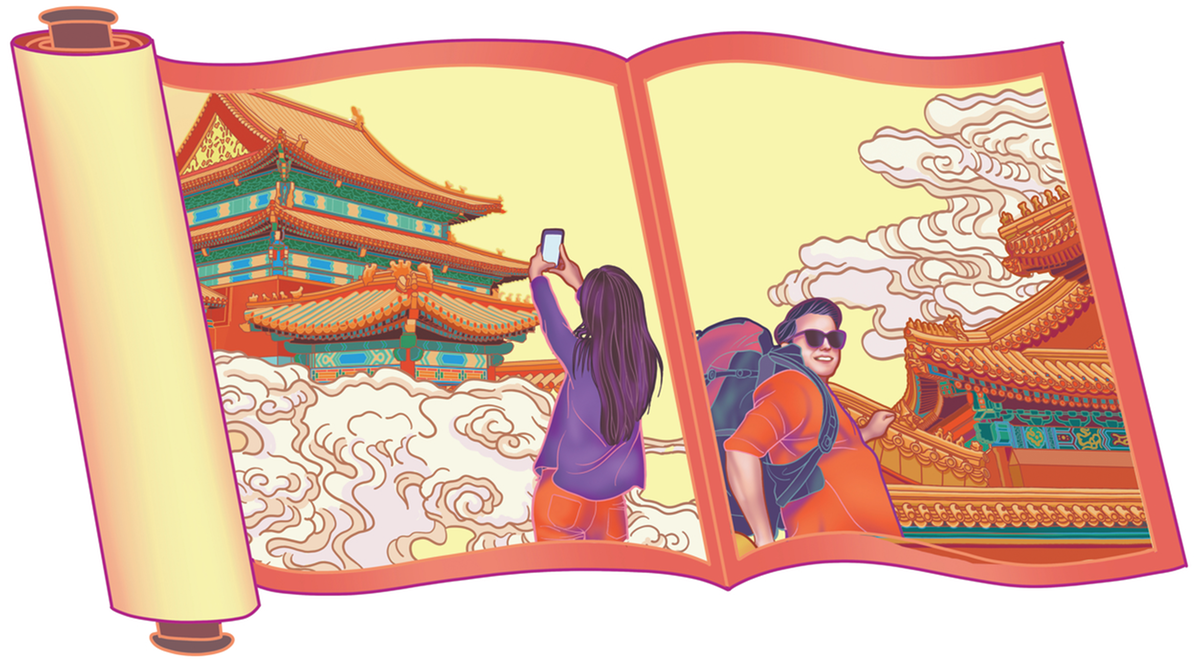
The Palace Museum will celebrate its centennial on Oct 10, 2025.What has allowed this almost six-century-old structure and century-old museum to maintain its vitality throughout history? What has inspired generations of Palace Museum custodians to embrace modesty and dedicate themselves to treating the preservation of cultural relics as a lifelong mission?
Perhaps the answer partly lies in the tumultuous years of war, in the epic narrative of the southward relocation of cultural relics by the older generation of Palace Museum guardians.
Following the Sept 18 Incident in 1931, when Japanese forces advanced on northern China, Palace Museum's forebears, led by figures such as Li Yuying and Yi Peiji, made a difficult yet resolute decision: to relocate the museum's finest artifacts southward. This decision required immense courage and responsibility. To safeguard the seeds of Chinese civilization amid the flames of war was not only a duty but a cultural awakening of the nation.
"The loss of territory can be regained, but the destruction of national treasures is irreparable." This sentiment, which still echoes among the Palace Museum staff of today, encapsulated the strong resolve of all cultural heritage workers at the time. Beginning in February 1933, five batches, totaling 13,427 crates and 64 bundles, of artifacts embarked on a journey of thousands of kilometers. Machine guns were mounted on the trains carrying the treasures, with armed guards deployed in each carriage. Alongside the trains, cavalry units accompanied the treasures as armed escorts.
Yet that was merely the beginning. Just six months after the artifacts reached Nanjing, Jiangsu province, the July 7th Incident, also known as the Lugou Bridge Incident, and the Battle of Shanghai erupted, necessitating the artifacts' further westward relocation. This time, the treasures were divided and dispatched in three directions — south, central and north — on an even more perilous journey amid the flames of war.
Niu Deming, who participated in the relocation, recalled the treacherous journey through the Mingyue Gorge in Chengdu, Sichuan province, where the path, carved in the mountainside, with cliffs on one side and a deep valley on the other, winded through perilous trails. More heart-wrenching was the sacrifice of Zhu Xuekan, who, while loading artifacts at the Xuantan Temple in Chongqing, slipped and fell to his death, sacrificing his life for the noble cause.
Sacrifices such as those of Zhu Xuekan embody the "gatekeeper spirit" of the Palace Museum, which prompts people to view cultural heritage preservation as a sacred duty and value the safety of cultural relics above their lives.
As the sixth (and former) director of the Palace Museum, I often ask myself: How should this generation of Palace Museum custodians carry forward this spirit? During my more than seven years in office, I inspected, many a time, all the more than 9,000 rooms of the Forbidden City, wearing out more than 20 pairs of cloth shoes. With every step, I felt the gaze of our predecessors, for every building carries the promise of safeguarding civilization.
We adhere to the principle that "only by preventing incidents can we achieve great deeds", capping the daily visitor number to 80,000, in order to ensure a dignified experience for visitors. We have continued the restoration of ancient buildings, increasing the open area from 30 percent before major renovations to about 80 percent now. We established the largest cultural relics conservation institution in China.
However, the changing times demand that we not only "preserve" but also "revitalize" the artifacts. Cultural heritage should not be locked away in storerooms. Instead, they should re-enter the social lives of the people. We launched eight popular apps including "Yinzhen's Beauties" and "Auspicious Symbols of the Forbidden City", and developed thousands of cultural and creative products, bringing the culture of the Palace Museum into everyday homes. We established a digital museum, using virtual reality and other technologies to offer audiences a new cultural experience.
All these innovative measures are aimed at achieving one goal: to bring to life the relics in the Palace Museum and the words inscribed in ancient texts. This is both a continuation and development of the spirit of the Palace Museum in the new era.
This year also marks the 80th anniversary of the victory in the Chinese People's War of Resistance Against Japanese Aggression (1931-45) and the World Anti-Fascist War. Reflecting on those arduous years, we more profoundly realize the preservation and transmission of culture is also a battle. Our predecessors protected our tangible cultural relics during times of war. Today, we are safeguarding the cultural roots and spirit of the nation.
The fall colors in the Palace Museum remain unchanged, as does the century-old but vibrant Palace Museum. From an imperial palace to a people's museum, from wartime relocation of artifacts to peacetime technological innovation, the century-long journey of the Palace Museum is a vivid testament to the enduring vitality of Chinese culture.
We will continue to uphold the "gatekeeper spirit" and shoulder the cultural mission in the new era. We firmly believe that in the next century, the Palace Museum will continue to present the eternal charm of Chinese civilization to the world with a more open and inclusive mindset, and greater innovative spirit.
We know well that we are safeguarding not just the Palace Museum but also the cultural lifeblood of the Chinese nation; we have inherited not just the artifacts but also the wisdom of human civilization. This is the "gatekeeper spirit" that has been passed down from generation to generation of Palace Museum custodians, and this has been the unwavering cultural commitment of the Palace Museum for a hundred years.
The author is former director of the Palace Museum.
The views don't necessarily represent those of China Daily.


Today's Top News
- Deeper opening-up promised for steady growth
- China to rebalance growth with domestic demand boost
- Consultative suggestions provide policymakers with essential inputs to finalize five-year plan
- Decoding China: How the people run the country
- AI helping to redefine entrepreneurship
- China's judges enhancing global role





