Prominent procedure









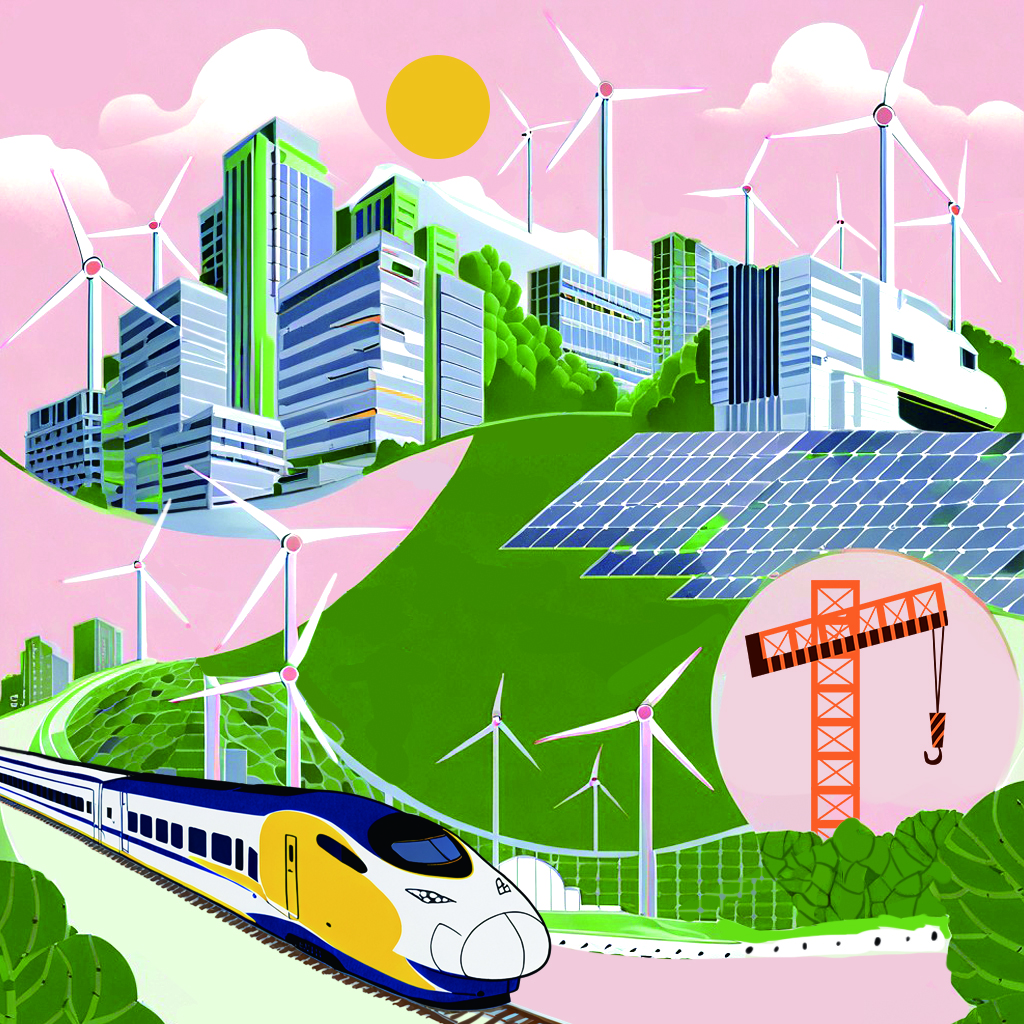
China's 14th Five-Year Plan has had a profound impact not only on the country itself but also beyond its borders
In the midst of an era marked by geopolitical tensions, trade wars and a reconfiguration of the international order, China's 14th Five-Year Plan (2021-25) not only reaffirmed the country's strategic direction but also redefined its role in the world. The plan, focused on high-quality development, technological self-sufficiency, international openness and ecological sustainability, has had a tangible impact beyond China's borders. In particular, achievements in international cooperation and green development are transforming the dynamics of the Global South and bringing stability to a strained global system.
During this period, China has carried out extensive cooperation with foreign countries and entities in areas ranging from infrastructure and energy to healthcare and the digital economy, and according to the General Administration of Customs, has become one of the top three trading partners for 157 countries and regions globally. This network of partnerships has allowed nations in Africa, Latin America, Southeast Asia and Central Asia access to financing, technology, and capacity building that would otherwise be almost unattainable.
Within the impact of this international cooperation policy on the Global South, three main milestones stand out.
First, infrastructure. With flagship projects such as railways in Kenya, ports in Pakistan and 5G networks in Latin America, these infrastructures not only improve connectivity but also increase local productive capacity and generate employment, acting as a lever for development.
Second, technology transfer. China exports not only products, but also knowledge. Through training centers, joint research institutes and technology transfer platforms, the country has contributed to strengthening local capacities. It is reported that China has established more than 70 joint Belt and Road laboratories with nearly 50 countries and created 10 international technology transfer platforms that serve regions such as Southeast Asia, Africa and Latin America.
Third, a geopolitical alternative. In a world where traditional powers impose political or financial conditions on aid, China has offered more practical agreements to promote win-win results. This has repositioned many nations of the Global South as key players with greater room for maneuver.
The diversification of economic and strategic partnerships in the Global South, with China as a key partner, has helped cushion the impact of sanctions, blockades or exclusion from Western-dominated financial systems. This multipolar shift helps contain conflicts and allows for a redistribution of global economic power, which can reduce long-term structural tensions and improve stability in the geopolitical context.
Green development has been another central component of the 14th Five-Year Plan. China has defined its transition to a low-carbon economy as a national priority, committing to peaking carbon emissions before 2030 and reaching carbon neutrality before 2060.This commitment is not symbolic and is being supported by massive investments in clean energy, reforestation, transport electrification and stricter environmental regulations. Furthermore, in his recent speech at the United Nations Climate Summit 2025, Chinese President Xi Jinping announced China's new Nationally Determined Contributions: "China will, by 2035, reduce economy-wide net greenhouse gas emissions by 7 percent to 10 percent from peak levels, striving to do better; increase the share of non-fossil fuels in total energy consumption to over 30 percent; expand the installed capacity of wind and solar power to over six times the 2020 levels, striving to bring the total to 3,600 gigawatts; scale up the total forest stock volume to over 24 billion cubic meters; make new energy vehicles the mainstream in the sales of new vehicles; expand the National Carbon Emissions Trading Market to cover major high-emission sectors; and basically establish a climate adaptive society." This comprehensive climate action plan targets economy-wide and all-greenhouse-gas net emissions reductions. It systematically establishes a multidimensional framework of energy and industrial transformation and policy innovation, marking China's transition to a more systematic and comprehensive low-carbon and resilient development phase, and contributing actively to the long-term goals of the Paris Agreement.
Among the concrete achievements in the 2021-25 period, China's leadership in renewable energy stands out. China has consolidated its position as the world's largest producer and installer of solar panels and wind turbines. In fact, the majority of new global solar capacity between 2021 and 2025 was installed in China, specifically, more than 54 percent of the capacity added worldwide in 2024 and 67 percent of the capacity added globally in the first half of 2025. Similarly, the country leads the electric vehicle market, accounting for more than 50 percent of global sales. This not only reduces its dependence on imported oil but also establishes a model for other Global South countries wishing to jump directly to clean technologies. And through green bonds and sustainable investment funds, China has mobilized capital for green projects, both domestic and international.
China has also begun exporting its green capacity to the Global South. This ranges from low-cost solar panels to direct investment in wind farms in Latin America and Africa. By reducing the cost of entry into the energy transition, China has become a key partner for other Global South countries to meet their own climate goals without sacrificing economic growth.
The significance of these achievements cannot be understood without considering the geopolitical context, which ranges from the Ukraine crisis, the Israel-Palestine conflict, the US trade and technology war against China, the fracturing of global supply chains, and even tensions surrounding the South China Sea. In this volatile environment, China's progress during the 14th Five-Year Plan acts as a stabilizing factor, both for its economy and for its partners in the Global South.
China has opted for a pragmatic approach that does not impose ideology, but rather offers infrastructure, trade and climate solutions. This "win-win" logic, although misinterpreted by some in the West, has been favorably received in many parts of the world where countries are seeking development without interference.
Furthermore, by consolidating diversified economic partnerships, China and other Global South countries are working together to reduce their vulnerability to sanctions, which in turn lowers the risk of systemic shocks in the global economy. As China is integrating itself into value chains in the Global South it is more committed to international stability.
China's 14th Five-Year Plan has proved to be more than just an internal plan. It has become a road map with global implications, especially for the Global South. Its emphasis on international cooperation and green development is reshaping the opportunity landscape for dozens of countries seeking a path to inclusive and sustainable growth.
As the world goes through a period of uncertainty and polarization, China's achievements in this five-year period have not only consolidated its national power but also offered a counterweight that balances the global system. In an increasingly multipolar environment, this balance is more necessary than ever.
The author is an economist and the adviser of Cátedra China Foundation, Spain, and writer of the book Why China Is Winning. The author contributed this article to China Watch, a think tank powered by China Daily.
The views do not necessarily reflect those of China Daily.
Contact the editor at editor@chinawatch.cn.