



Economic shockwaves
US tariffs hit Cambodia, Vietnam, and Thailand hardest in Southeast Asia









Editor's note: In this weekly feature China Daily gives voice to Asia and its people. The stories presented come mainly from the Asia News Network (ANN), of which China Daily is among its 20 leading titles.
A report by the United Nations Development Programme warns that recent changes in United States' tariff policy have had a significant impact on economies of the Association of Southeast Asian Nations, or ASEAN, with total exports to the US projected to fall by as much as 9.7 percent. The heaviest losses are expected for export-driven economies such as Cambodia, Vietnam and Thailand.
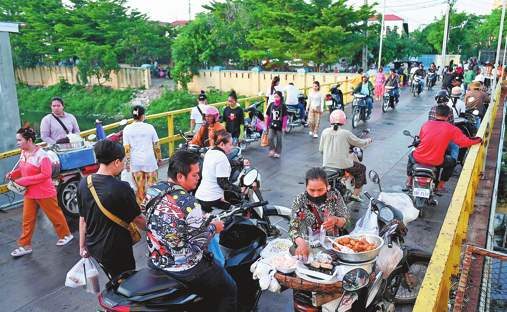
Cambodia is seen as the most vulnerable, with exports to the US forecast to contract by 23.9 percent. The country relies on the US for around 58 percent of its total exports and faces average tariff rates close to 19 percent. In addition, Cambodia could come under scrutiny as a potential transshipment hub for goods seeking to bypass US duties.
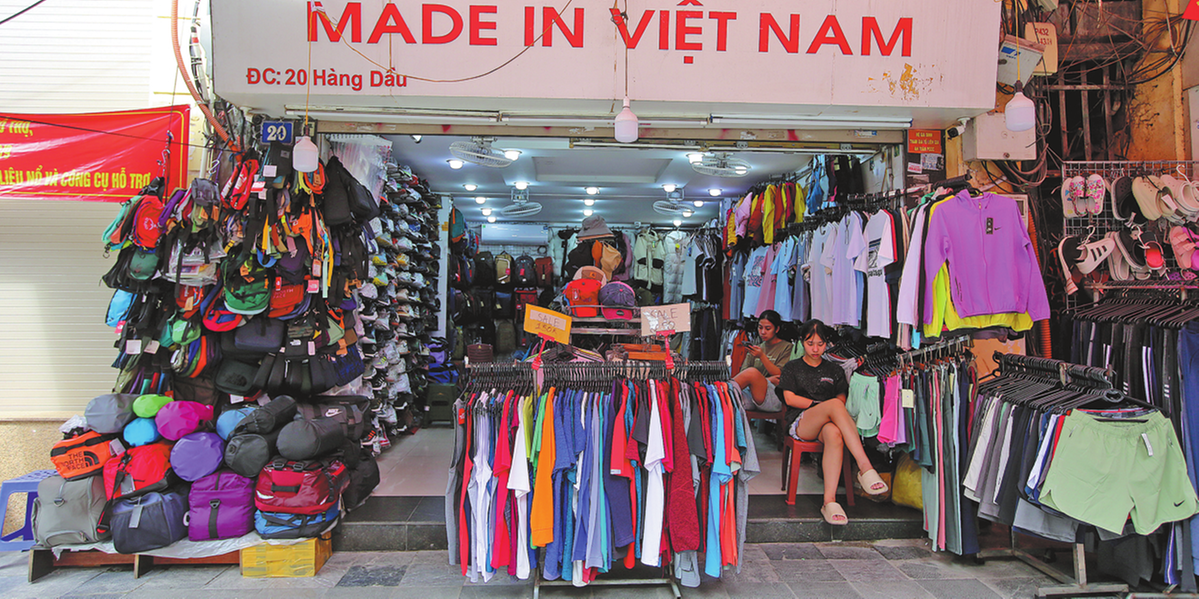
Vietnam is the next, with exports to the US expected to decline by up to 19.2 percent, according to the UNDP. Key sectors, including garments, footwear and electronics, now face average tariffs of roughly 20 percent, and the US has accounted for 36.6 percent of Vietnam's overall export volume.
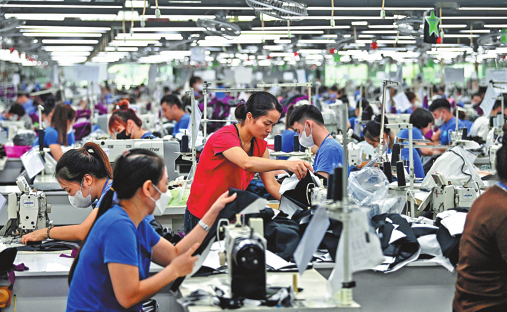
Philip Schellekens, UNDP's chief economist for Asia-Pacific, told Reuters that in a worst-case scenario, a 20 percent tariff hike triggering severe inflation in the US could slash Vietnam's export earnings by as much as $25 billion in a single year, nearly one-fifth of its annual total.
"No ASEAN country is harder hit by the US tariff hikes than Vietnam," Schellekens said.
Vietnamese customs data already reflect the shift. Exports to the US in August slipped 2 percent from July, with footwear, in which Vietnam is the world's second-largest producer, plunging 5.5 percent. Overall, the downturn in exports is expected to drag Vietnam's GDP growth down by about 5 percent.
The full impact may take years to materialize, though some effects could be cushioned by exporters absorbing part of the costs, diversifying to new markets, and boosting domestic consumption.
Still, the World Bank has revised down its forecast for Vietnam's economic growth this year to 6.6 percent, from 6.8 percent earlier, following the introduction of US tariffs. That projection falls well below the government's official target of 8.3 to 8.5 percent.
Thailand is also facing significant fallout from Washington's tariff measures, with exports to the US projected to contract by 12.7 percent. The decline stems from heavy reliance on key export sectors, including automobiles, electronics and food products, all of which are now subject to average tariff rates of around 19 percent.
Additional pressure is evident in data showing that Thailand's exports outside the US market also shrank by 1.9 percent in August, underscoring the difficulty of finding new destinations to offset lost demand. The country also faces potential scrutiny as a transshipment hub for goods seeking to evade tariffs.
Still, not all Thai products are affected. Roughly 26 percent of exports to the US remain exempt from tariffs, particularly certain electronic goods that form a critical part of US supply chains. These exemptions are expected to cushion the overall impact, at least in part.
Key approaches
According to the UNDP, the path forward for ASEAN amid shifting global trade dynamics is not to retreat from globalization but to adapt with strategic resilience. The agency outlines key approaches:
ASEAN must diversify beyond its traditional export markets and strengthen regional supply chains to cushion against external shocks. Examples include Malaysia's bid to position itself as a hub for semiconductors and data centers, and the creation of the Johor-Singapore Special Economic Zone.
Leveraging existing trade agreements is also crucial. The Regional Comprehensive Economic Partnership and so on can help unlock new markets and reduce dependence on any single trading partner.
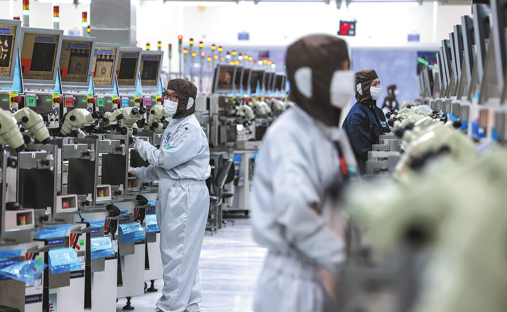
To remain competitive, ASEAN economies need to shift toward higher-value production and adopt advanced technologies, reducing reliance on commodity exports and simple assembly work.
The region should also embrace digital trade and e-commerce as vital channels, enabling micro, small and medium-sized enterprises to reach global markets at lower cost. Thailand, for instance, has set a target of expanding its e-commerce market to $60 billion, with the sector growing 19 percent last year alone.
Unlocking domestic markets by addressing regulatory barriers is key to stimulating consumption from a growing middle class. Supporting micro, small, and medium-sized enterprises, the backbone of many ASEAN economies, by providing better access to capital will further drive local economic development.
Investing in upskilling and reskilling the workforce is essential to preparing for new, technology-driven, and environmentally friendly industries. This will ensure the region's labor force remains competitive and adaptable in a rapidly evolving global market.
A crucial takeaway from the UNDP report is that ASEAN is not just increasing intra-regional trade but is actively creating a robust regional supply chain. Notably, the region is seeing a rise in "forward integration", where intermediate goods are exported to neighboring countries to be used in the final manufacturing process.
In 2023, over half of the goods traded within ASEAN were raw materials or components used by neighboring countries to produce final products, or goods made from materials already sourced from within the region. This is particularly significant in countries like Brunei, Thailand, and Malaysia, where exports of this type account for more than 60 percent of total exports.
The Nation, Thailand










