



Hidden history of Napa's Chinese workers remembered









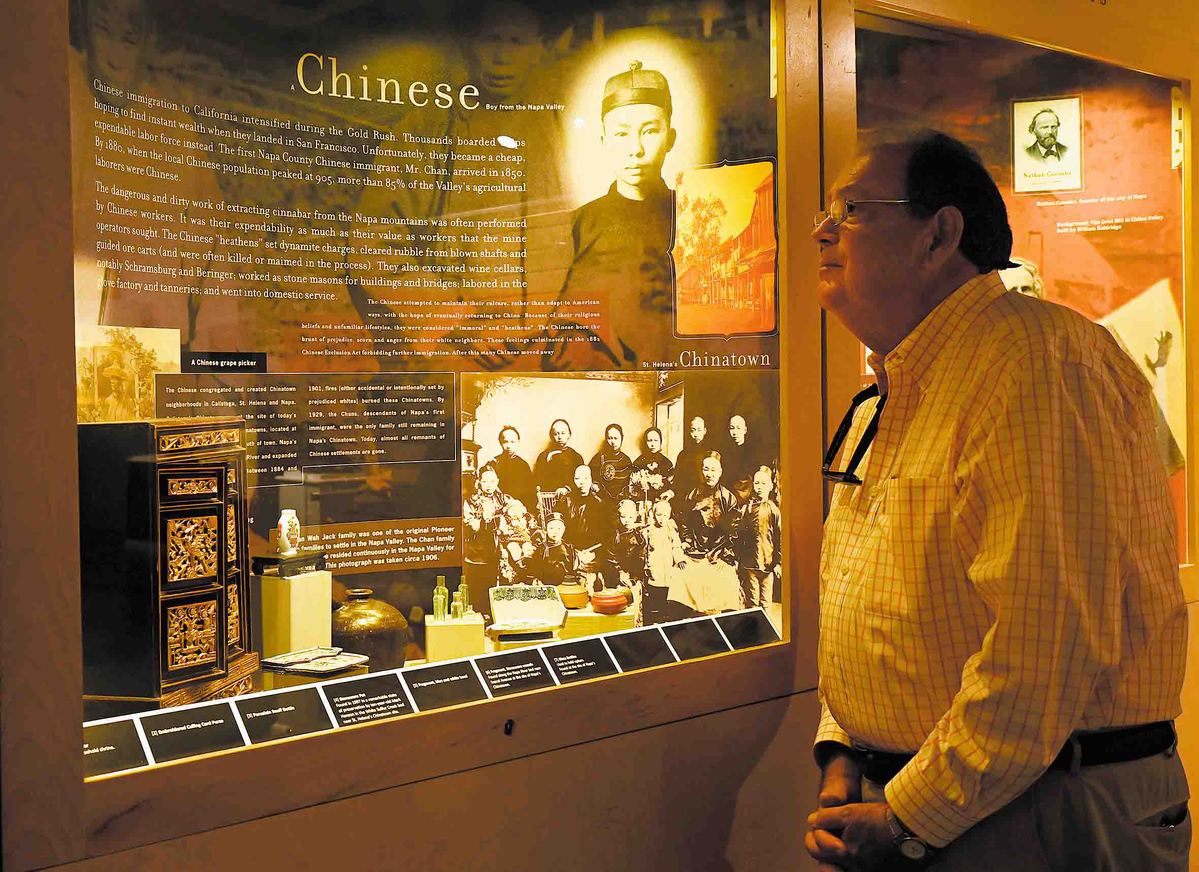
At the corner of the lower-level gallery of Napa Valley Museum stands a modest showcase displaying a stoneware pot, fragments of vessels, an embroidered purse, and other household items.
These humble artifacts tell the stories of Chinese workers from more than a century ago who toiled in what is now a world-class wine region but were largely erased from history.
The museum in Yountville, California, dedicates this exhibit to Chinese workers in Napa Valley, featuring artifacts mostly found along riverbeds at the sites of former Chinatowns in Napa and St Helena.
Amid the harvesting season, Napa Valley reaches peak tourism. While Yountville is known for its Michelin-starred restaurants and high concentration of tasting rooms, most tourists are not aware of this history.
"Chinese immigrants were instrumental in creating what this valley is today. These are, in some ways, hidden histories," Gabe Ely, gallery assistant at the museum, told China Daily.
"Not a lot of people seem to be aware of this. That's why we have this specific case showing items from their lives and how they tied into the early history of this area," he said.
California's Napa Valley is one of the most famous wine-growing regions in the world. Home to more than 400 wineries, the region draws almost 4 million visitors a year and contributes over $34 billion to the US economy each year, according to the Napa County Historical Society.
Chinese workers formed the backbone of the Napa Valley workforce, especially from the 1870s to 1900, playing a crucial role in establishing the wine industry.
They became the main labor force for the commercial wine industry that was just getting started in Napa around 1870. By the 1880s, they comprised 80 percent of the labor force working in the vineyards.
Chinese workers dug tunnels at wineries, cleared fields, planted vines, and performed other backbreaking work in the early years of the Napa wine industry.
They powered a significant portion of the Napa Valley economy. They worked not only in vineyards and wineries but also in quicksilver mines, on farms, for local railroads, as shopkeepers, hired laborers and domestic help, according to the Napa County Historical Society.
Despite their essential role in Napa Valley, the Chinese were hated, feared, and threatened by many locals, especially white men who felt well-paying jobs were being taken away from them.
These laborers faced the anti-Chinese movement of the 1880s, led by powerful white labor and political forces at the national, state and local levels. Once most of the Chinese laborers were finally driven out of the region around 1900, their homes and businesses were razed, and most of their contributions were largely forgotten.
Until recently, there were no monuments, plaques, or any other physical recognition of the Chinese workers.
"It's incredible seeing this exhibit at the Napa Valley Museum," David Read, executive director of the Yuba-Sutter Regional Arts Council, told China Daily, after viewing the exhibition.
Living in a diverse community north of California's capital Sacramento, Read said, "Once again, we're reminded that America was built on immigrant labor, and the Chinese made important contributions to what we enjoy in California today."
"Whether it was building the first Transcontinental Railroad or gold mining, all of that helped build the state of California. The value of immigrant populations to this country and California specifically is just unquestionably so important to who we are today as a state and as a nation," he said.
As many tourists visit the valley just to taste wine, Ely said he hoped they come for their special interests and leave with "a new wealth of information".
"It's always good to reflect and look back on the origins and really honor their contributions," he said. "That way, you're better connected to what you're enjoying."
liazhu@chinadailyusa.com










