



Asia-Pacific needs multilateralism, inclusivity









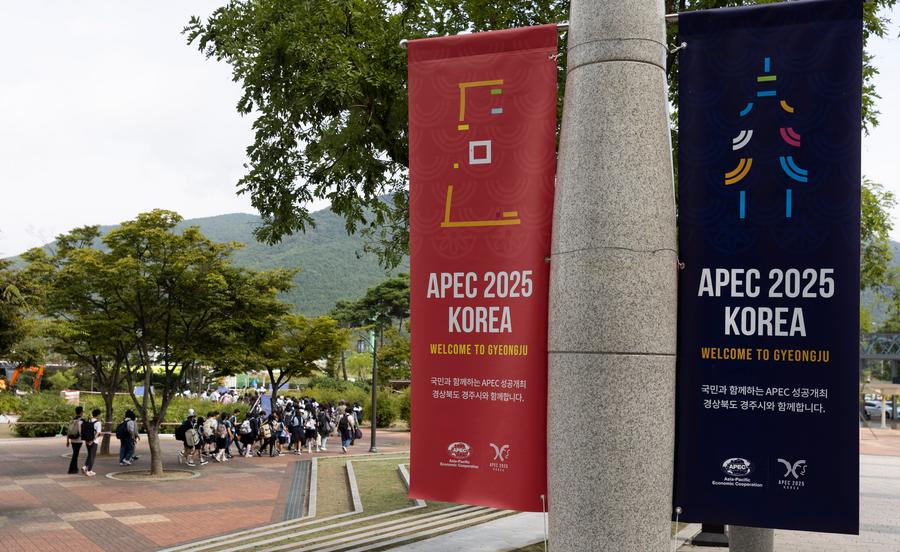
The United States was once a driving force behind Asia-Pacific cooperation. It was instrumental in elevating APEC from a ministerial-level dialogue to a leaders' meeting and hosted the inaugural APEC Economic Leaders' Meeting in Seattle in 1993.
At that time, the US was enjoying its "unipolar moment" as the world's sole superpower — championing globalization and reaping economic gains across the globe. Washington then regarded Asia-Pacific cooperation as an opportunity for its own economic growth and actively promoted regional trade liberalization and investment facilitation.
In the early 2000s, East Asian collaboration was gaining momentum — through frameworks such as the ASEAN+1, ASEAN+3, and trilateral cooperation among China, Japan, and the Republic of Korea.
The US had once explored the idea of establishing a Free Trade Area of the Asia-Pacific within APEC, which could boost regional growth. However, the previous US administrations shifted course as early as in 2009 to spearhead the Trans-Pacific Partnership negotiations. The excessively high standards in areas such as environmental and labor regulations hindered regional cooperation.
Later the US shifted from the "Asia-Pacific" to the "Indo-Pacific" narrative, sidelining established regional frameworks, with "Indo-Pacific" concept introduced in the 2017 APEC CEO meeting in Da Nang, Vietnam and elaborated in official strategy documents in following years.
Through the use of the geopolitical terminology of "Indo-Pacific" concept, the US appears intent on blurring the "Asia-Pacific "identity and pulling India into its strategic orbit. The moves to build small blocs, however, undermine effective regional collaboration.
Exclusionary blocs contradict the principle of "open regionalism". The Quadrilateral Security Dialogue and initiatives like the Blue Dot Network emerged, and hindered infrastructure cooperation in the Asia-Pacific region.
Former US president Joe Biden further securitized and politicized economic cooperation, establishing mechanisms such as the Chip 4 Alliance with Japan, and reinforcing minilateral formats like the QUAD, US-Japan-Philippines, AUKUS, and US-Japan-Australia-Philippines.
Through the "Indo-Pacific Economic Framework", the former Biden administration encouraged supply chains to "decouple" from China, destabilizing existing regional networks.
On the one hand, the current US administration demonstrates prudence in challenging such frameworks to protect domestic manufacturing. On the other hand, even key partners in the US' "Indo-Pacific Strategy" — Japan, the Republic of Korea, and India — have experienced pressure and tariff-related coercion.
Japan and the ROK were compelled to open their markets to US goods and pledged investments of $550 billion and $350 billion in the US, respectively. India was slapped with heavy tariffs for purchasing Russian oil. Southeast Asian nations such as the Philippines, Vietnam, and Indonesia have also been pushed to reduce tariffs and liberalize their markets. Tariffs as high as 40 percent on transshipped goods have dealt a severe blow to the regional trade relations.
An inclusive Asia-Pacific region benefits all participating economies, including the US. Rather than being "taken advantage of" in trade, the US actually gains from free trade, which enhances consumer livelihoods by providing access to a wider range of goods and services.
The US vows to be great again. To achieve that goal, it will be constructive for the US administration to move away from a "small blocs" mindset. Only when the world's largest economy works with Asia-Pacific partners to strengthen collaboration and promote development can the regional economies jointly build an open, dynamic, resilient, and peaceful Asia-Pacific community.

The views don't necessarily reflect those of China Daily.
If you have a specific expertise, or would like to share your thought about our stories, then send us your writings at opinion@chinadaily.com.cn, and comment@chinadaily.com.cn.


















