Deeper cooperation ahead










China will continue to share opportunities with the rest of the world and ASEAN could emerge as the primary beneficiary
Against the backdrop of complex global geopolitical shifts and ongoing supply chain restructuring, the economic and trade cooperation between China and the Association of Southeast Asian Nations has emerged as a stable anchor for regional integration. The Recommendations of the 20th Central Committee of the Communist Party of China for Formulating the 15th Five-Year Plan (2026-30) for National Economic and Social Development emphasize advancing "high-standard opening-up" and "mutually beneficial cooperation", which coincides with the China-ASEAN Free Trade Area 3.0 Upgrade Protocol. This dual policy dividend will propel China-ASEAN economic relations into a new era of expanded opportunities and deeper cooperation.
Amid the changing global situation, the pursuit of high-standard opening-up is an inevitable choice for China to foster a new development paradigm through Chinese modernization. A core orientation of China's upgraded opening-up strategy under the 15th Five-Year Plan is the shift from "border-level opening" to "institutional opening" centered on rule integration. Guided by this institutional opening-up agenda, China will leverage its super-large domestic market advantage to proactively integrate global resources, driving its transformation from a global factory to a global market. This strategic pivot not only responds to the new dynamics of global industry and value chain restructuring, but also reinforces the 15th Five-Year Plan's focus on fostering a more open, inclusive and resilient development model for China.
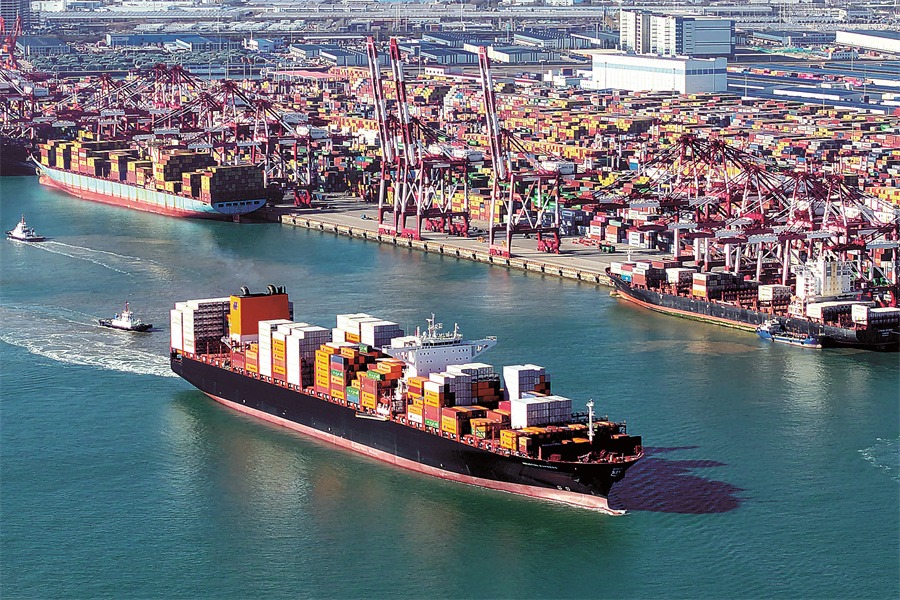
Since China and ASEAN officially launched the construction of their free trade area in 2002, ASEAN has played an increasingly pivotal role in China's opening-up. As both economies have achieved rapid development, intra-regional infrastructure connectivity has continued to advance while cross-border trade and investment have grown increasingly vibrant. Bilateral trade volume reached $982.3 billion in 2024, a 17-fold increase since 2002, with the two sides remaining each other's top trading partners for consecutive years. Cumulative two-way investment exceeded $450 billion by July 2025, with China becoming ASEAN's second-largest source of foreign direct investment.
As China and ASEAN deepen their high-quality cooperation under the framework of the Belt and Road Initiative, landmark infrastructure projects such as the China-Laos Railway have been successfully put into operation, driving continuous improvement in the "hard connectivity" between the two sides. This enhanced physical connectivity has injected strong momentum into "soft connectivity" advancements, including policy coordination, rule alignment and institutional synergy.
With closer economic ties, the integration of China-ASEAN value chains has reached new depths — production factors such as capital, technology, labor and resources flow more freely across borders — fostering seamless collaboration from upstream R&D to downstream manufacturing and distribution. Today, the China-ASEAN Free Trade Area has evolved into a vibrant and high-potential economic powerhouse in the Asia-Pacific region, characterized by prosperous trade, active investment and robust development vitality, standing as a cornerstone of regional economic stability and growth.
As ASEAN has emerged as a critical intersection linking China's domestic circulation and international circulation, the opening-up agenda for the 15th Five-Year Plan period will further unlock unprecedented opportunities in emerging fields, with the digital and green economies emerging as dual growth engines.
First, in the digital sphere, the emphasis for the next five years on advancing the Digital China Initiative and fostering an integrated national data market dovetails with CAFTA 3.0's provisions on tariff exemption for electronic transmissions and cross-border data flow guarantees. Cross-border e-commerce has already demonstrated robust growth, with the transaction volume reaching $336.3 billion in 2023, a year-on-year increase of 15.6 percent. Joint projects in 5G infrastructure and artificial intelligence are further deepening digital connectivity between China and ASEAN.
Second, green cooperation represents another promising frontier. The recommendations for the 15th Five-Year Plan explicitly call for accelerating green transition across all sectors and developing a new type of energy system, which aligns with ASEAN's urgent need for low-carbon development. Chinese enterprises have made significant inroads in ASEAN's new energy market. For example, BYD has established an electric vehicle production base in Thailand, while CATL is building a battery manufacturing facility in Indonesia. These flagship investments are not only supporting ASEAN's energy transition, but also creating regional industrial clusters, as outlined in the plan's strategy to guide the overseas distribution of industry and supply chains in a rational, orderly manner.
Third, rule integration under the proposed 15th Five-Year Plan framework will generate substantial institutional dividends for China-ASEAN cooperation. The plan's focus on "standard-based guidance and internationalization" will enable concrete progress in the mutual recognition of standards for key sectors such as EVs and electronics, further reducing enterprise compliance costs. Transnational trade facilitation has been significantly enhanced through the promotion of "smart customs" and "single window" systems. These measures directly implement the requirement to "promote unimpeded domestic and international economic flows".
Fourth, strengthening supply chain resilience has become a shared priority, and the recommendations provide a clear road map for cooperation in this sector. The commitment to improving the modern integrated transportation system and enhancing the diversity and resilience of international transportation routes can further boost connectivity projects such as the China-Thailand railway and China-Vietnam railway. CAFTA 3.0 features a dedicated supply chain chapter. By establishing early warning and emergency response mechanisms, it will be able to ensure the stable flow of key commodities amid global uncertainties.
The 15th Five-Year Plan will mark a new crucial stage in advancing China's centenary goal through Chinese modernization, with high-standard opening-up as a core pillar, among which ASEAN stands out as a key priority. China's commitment to higher-standard opening-up will not only elevate regional economic integration to new heights but also present a pivotal opportunity for ASEAN countries to accelerate industrialization and socioeconomic modernization.
To seize these opportunities, China and ASEAN should deepen integrated cooperation in trade, investment and emerging sectors. China will expand market access and optimize institutional arrangements, creating smoother channels for enterprises on both sides to connect and integrate into regional industry and value chains. This will enable China's super-large market advantage to better benefit all ASEAN nations while pushing both parties' opening-up to broader fields and higher levels. Leveraging China's strength as the economy with the most complete industrial categories, the two sides can enhance collaboration in industrial supporting facilities and manufacturing capacity, providing robust support for ASEAN's development aspirations. Strengthening economic and trade cooperation under the frameworks of the CAFTA 3.0 and the Regional Comprehensive Economic Partnership will further facilitate enterprises from both China and ASEAN accessing each other's markets and better integrating into regional industry and value chains.
As the recommendations emphasize, China will continue to share opportunities with the rest of the world and promote common prosperity. ASEAN will emerge as a primary beneficiary of China's high-standard opening-up in the new era. The path ahead requires sustained commitment to mutual understanding and win-win collaboration, as the two sides write a new chapter in their "diamond decade" of cooperation and demonstrate that open regionalism is the most effective way to address the challenges of our time.
The author is an assistant research fellow at the Institute of Ethnology and Anthropology at the Chinese Academy of Social Sciences and the former secretary-general of the Global Center for Mekong Studies (China Center). The author contributed this article to China Watch, a think tank powered by China Daily.
The views do not necessarily reflect those of China Daily.
Contact the editor at editor@chinawatch.cn.