



Is China overreacting to Takaichi's erroneous remarks on Taiwan?









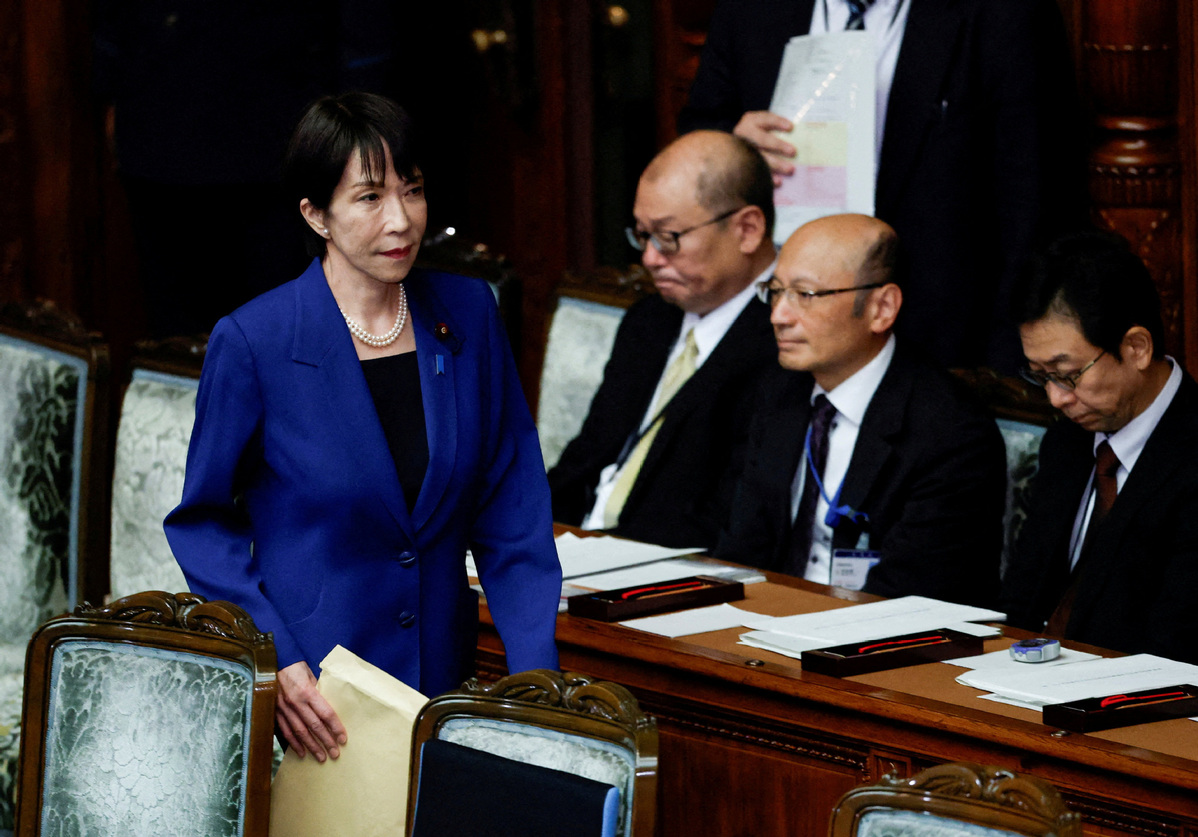
Since Japanese Prime Minister Sanae Takaichi wrongfully claimed in early November that a "Taiwan contingency" could constitute a so-called "survival-threatening situation" for Japan, she has provoked a diplomatic crisis with China.
China's response has been firm and multifaceted: issuing serious protests, summoning the Japanese ambassador, and sending letters to the UN Secretary-General, among others.
Certain Western media outlets, in disregard of the facts and international law, have accused Beijing of overreacting or even "bullying" Japan. But is China's response to the Japanese leader's erroneous remarks truly disproportionate? Anyone who understands the serious risks and political calculations underlying Takaichi's comments would conclude with a resounding "No."
From a legal and historical perspective, Takaichi's remarks are deeply alarming. China's recovery of Taiwan was a key outcome of World War II and forms an integral part of the post-war international order. Legally binding instruments, including the 1943 Cairo Declaration, the 1945 Potsdam Proclamation, and Japan's 1945 Instrument of Surrender, affirm China's sovereignty over Taiwan.
The 1972 Sino-Japanese Joint Statement states that the Government of Japan recognizes the Government of the People's Republic of China as the sole legal Government of China. Japan reaffirmed this stance in subsequent documents, including the 1978 Sino-Japanese Treaty of Peace and Friendship. By any measure, Takaichi's remarks constitute a serious breach of Japan's commitments and of international law.
As experts pointed out, Takaichi's provocative remarks on Taiwan mark the first time since Japan's defeat in 1945 that a Japanese leader has advocated in an official setting the notion that "a contingency for Taiwan is a contingency for Japan" and linked it to the exercise of the right of collective self-defense. It is also the first time Japan has expressed ambitions to intervene militarily in the Taiwan question and the first time Japan has issued a threat of force against China, openly challenging China's core interests.
This year marks the 80th anniversary of the victory of the Chinese People's War of Resistance Against Japanese Aggression. Since modern times, no country has inflicted greater suffering on China than Japan: over 35 million Chinese soldiers and civilians perished during Japan's 14-year invasion, and its half-century colonial rule in Taiwan left behind countless atrocities.
Instead of reflecting on this history, Takaichi's remarks reveal a nostalgia for Japan's colonial past and an attempt to weaponize the Taiwan question against China. For the Chinese public, her comments are a blatant provocation.
From repeated visits to the Yasukuni Shrine -- where 14 Class-A war criminals are enshrined -- to reckless claims that "a Taiwan contingency is a Japan contingency," the root cause of tensions in China-Japan relations is not any supposed Chinese reluctance to move beyond history, but Japan's blatant evasion of historical responsibility.
Japan has long aspired to become a so-called "normal country" with military assets capable of being deployed abroad. Right-wing forces seek to stoke public anxiety by exaggerating external threats -- particularly from China -- to justify expanding Japan's military capabilities.
The Japanese administration also appears eager to divert attention from domestic challenges, including minority rule, shrinking support for Takaichi's Liberal Democratic Party and dissatisfaction with governance, by staging a confrontational foreign policy performance. Japan's political landscape has seen a surge in right-wing popularity in recent years. The rise of the Sanseito Party is a telling example. For the Liberal Democratic Party, being "tough on China" is a political lifeline.
China has thus far responded with a set of non-military measures to defend its lawful rights and core interests. Through these coordinated actions, Beijing is making clear to the world that the Taiwan question is an internal affair, one that bears directly on China's sovereignty, territorial integrity and core interests.
Moreover, China's countermeasures serve as a clear and firm response to any attempt to undermine the one-China principle, preventing hostile forces from probing Beijing's red line on the Taiwan question through "salami-slicing" tactics.
More broadly, these actions are essential to reinforcing a correct international understanding of China's resolve to safeguard its core interests. The world should heed an unmistakable message from Beijing: the Taiwan question is China's red line and the first red line, and it must not be crossed.





