Land supply key to pushing recycling trade
Official urges govt to clear obstacles in development of circular economy









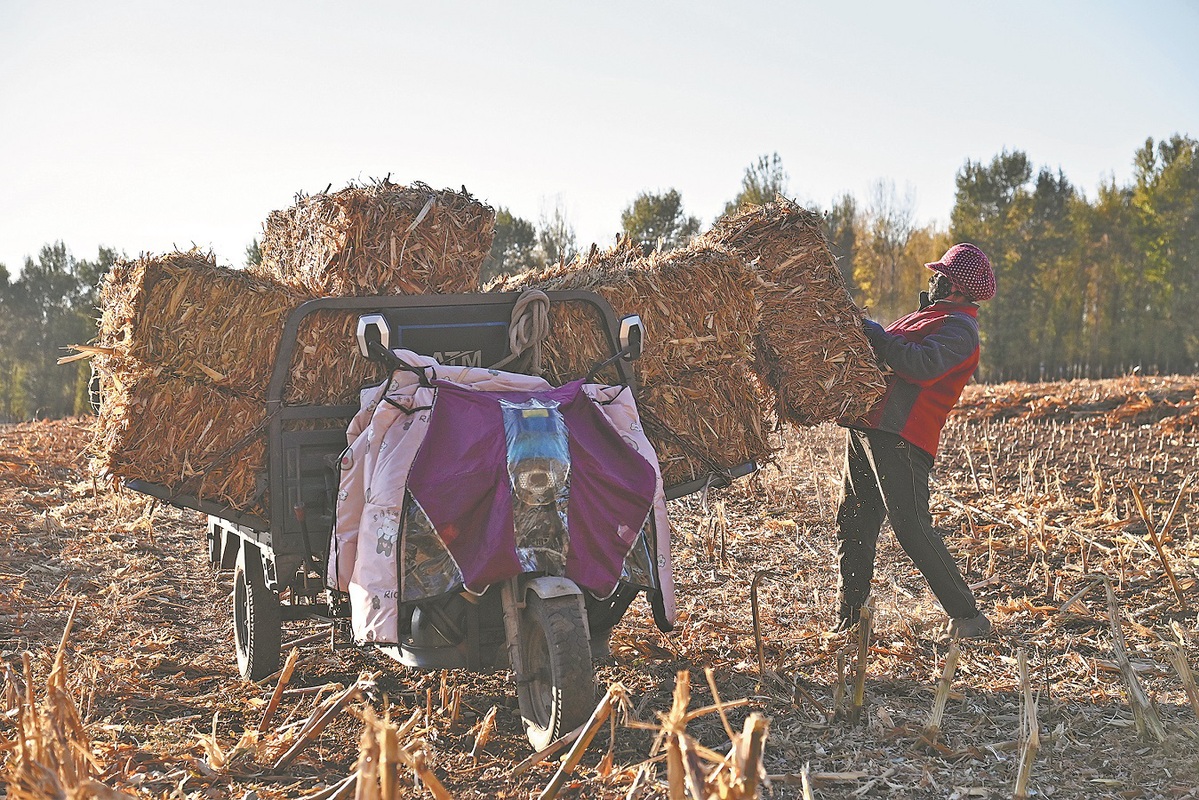
A senior national legislator has urged the government to step up efforts to guarantee land supply for recycling facilities, promote eco-design and foster a green consumer market to further advance China's circular economy.
Addressing an ongoing session of the Standing Committee of the National People's Congress on Monday, Wang Dongming, vice-chairman of the committee, said the country has made notable progress in developing a circular economy since the Circular Economy Promotion Law took effect in 2009.
His remarks were based on law enforcement inspections conducted by the committee from July to October, as well as similar inspections carried out by standing committees of provincial-level people's congresses in six regions, including Hunan and Guizhou provinces.
In 2024, China recycled more than 400 million metric tons of 10 major categories of renewable resources, Wang said. About 70 percent was waste paper and 21 percent scrap steel.
The total output value of the resource recycling industry exceeded 4 trillion yuan ($569 billion) in 2024, providing employment for more than 35 million people, he added.
Wang said the country has strengthened incentive policies to promote resource recycling by increasing financial support, allocating more than 117 billion yuan during the 14th Five-Year Plan (2021-25) period.
Green procurement policies have also been reinforced, with energy-saving and environmentally friendly products accounting for more than 85 percent of government purchases within their respective categories, he said.
Despite the progress, Wang said several challenges continue to constrain the circular economy's further development.
Although the Circular Economy Promotion Law includes provisions for establishing a recycling system, land use for renewable resource infrastructure remains inadequately guaranteed, making it difficult to secure suitable sites for recycling facilities and collection stations, he said.
Under the law, local governments are required to rationally plan waste recycling outlets and trading markets in line with urban and rural planning. They are also tasked with supporting recycling enterprises and other organizations by facilitating the collection, storage, transportation and information exchange of waste materials.
Wang said the collection system for low-value recyclables such as glass, ceramics, textiles and waste agricultural film remains underdeveloped.
Current recycling efforts are still concentrated on high-value materials such as scrap metals, end-of-life vehicles, used power batteries and discarded electronics, where markets are more mature and profit margins higher, he said.
He also cited obstacles related to product design, as well as certification and pricing of recycled materials.
"Eco-design principles have not been widely adopted across industries, leading to a mismatch between upstream manufacturing and downstream recycling," Wang said. Without a sound certification system for recycled materials and effective mechanisms to encourage their use, current pricing fails to reflect their environmental value, he added.
Wang called for a series of measures to address these issues.
Local governments should formulate circular economy development plans aligned with territorial spatial planning, designate land for recycling facilities as public infrastructure and ensure adequate land supply, he said.
The industrial sector should build a circular industrial chain from eco-design to recycling by improving standards for green design, manufacturing and packaging, he said. "The quality standards, labeling and certification systems for remanufactured products and recycled materials should be further refined," he added.
Wang also urged stronger measures to promote the use of recycled materials, including policies that guide automobile and electronics manufacturers toward higher recycled content in their products.
"We must also cultivate a green consumer market, promote green public procurement, and ensure that prices for recycled resources fully reflect market dynamics, resource scarcity and the costs of green, low-carbon development," he said.





- 17 rescued Filipino crew members transferred
- Team of Chinese, US scientists identifies key tumor cell state driving cancer growth, drug resistance
- China successfully conducts first metal 3D printing experiment in space
- Debt-ridden children's hospital gains strong public support, but future still uncertain
- China hands over 17 Filipino sailors from shipwreck to Philippines
- Topography, extreme rainfall causes of Guizhou landslide, report says