Globalization reconfigured, not abandoned
China moving up value chain while remaining pivotal node in production









As geopolitical tensions, climate imperatives and digital disruptions reshape the worldwide economic landscape, many have argued that globalization is in retreat. Yet such a view misses the deeper transformation underway, a senior trade expert told China Daily in an exclusive interview.
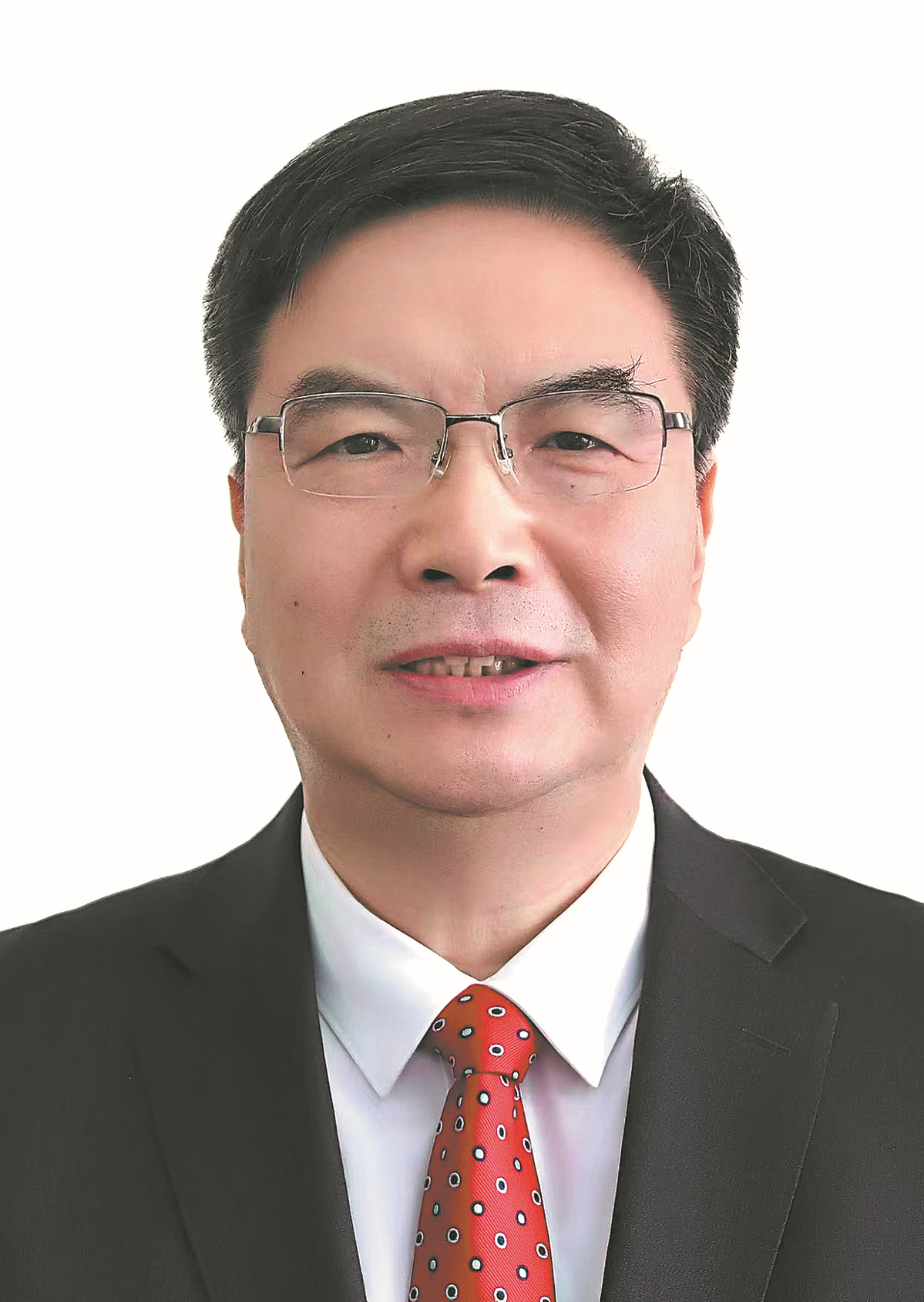
"Globalization is not collapsing; it is being reorganized. What we are witnessing is not deglobalization, but reconfiguration," said Zhao Zhongxiu, president of the University of International Business and Economics.
Moreover, China is moving up the value chain while remaining a pivotal node in global production, against the background of rising protectionism in some countries, Zhao said, citing key findings from the Global Value Chain Development Report 2025: The Re-wiring of Global Value Chains in a Changing Global Economy.
The report was released by UIBE in collaboration with the Asian Development Bank, the Institute of Developing Economies — the Japan External Trade Organization, the World Economic Forum and the World Trade Organization earlier this month in Beijing, Geneva and Washington, DC.
He explained that global value chains account for 46.3 percent of global trade, only slightly below their recent peak level of 48 percent in 2022, and are adapting to a new era defined not by efficiency alone, but by resilience, sustainability and strategic security.
One of the most visible shifts is the geographic repositioning of production networks. While Asia, Europe and North America remain core hubs, Zhao called attention to a rise in "connector economies" such as Vietnam, Mexico, Poland and Turkiye.
"These countries increasingly serve as intermediaries, enabling trade flows even between rival blocs," he said.
Simultaneously, global value chains are becoming more service-oriented and digitalized. Services now surpass goods in global value chain participation, with value-added services like design, logistics and digitalized services accounting for over one-third of content embedded in goods exports.
"Modern competitiveness is driven more by services and digital functions than by physical assembly," Zhao said, adding that environmental pressures are also rewiring supply chains.
Moreover, he stressed the proliferation of "Targeted Trade Deals" (TTDs), as there were over 180 sector-specific agreements signed between 2021 and 2024, focusing on digital trade, data governance and critical minerals rather than broad tariff cuts.
"These reflect pragmatic cooperation where comprehensive multilateral talks have become difficult," Zhao said.
Industrial policy, too, has returned with force globally. Zhao emphasized that in an interdependent global value chain world, such policies generate cross-border spillovers.
"Well-designed policies can foster learning and upgrading, while poorly coordinated ones risk triggering subsidy races and trade tensions. "The solution lies not in rejecting industrial policy, but in governing it better through transparency and international dialogue, he added.
As for China, Zhao said the country remains a central hub in global manufacturing and increasingly in services and digital trade, while it strengthens domestic value chains, invests in green technologies, and expands cooperation through regional and sectoral frameworks.
"China's experience shows that openness and domestic capability building are not contradictory," he said.
"By investing in infrastructure, skills, innovation and institutional reform, China has been able to integrate deeply into global value chains while upgrading its position. This offers valuable lessons for other developing economies."
For example, he said, in 2023, China produced nearly 77 percent of the world's electric vehicles — a dramatic reversal from the internal combustion engine era dominated by the United States, Germany and Japan.
This leadership stems from "strategic industrial policy, massive research and development investment, and strong government support for infrastructure," Zhao said, highlighting that at the industry level, one of the critical drivers behind China's leadership in EV production is its ability to scale quickly and integrate vertically across the supply chain, from battery production to vehicle manufacturing.
Robert Koopman, former chief economist at the WTO and a professor at American University, also said China has made many important and long-lasting contributions to the global trading system.
Such contributions include the country's ability to upgrade production to meet demand from markets worldwide and to set an example to other countries by demonstrating how global trade can be leveraged to accelerate domestic economic development, Koopman said.
One example comes from Ningbo Jingwei Systemtechnik Ltd in Zhejiang province. The IoT-enabled intelligent cutting machines it produces, dubbed "industrial tailors" by overseas clients, can help local textile manufacturers accelerate digital transformation.
The equipment integrates nonstandard customized design with standard modular components. It automates the entire process from design import to finished product output, said Zheng Zhaoze, the company's deputy general manager.
"The system could improve production efficiency by 300 percent and increase material utilization to over 90 percent," Zheng said, noting that the company now serves more than 30,000 clients worldwide, with export revenue in the first 11 months of this year reaching 120 million yuan ($17.17 million).
In fact, a growing number of enterprises in China are turning to technological innovation and high-end manufacturing to strengthen their global competitiveness, as the country's foreign trade continues to evolve toward higher value and greener output.
Exports of mechanical and electrical products reached 14.89 trillion yuan during the January-November period, up 8.8 percent year-on-year and accounting for 60.9 percent of the nation's total exports, said the General Administration of Customs.
Looking ahead, Zhao urged pragmatic optimism to advance healthy development of global value chains.
"The goal should be a globalization that is not only efficient, but also inclusive, resilient and sustainable," he said, adding that this requires expanding access to finance and technology, diversifying supply networks, and aligning trade, industrial and climate policies.
"Above all, we need dialogue and cooperation. A multipronged approach, encompassing improved infrastructure, robust institutional support and upgraded human capital, is fundamental to the healthy and orderly advancement of the global value chains."
Wang Yu contributed to this story.
Contact the writers at liuzhihua@chinadaily.com.cn