Takaichi's election gamble puts self-interest above Japan's future: China Daily editorial









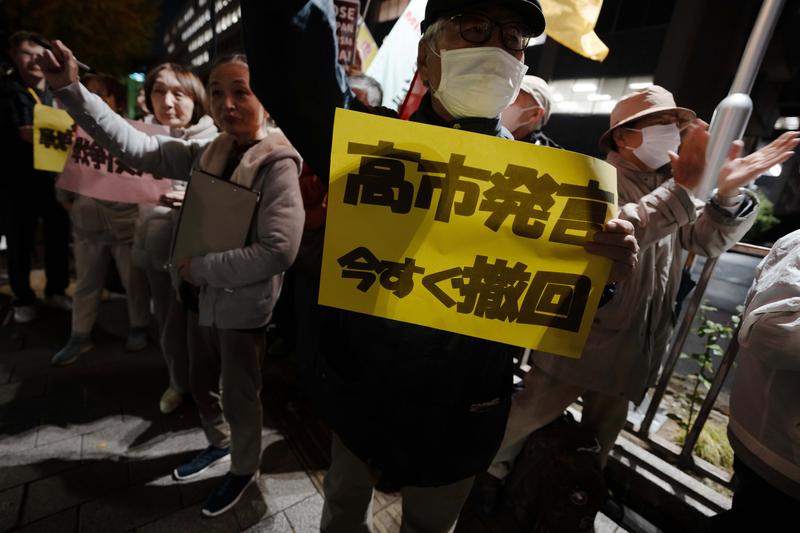
Since taking office, Japanese Prime Minister Sanae Takaichi has repeatedly stressed that her priority lies in economic management. So Tokyo's portrayal of recent moves to test the waters for a snap election as a matter of economic timing or legislative convenience may seem reasonable. Yet a closer look suggests that such a move is essentially being driven by her government's chasing of support to help it weather a series of troubles that are of its own making only three months after taking power.
Official Japanese data show why such rhetoric resonates domestically: consumer prices excluding fresh food rose around three percent year-on-year in 2025, while real wages continued to fall, eroding household purchasing power. The yen's prolonged weakness, lingering near multi-decade lows, has further amplified imported inflation and financial anxiety. These pressures form the social backdrop against which timing for an election is being weighed.
Yet economics alone cannot explain the government's haste. Japan's structural malaise, including decades of low growth and public debt exceeding 260 percent of GDP, was not created under Takaichi and cannot be fixed quickly. Indeed, an early election risks delaying passage of the fiscal 2026 budget, potentially undermining the anti-inflation measures she claims to be prioritizing.
The real driver for the move lies in political self-preservation amid the mounting diplomatic and security fallout following Takaichi's remarks in the Diet on Nov 7 concerning the Taiwan question. By openly hinting at military intervention and refusing to retract her words, she crossed China's red line and destabilized China-Japan relations. This was not a slip of the tongue, but a deliberate signal of confrontation, as a consequence, bilateral diplomatic relations have frozen, injecting uncertainty into trade, investment and regional stability.
China is among Japan's largest trading partners, with bilateral trade exceeding $300 billion annually. It is also a major source of tourists and supply-chain connectivity. Sustained tension threatens Japan's exports, inbound tourism and corporate confidence, eroding one of the few engines supporting Japan's fragile recovery. The longer the freeze persists, the higher the economic cost.
Simultaneously, Takaichi is accelerating remilitarization. Her government is pushing bills to expand intelligence powers, revise security laws and lock in defense spending at about 2 percent of GDP, two years ahead of schedule. This undermines the country's constitutional restraints on militarization, heightens regional tensions, and puts further pressure on Japan's strained public finances. Combined with aggressive fiscal expansion and drastic tax cuts, it risks yen depreciation, rising bond yields and mortgaging Japan's future.
History offers a telling parallel. Former prime minister Shinzo Abe used snap polls to advance a right-wing agenda. While tactically effective, the legacy included polarization, fiscal distortion and unresolved vulnerabilities. Takaichi, his ideological heir, appears determined to replicate the method while ignoring the cost.
With her approval ratings still in the "honeymoon" period, Takaichi is racing to convert her public support into seats. The calculus is a snap election would strengthen her grip over the Liberal Democratic Party, subdue her junior partner, the Japan Innovation Party, and weaken opposition leverage in both houses. More critically, it would manufacture a mandate for hard-line security policies that the public does not fully endorse.
This calculation places political ambition above national welfare. By inflaming security tensions, disregarding public fear of war and portraying militarization as inevitability, Takaichi is acting not as a guardian of peace, but as a leader who normalizes confrontation. Her behavior bypasses consensus, sidelines deliberative mechanisms and pressures lawmakers to follow an increasingly arbitrary line.
The bid to concentrate power, weaken checks and rush through irreversible change serves a larger ambition: rewriting Japan's pacifist Constitution. A weaker economy, higher borrowing costs, strained diplomacy, and an unstable security environment will define the legacy of this gamble.
That a snap election is even contemplated so early reveals a government under pressure of its own making. Such a short-term tactic cannot mask long-term damage. Japan stands at a crossroads not of opportunity, but of consequence. Choosing political expediency over restraint risks steering the country toward a more divided, indebted and dangerous future.
To justify this course, Takaichi invokes leadership and decisiveness, but genuine leadership demands a sense of responsibility. The Japanese public seeks stability, livelihoods and peace, not ideological adventurism. A durable mandate arises from dialogue established trust, not a policy course fostered by election brinkmanship. If Japan is to navigate inflation, its aging population and growing global uncertainty, it requires sober governance, not military mobilization. History will judge whether this moment was used to steady the nation or to serve one leader's vain ambitions.
The choice remains clear for all sensible minds between prioritizing peace, prudence and people, or pursuing power, provocation and peril. The consequences will extend far beyond any single election cycle, shaping Japan's role in Asia and the world for decades to come. That responsibility cannot be escaped, postponed, or obscured forever.