Firing on all cylinders










The trade order is evolving into a decentralized web that promises to be more balanced, resilient and vibrant than the monolithic system it is replacing, a note from Davos 2026
Editor’s note: The world has undergone many changes and shocks in recent years. Enhanced dialogue between scholars from China and overseas is needed to build mutual understanding on many problems the world faces. For this purpose, the China Watch Institute of China Daily and the National Institute for Global Strategy, Chinese Academy of Social Sciences, jointly present this special column: The Global Strategic Dialogue, in which experts from China and abroad will offer insightful views, analysis and fresh perspectives on long-term strategic issues of global importance.
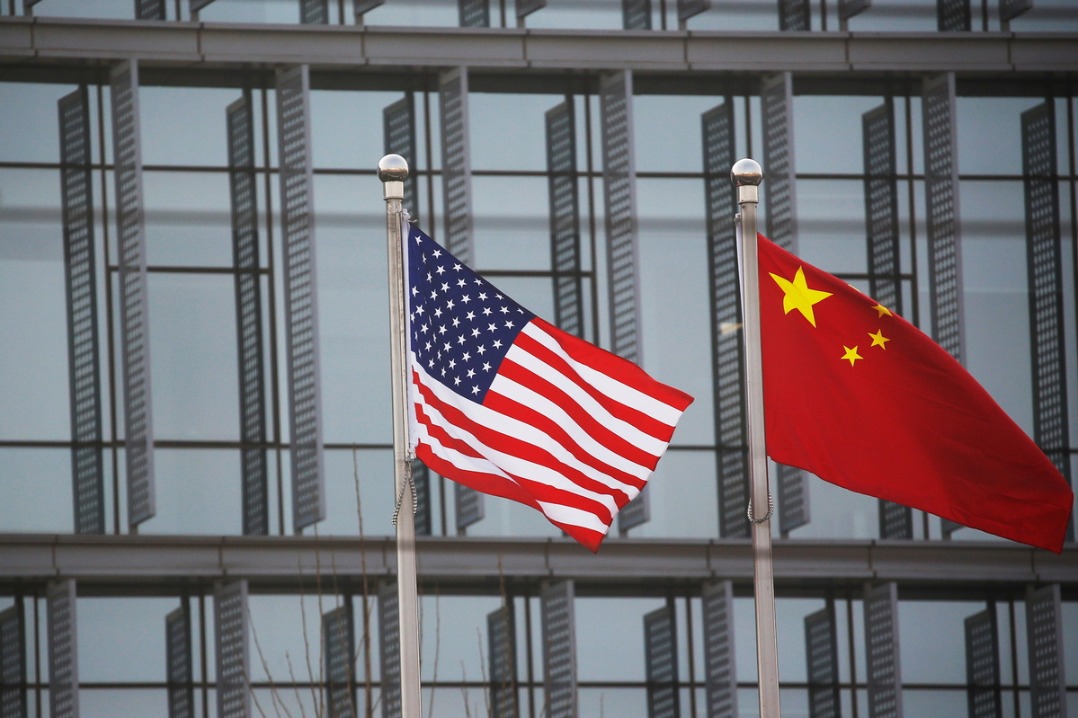
For nearly three decades, the engine of the global economy ran on a single, massive cylinder. It was a simple, powerful and ultimately precarious arrangement: The United States consumed, and China produced. This singular axis defined the era of hyper-globalization. It lifted millions out of poverty, filled shelves in the US with affordable goods and created a financial feedback loop that seemed unbreakable. But today, under the weight of geopolitical rivalry and a resurgence of US protectionism, that cylinder is misfiring.
The doomsayers are already writing obituaries for globalization. They point to Washington’s aggressive tariff regimes — the “US trade regression” — and the fracturing of diplomatic norms as signs of an impending dark age of autarky. However, this pessimistic view misses the forest for the burning tree. While the US-China axis is indeed fraying, the global economy is not collapsing. Instead, it is evolving. We are witnessing the birth of a multi-cylinder trading engine.
The narrative of “de-globalization” is fundamentally flawed because it assumes that the US is the only sun around which the economic planets revolve. As the US erects walls, the rest of the world is busy building bridges. The paralysis of the old order has inadvertently accelerated the diversification of supply chains and markets across Europe, Asia and the Global South. We are moving from a hub-and-spoke model, with the US at the center, to a distributed network where trade flows in every direction.
Once content to rely on the transatlantic alliance, the European Union has awakened to the necessity of strategic autonomy. The EU is aggressively pursuing trade agreements with Mercosur, the Southern Common Market, in South America, deepening ties with India, and refining its economic relationship with Southeast Asia. EU companies are not retreating; they are shifting production not back home, but to Vietnam, Mexico and North Africa, creating new nodes of industrial activity that are less susceptible to the whims of a single superpower.
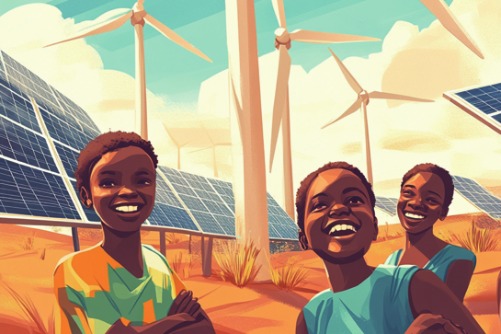
Similarly, China is pivoting with remarkable speed. Facing the headwinds of US tariffs and tech containment, China has doubled down on the Global South. The Belt and Road Initiative is maturing into a genuine infrastructure for non-Western trade. Chinese electric vehicles are flooding markets in Latin America; Chinese consumer electronics are ubiquitous in Africa. Trade between China and the developing world now eclipses its trade with the US and Europe combined. This is not a retreat from the world; it is an expansion into the parts of the world that were previously treated as economic afterthoughts.
The result of this reshuffling is a global economy that is beginning to fire on many cylinders, rather than just one. This multipolar trading system will be inherently fairer and more stable. In the old model, a financial crisis in the US could send shock waves through the entire system. In a multi-cylinder world, a slowdown in one region can be offset by growth in another. Canada, a member of the Canada-US-Mexico Agreement, suffered from a big decline in its exports to the US last year, but totally made up for that by exporting to other markets. If the US consumer pulls back, the rising middle classes of China, India, Indonesia and Nigeria will step in to fill the void.
Furthermore, this new structure promotes a healthier form of competition. The US-China axis created massive imbalances — huge trade deficits on one side, massive currency reserves on the other. A diversified web forces a correction of these imbalances. Countries in the Global South are no longer just extraction pits for raw materials; they are becoming processing hubs and consumer markets in their own right. Indonesia is demanding that its nickel be processed domestically; Mexico is becoming a high-tech manufacturing powerhouse. This adds value locally and spreads wealth more evenly across the world.
Of course, the transition is painful. The damages caused by the US tariffs are real. Tariffs hurt consumers, disrupt businesses and inject uncertainty into long-term planning. There will be friction, inefficiencies and higher costs in the short term as supply chains are untangled and rewoven. But we must distinguish between the pain of destruction and the pain of birth. The destruction of the old, unipolar trade model is creating the space for something new.
The next stage of globalization will be messier, certainly. It will lack the clear, albeit hegemonic, leadership of the post-Cold War era. But it will also be more democratic in its structure. No single nation will hold the kill switch for the global economy. By forced diversification, the world is inadvertently insulating itself against the volatility of US politics and geopolitical uncertainties.
The irony of the current moment is profound. The protectionist US policies designed to “Make America Great Again” by isolating itself may end up weakening it by making the rest of the world stronger by forcing it to adapt. As the US retreats into a fortress of tariffs, countries are discovering that they can trade, innovate and grow with each other. The engine of the future is not a single, roaring American V8, but a complex, hybrid network of smaller engines, humming in sync across continents. And that engine is just starting to rev up.

The author is the director of International Political Studies at the National Institute for Global Strategy at the Chinese Academy of Social Sciences.
The author contributed this article to China Watch, a think tank powered by China Daily. The views do not necessarily reflect those of China Daily.
Contact the editor at editor@chinawatch.cn.