



Nation achieves 20m EV charging facilities milestone









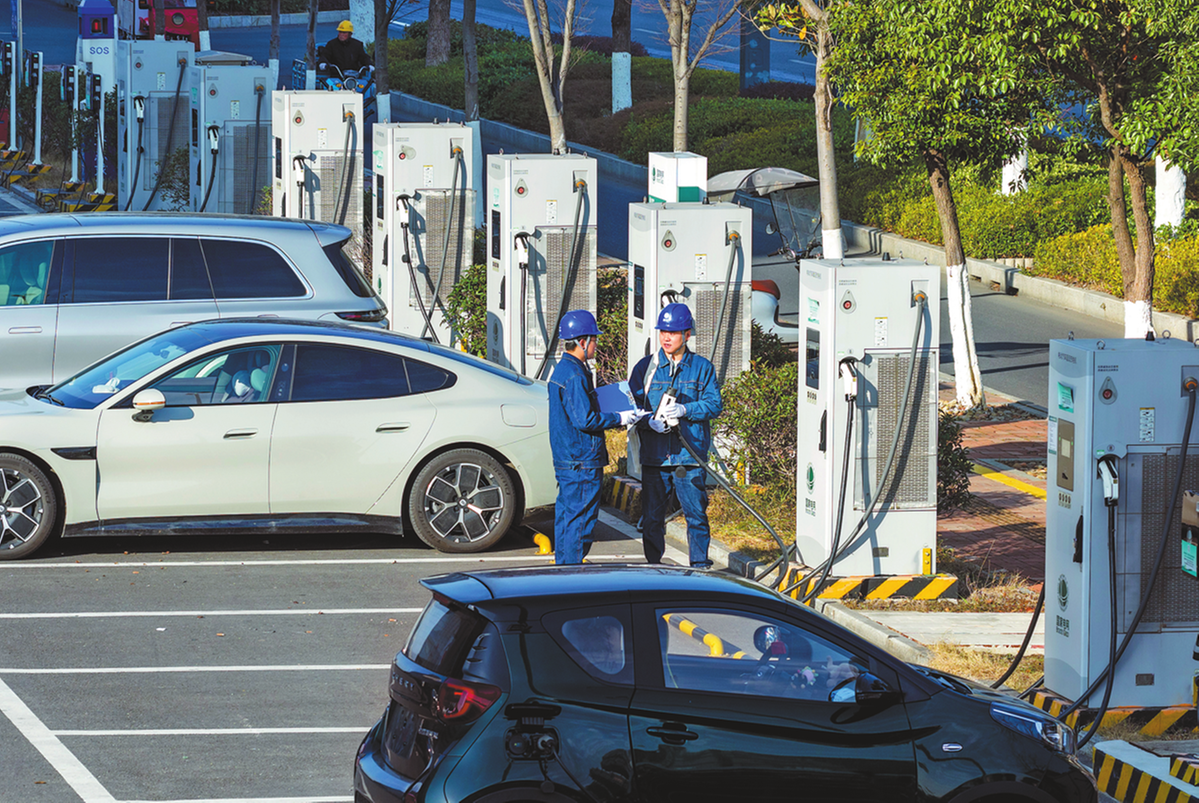
China reached a pivotal milestone in its green energy transition as its national electric vehicle charging network surpassed 20 million units by the end of 2025, according to the National Energy Administration. The country currently has the world's largest and most rapidly expanding EV charging infrastructure.
According to data released on Wednesday by the NEA, the total number of charging facilities has exceeded 20.09 million, supporting a fleet of more than 40 million new energy vehicles.
The scale of this achievement is underscored by the unprecedented acceleration of the build-out. While it took the country 13 years to install its first million piles, the most recent expansion from 10 million to 20 million units was completed in just 18 months, the NEA said.
The current network comprises 4.72 million public facilities and 15.38 million private units, reflecting a comprehensive strategy to integrate high-capacity urban hubs with residential charging convenience.
Analysts point out that China's lead in the electric vehicle sector has moved beyond mere vehicle manufacturing and into the creation of a nearly impenetrable infrastructure moat.
By removing "range anxiety" — the primary psychological barrier to EV adoption — China has created a self-sustaining cycle where infrastructure drives sales, and high sales volume justifies further infrastructure investment, they say.
"China is no longer just selling cars. It is selling a lifestyle of seamless mobility," said Lynn Zhang, managing director of consulting firm Kantar Insights.
"The sheer scale of the 20 million milestone represents a massive economic stimulus, as the build-out has catalyzed, and will continue catalyzing, investment across the supply chain — from smart meter manufacturers and power module suppliers, to energy storage firms," she said.
China has witnessed robust growth in EV charging infrastructure in recent years, mirroring the steady expansion of the country's new energy vehicle market.
By the end of 2027, China aims to establish a nationwide network of 28 million charging facilities, with public charging capacity surpassing 300 million kilowatts, sufficient to meet the demand of more than 80 million EVs, according to the country's three-year action plan jointly issued by the National Development and Reform Commission and other government agencies in October.
As part of its broader efforts to boost consumer confidence and accelerate EV adoption nationwide, the plan sets out measures to upgrade urban fast-charging networks, expedite charging facility upgrades in expressway service areas, and tackle rural charging infrastructure shortages.
The plan also emphasizes improving charging infrastructure in residential areas and scaling up private charging facilities.
Technological upgrades have advanced in tandem with physical expansion, said the NEA.
The average charging power of a single public unit has reached 46.5 kilowatts, a 33 percent increase in efficiency over the previous year, and that has significantly reduced wait times and improved the overall service experience for drivers, it said.
The reach of the network has also expanded into the nation's transit arteries and rural corners. Charging facilities now cover over 98 percent of China's highway service areas, supported by a total of 71,500 piles, figures released by the administration reveal.
From a technical standpoint, the most significant shift is the transition from "dumb" charging to vehicle-to-grid (V2G) and smart interaction. With 40 million NEVs on the road, China effectively has a massive, decentralized battery system capable of stabilizing the national power grid.
Zhu Gongshan, chairman of GCL (Group) Holdings Co Ltd, China's largest private power firm, said the country's efforts to step up V2G are also essential for grid stability by quickly increasing or decreasing power output (peak shaving) and providing backup power.
"Granting distributed energy resources equal market standing with traditional power generators will unleash their flexible potential, thereby accelerating the shift from policy-driven to market-driven growth," he said.
The company has been stepping up efforts to intensify research and development in V2G interaction technologies, fostering integration between energy storage and renewables.
Looking ahead, the NEA aims to further amplify service capacity and optimize the layout of the network to sustain the momentum of new energy vehicle consumption.
The administration said it will continue to refine the policy system and guide local governments to ensure that charging infrastructure remains a robust pillar of China's broader carbon neutrality goals.




















