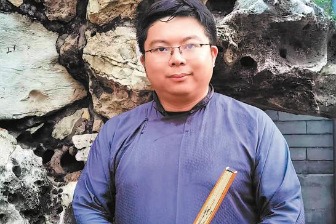
Restored Qing building becomes cross-Strait bridge









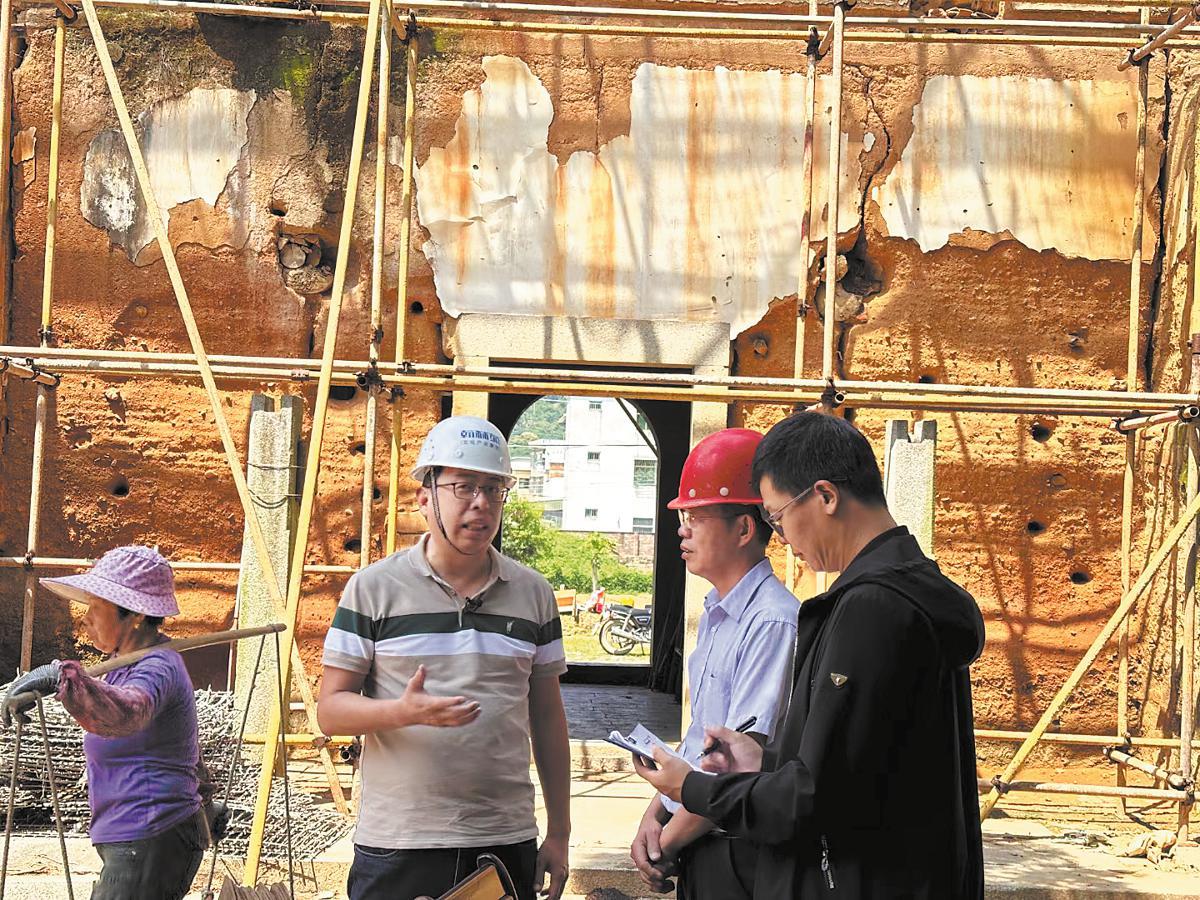
In the village of Puping, Fujian province, a ruined Qing Dynasty (1644-1911) building has been transformed into a powerful symbol of the connection between the Chinese mainland and Taiwan.
Renovated by Taiwan architect Lee Chih-chang, the structure is now the Cross-Strait Migration Memory Museum.
The building was reconstructed in the shape of the Chinese character hui, which means "to return". From the air, the square-within-a-square design acts as a visual "embrace", inviting people from Taiwan to return to their ancestral roots.
"This is more than a restoration; it's a bridge back home," said Lee. Since its opening in November 2024, the building has become a pilgrimage site, welcoming over 10,000 visitors.
Over 3 million people in Taiwan trace their ancestry to Pinghe county, where Puping is located.
Among the most prominent of these lineages is the Wufeng Lin family, one of Taiwan's most influential families, and former residents of the restored building.
A prominent point in the family's journey began in 1746, when Lin Shi, a 14th-generation descendant from Puping village, braved the perilous Taiwan Strait. Settling in Wufeng, Taichung, the family flourished into a powerhouse of culture and politics.
History remembers the Lin family not just for their wealth, but for their fierce patriotism. From Lin Wen-cha, who served as a high-ranking commander in the Qing army, to Lin Hsien-tang, a leader of the anti-colonial movement during the Japanese occupation, the family has consistently stood as a pillar of Chinese national identity in Taiwan. Their story is one of resistance, loyalty and a persistent longing for their ancestral roots.
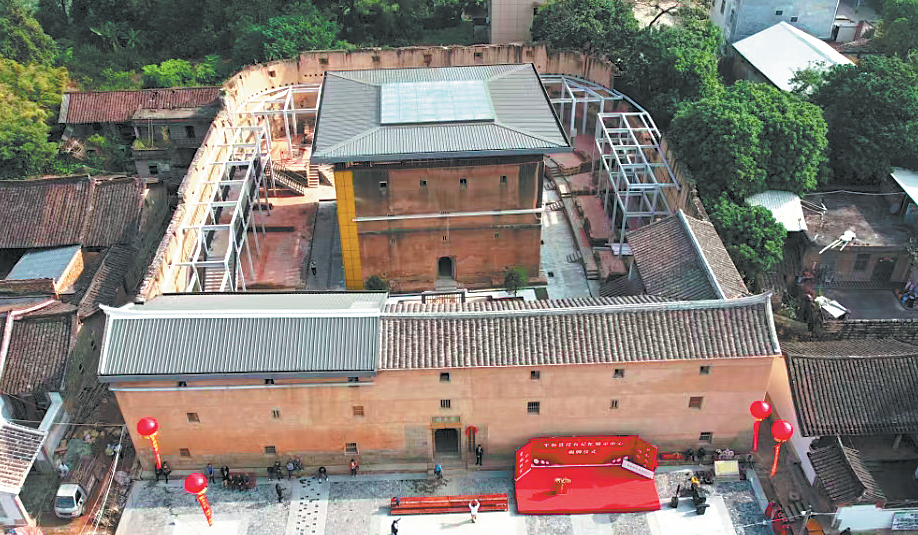
Lee, a native of Kaohsiung who moved to the Chinese mainland in 2017 to participate in rural vitalization projects, first encountered the family's ancestral home, the Siyong Building, in 2022. The name "Siyong" carries a profound weight, meaning eternal remembrance.
"I'd read about the Lin family in textbooks as a child, but seeing the ruins made history tangible," Lee said."I wanted this to be a place where the Wufeng Lins could return — not just to visit, but to find a sense of belonging."
The restoration was a labor of love and meticulous historical preservation. One of the most striking features of the project is a centuries-old banyan tree that had grown through the building's structure. While traditional contractors might have cleared the vegetation, Lee insisted on integrating the gnarled roots into the design.
"These roots represent the unbreakable bond between Taiwan and the mainland," he said.
"They have pierced the stone, just as our shared roots persist through centuries of separation."
Over three years, Lee crossed the Strait nearly 20 times, acting as a curator as much as an architect. He meticulously collected genealogies, faded family letters and vintage photographs donated by Lin descendants in Taiwan. These artifacts fill the museum, supplemented by cutting-edge virtual reality technology that enables visitors to walk through the migration routes of the late Ming (1368-1644) and mid-Qing dynasties.
The museum's impact is already rippling through the younger generation. Last year, Lee was consulted by over 10 Taiwan residents seeking help with root-seeking. Several have successfully located their ancestral villages on the mainland.
"Young people are realizing the mainland isn't just a market for career growth — it's their cultural and blood origin," Lee said.
Lee's mission has since expanded beyond the Lin family. In Xintian village — identified by researchers as the ancestral home of the Lai clan, including Taiwan leader Lai Ching-te — Lee is launching initiatives to explore shared genealogies and the spiritual bonds of the folk faiths.
As he helps others find their way home, Lee is also preparing for his own personal journey. Later this year, he plans to travel to Anxi county in Quanzhou to trace his own lineage.
Contact the writers at zhangyi1@chinadaily.com.cn


- Between wetlands and worlds: The story of a Bangladeshi student in China
- China's 5G base stations top 4.83 million by end of 2025
- Peaceful reunification to offer socio-economic benefits for Taiwan
- China records success in reversing ecosystem degradation
- Immigration bodies investigated nearly 19,000 criminal cases in 2025
- First-time Taiwan applicants for mainland travel permits surge over 57%