III. All-round Promotion of Energy Conservation
China is a country with a large population but relevant deficiency in resources. To attain sustainable use of energy resources and sustainable economic and social development, it must take the path of conserving energy.
China always puts energy conservation in the first place. In the early 1980s, it put forward the development policy of "stressing both development and saving, with priority given to saving." The Chinese government issued the Decision of the State Council on Strengthening Energy Conservation in 2006. It issued the Comprehensive Work Plan on Energy Conservation and Emission Reduction in 2007, making an all-round plan for the major sectors of energy consumption, such as industry, construction and transportation. China carried out ten key energy-conservation projects, including the innovation of coal-fueled industrial boilers (kilns), surplus heat and pressure utilization, energy saving in electrical motors, construction of energy-saving buildings, the green lighting project, and energy saving in government bodies, thus increasing its energy-conservation capacity to 340 million tons of standard coal. The Chinese government launched an energy conservation drive among 1,000 enterprises, resulting in a sharp decline in the comprehensive energy consumption index of key industries, and saving energy equivalent to 150 million tons of standard coal. China's energy consumption per unit of GDP dropped 19.1 percent during its 11th Five-Year Plan period (2006-2010).
In 2011, the State Council released the Comprehensive Work Plan on Energy Conservation and Emission Reduction During the 12th Five-Year Plan Period. This plan proposed the major objectives and key actions in the fields of energy conservation and emission reduction during this period. China aims to establish a "reverse coercion mechanism" through the dynamic integration of its efforts in lowering the intensity of energy consumption, reducing the total emissions of major pollutants, and rationally controlling total energy consumption. The "reverse coercion mechanism" helps promote the strategic restructuring of the economy, push forward the optimization of the industrial structure, and strengthen all aspects of energy utilization management in industry, construction, transportation, and public organizations, as well as in the fields of urban and rural construction and consumption, thus contributing to the building of a resource-conserving and environment-friendly society.
-- Optimization of the industrial structure. The country puts the adjustment of the industrial structure in the key place of its energy conservation strategy. It exercises strict control over low-level duplicated construction, and eliminates industries with high consumption and high pollutant emission, and backward productivity. China expedites the transformation of its traditional industries with advanced and applicable technology. It raises the entry threshold for processing trade, and promotes its transformation and upgrading. It improves the structure of foreign trade, and transforms its energy- and labor-intensive development mode into a capital- and technology-intensive one. It pushes forward the development of the service trades, fosters and develops emerging industries of strategic importance, and speeds up the formation of pioneer and pillar industries.
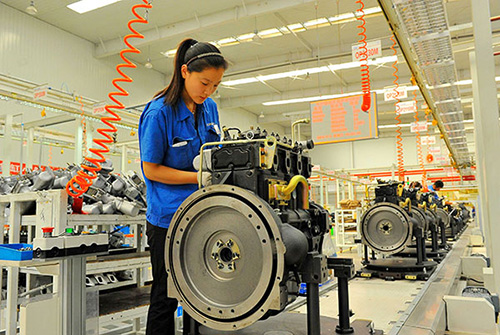
-- Strengthening energy conservation in industry. With its energy consumption taking up about 70 percent of China's total, industry is the major energy consumer in China. The state has drawn up catalog of advanced and applicable technologies in the fields of energy conservation and emission reduction for key industries such as iron and steel, petrochemicals, non-ferrous metals and building materials, for the purpose of eliminating backward technology, equipment and products, and developing energy-saving and high-value-added products and equipment. It has established and improved a mandatory standards system of quotas for energy consumption per-unit product in key industries, and strengthened the energy-saving evaluation and supervision system. It has undertaken key energy-saving projects, including simultaneous generation of heat and power, recycling of industrial by-product gas, construction of enterprise energy-control centers, and fostering of energy-saving industries, so as to increase its enterprises' energy utilization efficiency.
-- Promoting building energy conservation. China makes vigorous efforts to construct green buildings and comprehensively advance energy conservation in buildings. It sets and improves the standards for green buildings, and implements rating and identification of green buildings. It actively promotes energy-saving renovation of existing buildings, and sets quotas for energy consumption by public buildings and publicizes their energy efficiency rates. It has set up a management system for the life cycles of buildings, and exercises strict control over demolition of buildings. China has also made and implemented an energy-saving plan for public institutions, and strengthened the establishment of a supervisory system for energy conservation in public buildings. It carries forward heat metering and energy efficiency renovations on existing residential heating systems in the northern regions of China, builds energy-saving greenhouses, improves the old heat-supply network, and practices metered heat-supply charging and energy consumption quota management.
-- Pushing forward energy conservation in transportation. China continues to give priority to public transport, actively develops intercity rail transportation, and rationally encourages green commuting. China implements the fuel economy standard of the world's advanced level for automobiles, and popularizes energy-saving and environment-friendly vehicles. It speeds up the elimination of old automobiles, locomotives and ships. Vigorous efforts are made to optimize the transportation structure and develop green logistics. China increases the electrification rate in rail transportation, and launches energy-saving renovations at airports, piers and railway stations. It actively develops and popularizes new energy vehicles, and makes scientific plans for the construction of supporting facilities, including compressed natural gas filling and electricity charging facilities.
-- Promoting energy conservation among all citizens. The Chinese government will intensify efforts in energy-saving education and publicity. It works hard to bring into being a green mode of consumption and green lifestyle among urban and rural residents, and strengthens the public awareness of the importance of resource conservation. It strictly enforces the energy-saving standards of public institutions, and gives full play to the demonstration and leading role of government organs in energy conservation. It mobilizes all sectors of society to participate in energy conservation by conducting relevant activities in residential areas, schools, government organs, the armed forces and enterprises. All these measures help build a long-term mechanism of energy conservation with the participation of all sectors of society. Attention is also paid to energy conservation and emission reduction in rural areas, such as the construction of energy-saving houses.


Copyright 1995 - . All rights reserved. The content (including but not limited to text, photo, multimedia information, etc) published in this site belongs to China Daily Information Co (CDIC). Without written authorization from CDIC, such content shall not be republished or used in any form. Note: Browsers with 1024*768 or higher resolution are suggested for this site.
License for publishing multimedia online 0108263 Registration Number: 130349