Migration part of global development


In September 2000, the United Nations Millennium Development Goals rallied the international community behind a shared vision. The MDGs, which expire in 2015, signaled a new era of global cooperation. They triggered real progress in terms of lifting millions of people out of extreme poverty, improving health and access to education, and empowering women.
The eight original MDGs, which include reducing child mortality and achieving universal primary education, are lauded for their simplicity and measurability. They took an abstract, outsize challenge and distilled it into achievable ends. But as Albert Einstein loved to say, "Not everything that counts can be counted, and not everything that can be counted counts."
Today, it is important that we do not become trapped by what worked in the past. To succeed, the post-2015 agenda must break the original mold. It must be grounded in a fuller narrative about how development occurs - a narrative that must account for complex issues such as migration - otherwise the global development agenda could lose its relevance and thus its grip on stakeholders.
It is perhaps understandable that the original MDGs did not mention either internal or international migration. These are politically sensitive topics that could have polarized, rather than united, the international community. Moreover, our empirical understanding of how migration interacts with development was limited at the time; there was little data with which to shape measurable goals.
Yet migration is the original strategy for people seeking to escape poverty, mitigate risk and build a better life. It has been with us since the dawn of mankind, and its economic impact today is massive. Migrant remittances exceed the value of all overseas development aid combined, to say nothing of the taxes that migrants pay, the investments they make and the trade they stimulate.
As we consider the next-generation development agenda, it is also critical to understand that migration was a vital force in achieving the original MDGs. There are an estimated 215 million international migrants today - a number expected to grow to 400 million by 2040 - and another 740 million internal migrants who have moved from rural to urban areas within countries. Each typically supports many family members back home, which also helps to lift entire communities.
In Bangladesh, for example, just 13 percent of households that receive remittances from abroad are below the poverty line, compared to 34 percent of non-remittance-receiving households. Evidence from Latin America, Africa, South Asia and elsewhere shows that remittances reduce the depth and severity of poverty, and that the additional income is disproportionately spent on education and health. In rural Pakistan, remittances are associated with higher school enrollment, especially for girls. The list goes on.
Beyond the data, there is no greater symbol of the world's growing interdependence than the movement of people. If we can make meaningful economic progress in the coming generations, one of the pivotal reasons will be that people are allowed to move more freely. Advanced countries, with their adverse demographic trends, need migrants, as do developing countries - not only for migrants' economic contributions, but also for the social and cultural diversity that they bring.
This is not to deny that migration has its downsides. But migration is here to stay, and it is growing. There can be no return to a mono-ethnic past, so successful societies will need to adapt to diversity.
Typically, development experts regard migration as a sign of failure: If development policies work, people should not want to move. Accordingly, migration has been viewed as a problem to be solved - not as a solution to a problem.
But migration should not be considered good or bad; it is simply natural to the human condition. People migrate from poor countries, from middle-income countries and from rich countries. They go from north to south, south to north, south to south and north to north.
The likeliest outcome of the debate on the post-2015 global development agenda will be something between the MDG-style approach - concrete, measurable targets for reducing extreme poverty - and the emerging sustainable development narrative, which emphasizes the complex forces of interdependence, such as migration and climate change. In the imperfect world of politics, this middle ground would be a positive outcome.
Fortunately, the type of measurable outcomes that the MDGs have thus far demanded are being developed for migration. The overarching goal is to design a roadmap that can take us from today's poorly managed, exploitative system of human mobility to one that is well managed, protects migrant rights and plans for the consequences and opportunities of migration.
An ideal result would focus attention on the need to reduce the barriers to all kinds of human mobility - both internal and across national borders - by lowering its economic and social costs. Such an agenda includes simple measures, such as reducing fees for visas, and more complex reforms, such as allowing migrants to switch employers without penalty and increasing the proportion of migrants who enjoy legal protections and labor rights.
The bottom line is that making migration part of the world's development strategy will have a meaningful impact on the lives of migrants, affording them greater access to rights and to the fruits of their labor. Perhaps even more important, it could change public perceptions of migrants so that they are viewed as a blessing rather than a scourge.
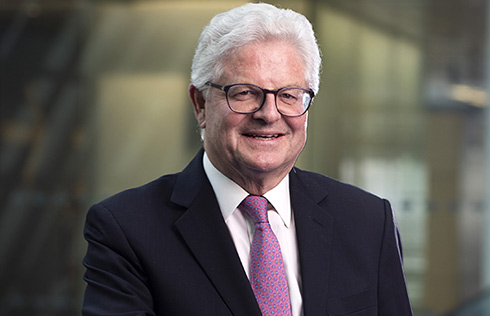
The author is the UN secretary general's special representative for migration. Project Syndicate