This year is a milestone for outward direct investment from China. The nation's outward investment is predicted to match or exceed the foreign direct investment flowing into China's mainland.
While the final statistics are not expected until around the end of February, it is important to understand the underlying forces driving the current momentum, which might help determine whether such a trend is sustainable.
China, the largest emerging market and transition economy in the world, has seen 35 years of rapid economic growth. It is natural that it attracts a lot of capital investment from around the world.
What remains somewhat of a puzzle is how China is becoming a net capital exporting economy despite its fast economic growth and its relatively low per capita income. To resolve this puzzle, we need to look back at China's growth path.
In the early years of its reform and opening-up, which started in the late 1970s, China adopted aggressive policies to attract foreign direct investment, including tax and land usage incentives, among others.
This set of policy initiatives worked and China soon became the largest recipient of foreign direct investment among emerging markets and one of the most attractive destinations for global capital.
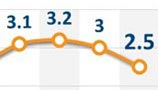
The financial crisis of 2008 changed all this. Although China remains attractive, the speed of foreign investment inflows to China decelerated. The rate of growth fell to less than 2.8 percent a year in the past five years. That trend probably will continue because of the slow recovery in the United States and the stagnation of many other major economies.
At the same time, the cumulative foreign direct investment inflows in the past few decades have reshaped the landscape of China's economy and accelerated its industrialization.
Enterprises backed by foreign investments bring with them advanced technology and global best management practices. When these foreign-backed enterprises make profits in China's rapidly growing domestic market and from its large, low-cost labor pool, the technological spillovers help local firms increase their productivity and upgrade the skills of China's labor force.
In the early years, joint ventures represented as much as 80 percent of those foreign-backed companies. The transmission of technology and management know-how accelerated. Increasing competition from those companies also forced domestic firms to restructure to become more efficient.
Over 35 years, after a lot of trials and errors, a group of Chinese firms have gained the abilities and skills to compete internationally. Those firms began exploring international markets by investing in key markets. Some firms can be considered global leaders in their sectors, such as Huawei Technologies Co Ltd, Lenovo Group Ltd and Haier Group.
In addition, China's rapid growth may be constrained by its limited resources in energy and minerals. A number of large companies initiated their going-global plan by acquiring and managing resources-related companies and investing in resource-rich countries. The largest cross-border acquisition by a Chinese company, amounting to $15.1 billion, took place two years ago when China National Offshore Oil Corp bought Nexen of Canada.
The financial crisis of 2008 marked down asset values in many countries, presenting opportunities to some companies in China. The rate of increase of outward direct investment from China in the five-year period since 2008 is 12.5 percent on an annual basis. The 10 percent difference in growth rates of investment flows in opposite directions narrows the gap between China's inward and outward flows of direct investments.
Although it is likely that China's outbound direct investment will surpass foreign direct investment in the country this year, the momentum is expected to continue.
One of the reasons is that the value of stock generated by outward investment remains low in comparison to the stock from inward FDI in China and to the size of its economy.
By the end of 2013, the cumulative stock of China's ODI was just $660.48 billion, substantially smaller than the stock of its inward FDI of $956.8 billion. It also was only about one-tenth of that of the US' $6.35 trillion. It is too early to say that China is a major direct investment exporter. There is still a long way to go.
As more and more Chinese companies gain international competitiveness by improving their productivity and upgrading their technologies, they will see more opportunities in the global market. It seems clear that more and more Chinese firms will go global.
The author is professor of strategic management, Guanghua School of Management, Peking University.

Copyright 1995 - . All rights reserved. The content (including but not limited to text, photo, multimedia information, etc) published in this site belongs to China Daily Information Co (CDIC). Without written authorization from CDIC, such content shall not be republished or used in any form. Note: Browsers with 1024*768 or higher resolution are suggested for this site.
License for publishing multimedia online 0108263 Registration Number: 130349