Editor's Note: The official People's Daily newspaper has interviewed an "authoritative insider" who anonymously addressed pressing issues affecting the Chinese economy, while expressing confidence in growth prospects. In a Q&A, the insider advocated that China squarely face up to the economic problems and maintain a strategic focus in the process of restructuring.
Q: Economic growth has been slowing since the year started. What is your assessment of the current situation and outlook?
A: Overall, economic growth is in line with the targets set in the Government Work Report released earlier this year. China's economy is still functioning within a "reasonable range" and within expectations.
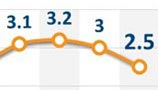
The economy grew 7 percent year-on-year in the first quarter, which is still a rapid pace in the global context. Urban job creation and household income growth remain solid.
Notably, while the growth rate slowed, the quality of growth steadily improved and economic restructuring continued. The service industry accelerated.
While investment growth slowed, consumption growth remained stable. The gap between urban and rural incomes narrowed. Energy intensity (the amount of energy required to produce a unit of economic growth) fell 5.6 percent from a year earlier. New businesses, new industries and new products continued to emerge.
What is your assessment of China's economic prospects?
When we look at the economy, we have to take short-, medium-and long-term views at the same time. An issue might seem very "significant" in the short term, but in the longer term, it may appear much "smaller".
While some acute problems, especially short-term problems, need to be taken seriously, some problems are long-term in nature and are unstoppable trends. The fundamentals of the Chinese economy remain sound, as the country has the world's highest household savings rate and maximum room for macroeconomic policy maneuvers.
China's economy is very resilient, and the nation has an upper hand regarding institutional systems. There will not be serious problems as long as we react carefully to economic trends.
How do you view divergences among different regions and industries?
The eastern regions that have proactively restructured their economies are better prepared for a downturn. Other regions, especially resource-rich regions, face stronger downward pressure.
In terms of industries, those plagued by overcapacity are having tough times. That is also true of sectors that need large amounts of energy and resources and/or produce high levels of pollution.
But the high-technology and service industries are thriving. Overall, those who proactively adapt to the economic "new normal" - a phrase introduced by President Xi Jinping to describe slower growth, but of better quality - respond to market demand, innovate and target the "medium-to high-end market" will fare better.
Destocking and deleveraging" are proceeding, and it is a very painful process in many cases. What does it mean for the Chinese economy?
Economic restructuring is a task we cannot avoid or delay. The only option is to do it proactively, and the sooner, the better. China should concentrate on restructuring the economy instead of becoming preoccupied with minor fluctuations in the growth rate. Under no circumstances should it become so anxious as to resort to strong stimulus.
The economy faces downward pressure and many enterprises are finding it tough to survive. Meanwhile, some problems are brewing. How do we cope with this combination?
Downward pressure is inevitable given such problems as shrinking external demand and the transition to new growth drivers. Problems such as weak demand and overcapacity will persist, so we must be prepared with appropriate measures.
There is no need to panic. Macroeconomic policies should make stable growth a priority while avoiding the old growth model that put pressure on resources and the environment. Short-term policies should also promote long-term development goals. Reforms to promote sustained and sound economic development could be accelerated. There are some measures that would be beneficial for reform in the long run, but they may increase companies' burdens, so using such measures should be carefully weighed.
Could investment and consumption provide more economic momentum?
Investment still plays a crucial role in boosting growth, and it is important to provide sustainable funding sources for this area. China has high household savings, so it is crucial to turn them into an effective funding source for investment. We should also further explore the potential of private capital.
Consumption plays a fundamental role in boosting growth. Wages and other income need to be adjusted, and the social security system needs to be improved to unleash potential consumption. Chinese consumers' purchasing power is robust, and there is increasing demand for personalized and diversified products. There is nothing we can do about declining external demand in the short term; the solution to that problem lies in innovation and restructuring.
As the economy slows, new risks are likely to emerge. How should China respond?
Currently, most risks are under control, but the government needs to remain vigilant when it comes to specific areas such as high leverage and bubbles. In recent years, non-financial enterprises have seen the fastest growth in debt, particularly those in the property sector or those with excess capacity.
These industries should be closely watched, as should local government debts. If the economy continues to decline in some regions, there may be an impact on the labor market. The property market is having a tough time digesting inventories. The country needs a long-term mechanism for the sound development of the real estate market, combined with a new urbanization model.
Some people advocate a "strong stimulus" for the economy. What role do you think macroeconomic policies should play at this stage?
Without putting macroeconomic policies into effect, it is hard to achieve steady growth and ensure the economy operates within a reasonable range. But if you resort to the old methods of large-scale investment and strong stimulation, new burdens and contradictions may occur. We need growth, but it must be qualified, cost-effective growth.
Steady growth and restructuring should work together with the implementation of the proactive fiscal policy and prudent monetary policy, to keep economic growth from plunging. The monetary policy stance should ensure that money flows into the real economy. It is important to achieve a balance between stable growth and lower leverage.
Clear policy signals are key to stable market expectations. It is clear that the Party and the government are on track to promote market-oriented reform and support for entrepreneurs. We are consistent in sticking to the reform of State-owned enterprises, protection of property rights of private enterprises, and the policies of opening-up and attracting foreign investment.

Copyright 1995 - . All rights reserved. The content (including but not limited to text, photo, multimedia information, etc) published in this site belongs to China Daily Information Co (CDIC). Without written authorization from CDIC, such content shall not be republished or used in any form. Note: Browsers with 1024*768 or higher resolution are suggested for this site.
License for publishing multimedia online 0108263 Registration Number: 130349