In good voice
 |
|
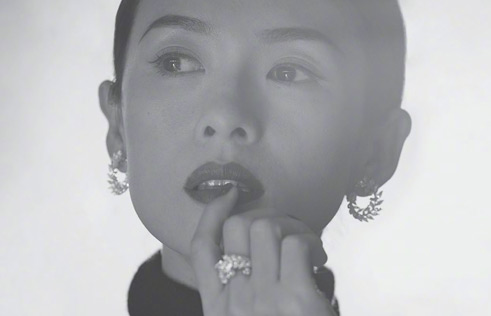
Off stage, Sa Dingding appears to be serious and reserved, exuding the assured confidence of a star who refuses to be typecast. Zou Hong / China Daily |
 |
|
On stage, Sa is dynamic and flamboyantly dressed. Zhang Xiaoli / For China Daily |
Sa Dingding is well known in the West as a crossover artist, but she is now concentrating on getting Chinese people to appreciate her folk roots. Chen Nan reports.
She's not that well known in China, but Sa Dingding, a 28-year-old singer from Inner Mongolia, has a Grammy Award nomination, a BBC Award for World Music, has performed at the Royal Albert Hall and has a nonstop schedule of sold-out concerts worldwide. She speaks little English, but her songs, which incorporate Buddhist mantras, traditional Chinese instruments, indigenous music and electronica, go down well in the West.
Now, she is going to have a concert at the Great Hall of the People in Beijing on May 2, which she calls, returning to her cultural roots and showing a "made-in-China Sa Dingding".
"Some people in China know me from photos in florid costumes or a music video featuring psychedelic effects. Most of my songs are not performed in Mandarin and even without lyrics, they don't know what I am singing," Sa says in Beijing. "I want to show the true me at the concert, let my music talk and introduce myself."
She says that despite her rich performing experiences worldwide, she feels nervous about the upcoming concert, for an audience of 5,000.
In addition to her long-time band - which includes bass, drums and keyboards, plus traditional instruments such as the pipa lute and guzheng (Chinese zither) - dancers and folk artists from Chinese ethnic groups will perform. She also plans to put a giant drum, which was discovered at an abandoned temple in Tibet a few years ago, on the stage.
"I am eager to show my music and imagination to the audiences. Because I have developed my music from Chinese culture, I want to share with the people who have the same roots as me," she says.
In person, Sa is nothing like her dynamic stage persona. Serious and reserved, she considers each question carefully as if she's struggling to condense her thoughts into sound bites.
Rather than being exquisitely dressed in her usual lavish robes, Sa wears a loose sweater, with matching leggings and short boots. With her long black hair, she looks just like any other fashionable woman.
However, Sa exudes the assured air of confidence of a star who refuses to be typecast.
Born to a Han father and Mongolian mother, her earliest musical influences came from her nomadic life as a 3-year-old on the grasslands of Inner Mongolia, with her grandma. There, she learned how to sing and speak Mongolian, which shaped her habit of music as a daily routine, molding her distinctive voice and love of freedom.
She studied music formally and won a national singing competition in 1999 at the age of 16.
However, she was told her ethnic music would not sell well. So she did a dance music album (one of the nation's first) which was popular and performed at the CCTV Spring Festival Gala in 2001 and 2002.
She was known then as Zhou Peng and later took the stage name Sa Dingding, which is from her mother's Mongolian surname and a childhood nickname.
"When I was young, my music path was designed by teachers and catered to the music market. I just kept what I really wanted to sing in my heart and waited for a moment to fulfill it," says Sa, who calls the days of being "Zhou Peng" "childish", but nevertheless a valuable experience, which strengthened her mind to sing her heart out.
Taking a long break, which was long enough for people to forget about her, she released Alive in 2007, an album that mixes traditional Chinese melodies and Buddhist mantras with electronic instruments.
The album saw Sa not only sing in Mandarin and Mongolian but also in Tibetan, Sanskrit and, Zi Yu, a language of her own invention.
She poses like the Buddha in promotional photos, even though she is not a Buddhist. "Buddhism is a big part of Chinese culture. Both my mother and grandma are Buddhists," she says. "I'm interested in learning about it."
Her exotic appearance - self-designed ethnic-style clothing, braids and bangles - was influenced by her mother. "My mother loves designing and knitting clothing and accessories," Sa says.
In 2008, she won the BBC music award, which ushered Sa onto the international stage. While touring European countries and the United States, she gradually became recognized as a crossover musician from China and got her nickname of the "Asian Bjork" by Western media.
For her second album in January 2010, Harmony, Sa absorbed influences from ethnic groups in Yunnan province and invited folk musicians to join her band. The album topped iTunes' World Music chart before officially going on sale.
The Guardian gave her second album four stars upon its UK release in March 2010, describing the title song, Ha Ha Li Li "the most propulsive deep bass groove for Sa Dingding's vocal blend of stealthy intimacy and keening ululation".
For Sa, it meant she had taken control of her career.
"If Alive was an accidental success, then Harmony proved I was a musician, bringing Chinese music to the international stage," she says. "My way of working is that whenever I have a feeling I can write a song very quickly. It is not a big burden, it is a natural and fluid process."
To further her musical dreams, Sa is going to open a live music venue in Beijing's 798 art district. The two-floor building, which has a capacity of about 40, will be called Seven, referring to reincarnation. Sa plans to invite Chinese folk musicians from ethnic groups to perform.
"The live music venues in Beijing mainly play rock, punk, jazz, hip-hop and other music genres from the West. I want to offer people a place to feel authentic Chinese music from folk artists," she says. "The venue is small but audiences can get a close look at the artists, their costumes, instruments and facial expressions."
She says that in the past mainland musicians looked to the West for ideas about contemporary art without drawing on their own cultural roots. She thinks it's time for Chinese artists to embrace their own culture and look for a Chinese voice.