


Baby formula sales to be shifted to pharmacies
Authorities are to require that all baby formula on the Chinese mainland be sold in pharmacies or in shops that are qualified to sell medicines, a move aimed at improving consumer confidence in formula products while weeding out fake brands.
However, some experts say changing sales channels will do little to improve safety standards or allay consumer fears in the wake of the Fonterra milk powder scandal.
The China Association of International Trade under the Ministry of Commerce announced that domestic and foreign baby formula will be sold in 20 pharmacies in Beijing and Jiangsu province as of October, in a pilot program that will be extended to 20,000 pharmacies in 500 cities by 2015.
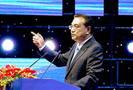
Some experts said the move reflects Premier Li Keqiang's announcement in late May that baby formula would be subject to the same strict supervision standards as medicines and that fake products would be removed from the market.
"We heard that supermarkets and chain stores specializing in baby products will also need to acquire the qualifications for selling medicines before they can sell infant formula," said Cao Mingshi, deputy secretary-general of the Shanghai Dairy Association. "In this way, the counterfeit and substandard infant formula sold in farmers' markets and grocery stores will be banned," he said.
Some experts and industry insiders, however, are less than confident of the likely effectiveness of the new moves.
"The quality of baby formula products isn't decided by the sales channel but by previous manufacturing processes and the quality of the milk source and raw materials," said Wang Dingmian, former director of the Dairy Association of China.
Forum: Best infant formula to recommend
"The focus of food safety efforts should be on the supervision of the production process. The quality of milk powder remains the same as the place of sale changes," he said.
Some consumers also expressed confusion over the new policy. "I won't take the place of sale as a criterion for evaluating infant formula. I don't have any idea how it will help to upgrade the quality of products," said Chen Zhongqi, the mother of a 5-month-old boy in Suzhou, Jiangsu province.
China's dairy industry suffered a crisis of confidence in 2008, when milk powder produced by Sanlu Group was found to contain the toxic chemical melamine, which had been added to boost the apparent protein content. Six children died from drinking the milk, and at least 300,000 others became ill.
Baby formula in China can be found in supermarkets, specialized shops and on the Internet. In many Western countries, meanwhile, formula products are mostly found in pharmacies because the global companies producing them often have a history as producers of medicines, experts said.
"Major companies like Abbott Laboratories and Mead Johnson, based in the United States, were drugmakers at first and expanded their business into the baby formula sector. They utilized their original sales networks, which established the tradition of selling baby formula in pharmacies," Wang said.
He doubts the appropriateness of storing infant formula in pharmacies, as most cans of infant formula are not 100 percent air-proof.
"Milk powder has a strong ability to absorb other substances. The smell released by traditional Chinese medicines and Western medicines in the storage might alter the flavor of infant formula and accelerate its deterioration," he said.
A director of a dairy company that registers and imports milk products from New Zealand said his business previously tried to cooperate with several pharmacies but failed because they demanded large one-off fees to place new products on their shelves. Supermarkets also charged such a fee, he said, but not nearly so large as pharmacies. He declined to be named.
To further boost confidence in the industry, the Ministry of Industry and Information Technology plans to merge or shut down a large number of mainland dairies that make baby formula. The number will plunge from the current 128 to 50 by the end of 2018, China National Radio reported on Sunday.
"It's hard to achieve a high production standard when we have many scattered businesses," said the ministry's spokesman Zhu Hongren.
- China consults on tighter infant formula rules
- Abbott formula recalled over botulism concerns
- Nutricia widens infant formula recall
- New Zealand gov't names infant formula brand in Fonterra botulism alert
- Nutrica recalls Karicare infant formula in New Zealand
- Complaints spike over subpar baby formula imports
- HK to lift controls on baby formula: expert
- China launches anti-trust probe into baby formula
- China steps up checks on milk formula producers
- Baby formula industry to consolidate









Registration Number: 130349


