Villages built on filial piety
For Dipu and the neighboring Huanxi village, family ties take preference over all things.
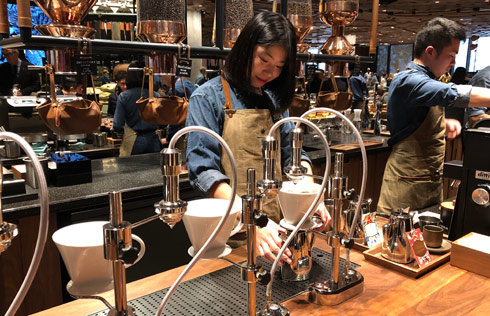
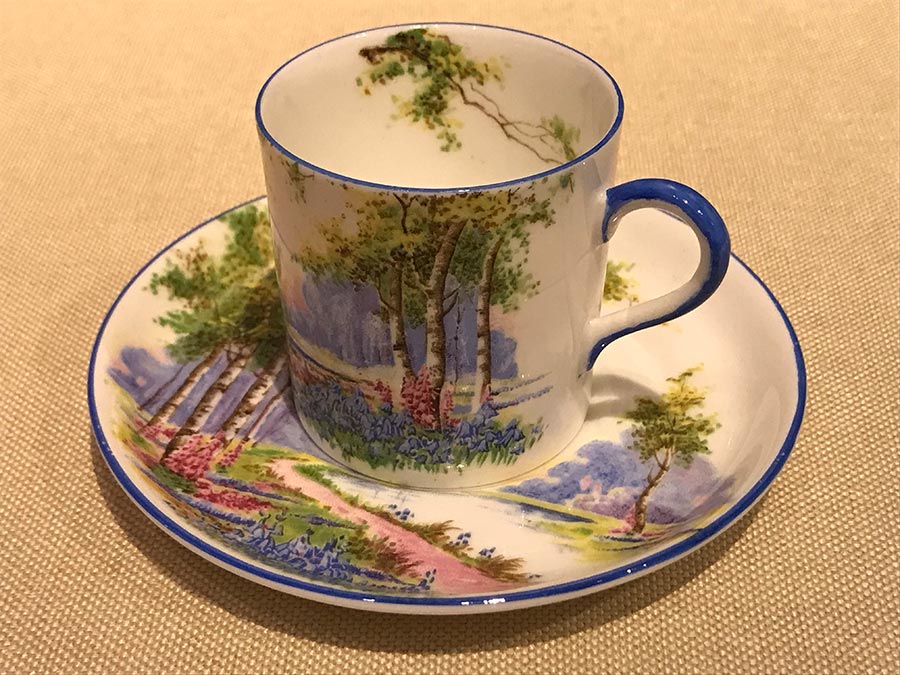
Dipu village is a place where you take tea in a pigsty and coffee in a cattle enclosure.
Well, actually, in renovated rooms that previously housed farm animals.
|
From left: Children practice calligraphy in Tonglu county. Wang Zhuangfei / China Daily; The ancestral hall of the Shentu family in Dipu village. Provided to China Daily |

"Manure stench meant people used to rush by, pinching their noses," a local guide says of Cattle Pen Cafe.
"Now, the aroma of coffee lures them to linger."
Shentu Fang opened Pigsty Teahouse in 2013.
She converted 14 swine hutches into a hip joint to sip a cuppa.
"It's unique," says Shentu.
"We don't want to destroy our history and environment."
Trees heave with fruit. Vines spill from rooftops. Pots pop with flowers.
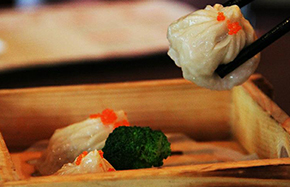
A nearby shop peddles petal pancakes - that is, dough disks stuffed with floral flavors like rose.
Indeed, the livestock quarters cum cafes are microcosms of the settlement in Zhejiang province's Tonglu county. It's a place where blooms burst around lightly renovated historical buildings - including 40 ancient structures. Many new edifices are rendered according to traditional designs.
For instance, new flagstones have been arranged along Dipu's old cobblestone streets for women wearing high heels.
The wells and drainage systems devised when the settlement was founded nine centuries ago are still used. Thirteen trees older than 200 years still stand. Two took root eight centuries ago.

But Dipu's umbilical link to its past is less tangible, yet palpable - a rigorous reverence for familial piety that dates to at least the Qing Dynasty (1644-1911).
A villager during emperor Kangxi's (1654-1722) reign nursed his critically ill father back to health with such devotion that villagers reported his good deed to the royal court.
But word didn't reach the throne for two generations. Kangxi's grandson, Qianlong (1711-1799), was so moved upon hearing the account that he ordered the construction of a stone archway to honor the "dutiful son" in Dipu.
The gate still stands - as do the ideals it represents.
Over 70 percent of Dipu's villagers share the surname Shentu and regularly visit their ancestral hall.
A local man built the nearby Baoqing Theater in the Ming Dynasty (1368-1644) to show gratitude for his uncle, who raised him.
The wooden platform, adorned with such ornately carved auspicious symbols as lions, crayfish and bats, still serves his descendants as a stage for reverence of family ties.
A stele marking the tomb of the first settler in the middle of a roundabout on Dipu's main road again places filial piety front and center, in every sense.
Indeed, a visit to Dipu makes you want to visit your parents afterward. Or at least call home.
Such reverence for forbearers extends to neighboring Huanxi village, where 90 percent of the 2,000 residents take their surname from the first settler, Zhou Weishan, who built his home in the shade of ancient gingko trees six centuries ago.
The surviving trees lining Gingko Square are today over a millennia old.
But even more venerated is the 14-generation branch of the Zhou family tree that extends from Huanxi's Confucian philosopher Zhou Dunyi, who penned the poem Ode to the Lotus in the Northern Song Dynasty (960-1127)..
Locals learn its lines as children and can recite the prose by heart.
Roughly 334,000 square meters of lotuses bob atop ponds throughout the town. They're not only central to the settlement's history and culture but also to its economy.
Lotus seeds are sold as snacks and pulverized to produce tea and liquor.
And the plants give vim to the scenic splendor that draws tourists who occupy Huanxi's six-dozen bed and breakfasts.
Families process them in their courtyards with hand-crank grinders.
The Lotus Culture Hall takes its namesake from Zhou Dunyi's poem and serves as his ancestral hall, an auditorium and an art gallery.
On residents' 63rd birthdays, relatives release carp into the Tianzi and Qing rivulets that encase three sides of the settlement and join at its main gate to transform into dragons. The symbolism represents longevity in local lore.
Superstition or not, over 300 villagers are older than 60, and the oldest is 103.
That said, the water-dwelling creatures are traditionally believed to have brought the floods that led to the construction of two ancient bridges, including the Crocodile Bridge - so named because the reptile is considered the mythological deities' natural nemesis.
Today, Crocodile Bridge serves as a link between Tonglu's past and present, and connects Huanxi to the outside through tourism, in a very real sense.
erik_nilsson@chinadaily.com.cn
(China Daily 09/05/2016 page29)