Puffer Perils
 |
|
Photo illustration by China Daily |
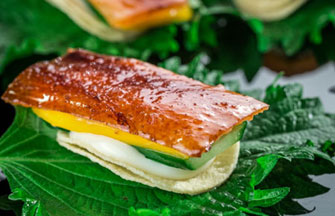
Fugu, or puffer fish, is a popular delicacy up and down the Yangtze River. The fish is officially banned for fear that diners may keel over after the meal because of careless cooks. But that has not stopped the eager gourmets, and Han Bingbin files this report on the game of culinary Russian roulette.
It was in May in Rugao, Jiangsu province. The chef had tasted the plate of red-roasted fugu and confidently pronounced it safe. What followed was a happy interlude during which Fan Kai, a doctor, and his group of friends enjoyed the tender and delicious seasonal treat. But just as they were about to leave, one in the group suddenly complained of dizziness and found his legs too numb to stand on. As they called for the ambulance, the victim started having breathing problems and collapsed. Dr Fan immediately started resuscitation, and the mouth-to-mouth rescue saved his friend's life. Not every fugu diner gets away with it. Every spring in the Yangtze River delta region, there are similar stories, and some with sad endings.
The cute-looking blowfish contains an intense poison known as tetrodotoxin that can paralyze a man in minutes and kill him in a couple of hours.
The toxin is found in many parts of its body, including the blood, liver, eyes and gill, and a tiny amount of poison is enough to be lethal. That is why restaurant chefs must be impeccably trained to prepare the fish for consumption.
But the risk of getting poisoned by this little blowfish has not deterred the gourmets. In fact, it has become part of the attraction. This "dauntless spirit" is reflected in a local idiom popular in the Yangtze delta: Risk your life for the sake of a plate of fugu.
It is said that the saying originated from an expression by Song Dynasty (960-1279) master poet Su Shi when he first tasted the fish in Changzhou, Jiangsu province.
He was so enamored by the fish that he dedicated several poems to its praise. Since then, fugu has become a symbol of spring treats in ancient poetry. Su Shi, or Su Dongpo as he is better known, was not the first to sing its praises.
The earliest record of fugu consumption along the lower reaches of the Yangtze dates back still further to Shanhaijing, a collection of mythical legends written more than 4,000 years ago. Why such an age-old obsession with such a dangerous morsel?
Veteran Huaiyang cuisine chef Zhou Yixiang says there is an understandable reason.

As the blowfish swims upstream from the deep seas to spawn in the Yangtze River in spring, the salt in its body is largely diluted by the sweet waters of the river. This process gives the fish meat a unique texture different from either freshwater or saltwater fishes.
But to enjoy the special texture and taste of this delicacy, it needs the most expert preparation and care, Zhou emphasizes.
First of all, the edible parts, usually the skin and meat, must be carefully separated from the internal organs. Then the backbone has to be broken to let out the blood, all the while under running water.
The fish must next be soaked in fresh water for around 10 minutes to rinse away any remaining blood. Before finally serving the fugu, the chef also has to taste it first to make sure it is safe to eat.
In the past, a long-term reputation was necessary to build one's credibility as an expert fugu chef. These days, however, safety is more regulated and authorized fugu chefs must be professionally trained and certificated before they are allowed to prepare the fish for diners.
Qiu Yangyi, the secretary-general of the Yangzhou Cuisine Association, says the practice follows that in Japan, where apprentice fugu chefs must train with veterans for a couple of years and then sit for examinations.
In China, the training period is much shorter.
In Jiangsu, arguably the original hub of China's fugu-eating tradition, Qiu says the "experience has been passed down for hundreds of years at the cost of numerous lives". Training under the Jiangsu Cuisine Association lasts about a week.
During that period, experienced blowfish chefs along with aquaculture experts train young chefs, who must have at least an intermediate cook's certificate.
The trainees are taught the various habitats and categories of fugu, the butchering techniques as well as the treatment and antidotes for the poison.
Since 2007, the association has trained more than 600 chefs. They still have to undergo annual reviews, and the results are updated on the association's website for public reference.
But the certification is non-governmental.