Premier lays foundations in Europe
Two silk roads will revitalize Eurasia as well as help build a more inclusive and open global market
This year could well be described as China's European year as Premier Li Keqiang paid a second visit to the continent. In fact, he has visited Europe four times since taking office last year. Moreover, his presence at the 10th Asia-Europe Meeting in Milan on Oct 16-17 has brightened the prospects for the new Silk Road Economic Belt and 21st Century Maritime Silk Road, which President Xi Jinping proposed last year.
Li's visit to Germany, Russia and Italy, given their strategic significance both in terms of geopolitics and economics, reflects Beijing's determination to deepen China-Europe cooperation. The "two silk roads" are aimed at improving the connection between Asia and Europe (and even Africa), as well as advancing China's comprehensive reform and Europe's re-industrialization.
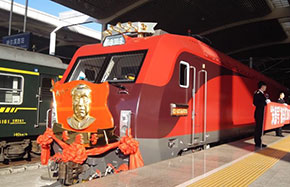
As the largest trading partner of China in the European Union, Germany serves as a bridge to Eurasian cooperation, and now Duisburg, Germany, has become the westernmost destination of the Chongqing-Xinjiang-Europe international rail route. And Italy, where the ancient Silk Road ended, could still play a vital role in connecting Asia, Europe and Africa.
Li's visit to Europe has sown the seeds of deeper China-Europe ties and a closer China-EU strategic partnership by making use of two important factors for safeguarding world peace - boosting the global market-oriented economy and promoting universal civilization.
The two proposed silk roads are aimed at realizing more inclusive globalization. Unlike the US-led Trans-Pacific Partnership and Transatlantic Trade and Investment Partnership, which have kept out China by imposing higher trade standards, the silk roads proposition is open, inclusive and not aimed at containing any country. It is also intended to help develop all "roadside countries". A similar EU-proposed blueprint aimed at building a free trade zone from Lisbon to Vladivostok is likely to take China-Europe cooperation to a higher level.
Connecting China with Europe and Africa, the "two silk roads" - once they become operational -could establish closer bonds among countries along the Pacific Ocean, Indian Ocean and Mediterranean Sea. Compared with traditional ocean routes-based globalization, which has created a wealth gap between coastal and landlocked countries, the two silk roads attach greater importance to lesser, developing, landlocked countries such as Mongolia.
The integration of Europe and Asia will benefit not only lesser, developing Asian countries, but also increasingly "marginalized" European states, according to a report issued by the Group on the Future of the EU 2030 four years ago.
To put Europe back on the center stage of globalization, what is urgently needed is to break down the geographical barriers in Eurasia and upgrade the transport network. No wonder, the Connecting Europe Facility program, details of which were published by the European Commission recently, says more than 26 billion euros ($31 billion) from the EU budget would be used from 2014 to 2020 to boost transport, energy and digital networks to remove bottlenecks and fill in the missing links in the EU's single market.
If this network is properly connected to the two silk roads proposed by China, the railways, highways, and sea and air routes, as well as oil and gas pipelines across Eurasia, should gradually spawn a wide spectrum of industrial clusters. Their radiating effect on sectors such as construction, energy, metallurgy, finance, communications and tourism would ideally give rise to a latent Eurasian market characterized by convenient multilateral trade and investment.
Of course, collaboration with third parties is important for China-Europe ties, a fact acknowledged by top leaders on both sides at the 16th China-EU leaders' meeting in Beijing last year, with the China-Europe 2020 plan proposing more bilateral consultation on African, Central Asian and Latin American affairs. It is also important for China and the EU to cooperate at regional and trans-regional forums, particularly the Asia-Europe Meeting and the ASEAN Regional Forum, which play vital roles in facilitating sustainable and inclusive development in Asia.
Europe, whose past colonial rule still affects many countries in developing parts of the world, could also benefit from China's integration into the broader world community. So, instead of indulging in the zero-sum game of accusing each other of colonialism and neo-colonialism, China and Europe should rope in third parties in their cooperation programs.
Joint efforts such as the proposed two silk roads will not only revitalize Eurasia as a whole, but also build a more inclusive global market.
The author is a professor of international relations at Renmin University of China. The views do not necessarily reflect those of China Daily.