Rare artifacts get a safe ticket to ride
Taking the rare Qin Terracotta Warriors and their horses around the world for exhibitions entails great difficulty and detailed preparations for those responsible for their care.
An exhibition of the clay-based figures from Xi'an, the capital of Northwest China's Shaanxi province, at the Children's Museum of Indianapolis in Indiana, from May 10 to Nov 2, has proved a hot attraction.
The exhibition, called China's Terracotta Warriors - the Emperor's Painted Army, showcases 265 rare cultural relics, including life-sized warriors unearthed from pits next to the Mausoleum of Emperor Qin Shi Huang, the first emperor of the Qin Dynasty (221-206 BC).
Among the exhibits, 18 are listed as first-class relics under national protection.
Pang Yani, director of the Shaanxi Cultural Heritage Promotion Center, which organizes overseas heritage exhibitions under the Shaanxi provincial administration of cultural heritage, says preparations for overseas exhibitions begin two to three years before a show is scheduled to open, and the plan and relics to be exhibited must be approved by the State Administration of Cultural Heritage.
"Overseas exhibitions like that in the Children's Museum of Indianapolis are held several times in different countries," Pang says.
To prepare the exhibition and protect heritage items sent overseas, Chinese and foreign experts make careful checks.
On April 12, program managers from the center and experts from the Children's Museum, as well as staff from the Shaanxi Huaxie International Treasures Freight Services Co, which was responsible for transporting the items, entered the treasury to check the relics chosen for the exhibition.
"The rare relics, including the Qin Terracotta Warriors, were collected from museums throughout Shaanxi province and packed in more than 10 large wooden boxes," Pang says.
Staff from the three institutions carefully checked and transferred each piece, including a suit of stone armor, a class-one heritage item with national protection status, unearthed from near the Mausoleum of Emperor Qin Shihuang in Lintong, an eastern suburb of Xi'an.
To check each piece of the armor, the Chinese and US experts divided the armor's 617 stone pieces into nine areas both shoulders, chest, back, upper body, both ribcages, the breast and lower back and then inspected each part.
"We checked if any piece of the armor had stains, or was incomplete, and recorded it," says Zhang Zheng, a program manager with the center, who added that it took more than five hours to complete the inspection.
The team inspected every item and recorded everything in minute detail. The records were then translated into English, and both versions were signed by all involved.
"Although that suit of armor had been exhibited overseas many times, we can't use the previous records for upcoming exhibitions. Instead, we have to check the relics again and again before every exhibition, because we must not make any mistakes with these very much precious relics," Zhang says.
In addition to the written records, more than 200 photographs were taken of the artifacts.
The experts repeat the careful inspections when the exhibition is over, Zhang says.
According to Zhu Yonghong, deputy general manager of Shaanxi Huaxie International Treasures Freight Services, after all the relics were checked, they were carefully packed by the transport company.
"Each relic was placed in customized packaging, according to its texture, in acid-free paper that protects the item from surface wear. The treasures were then put into wooden or brocade boxes with padded interiors to protect them from shock and moisture.
"The packaging boxes were made of special fumigation-free wooden boards, which could not be compromised by borer beetles," he says.
The vehicles transporting the exhibits were also specially equipped to maintain a constant temperature and absorb shocks, and their speed was limited to between 60 km/h and 80 km/h. Strict security measures were adopted during the journey.
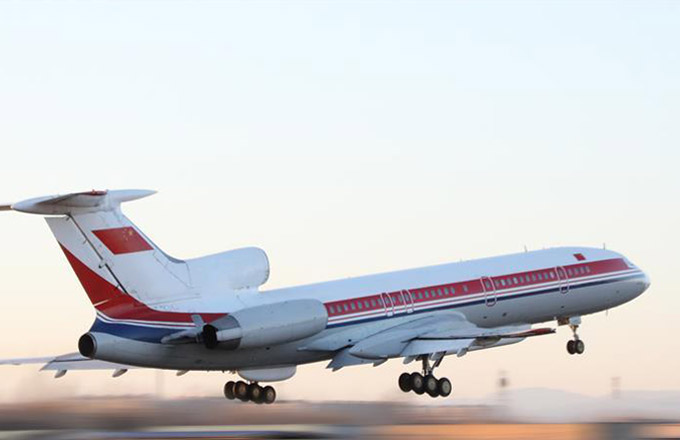
Zhu says heritage items displayed in foreign countries must be declared to customs in advance and then his company transports them by air to their destination countries via Shanghai.
Contact the writers at luhongyan@chinadaily.com.cn and malie@chinadaily.com.cn