Infrastructure opportunities can strengthen bilateral ties
President Trump's administration has pledged a $1 trillion investment to improve America's infrastructure, and many believe it will generate opportunities for foreign investors, including those from China.
The question is how? A conference on China-US cooperation in the real estate industry offered a few answers.
Tony Spitaleri, former mayor of Sunnyvale, California, said it would take only three projects in New York City to "use up" the dedicated federal budget.
"The reality is we need many more trillions of dollars for infrastructure," he said at a conference last week in San Francisco that gathered developers, service providers and government officials from both China and the US.
Analysts believe Trump's infrastructure plan most likely will rely heavily on public-private partnerships. "What's important to me is that not only all of you (Chinese investors) have investment in the housing works, but you also look into the infrastructure projects that we need - tremendous amounts of money, tremendous amounts of resources," Spitaleri said.

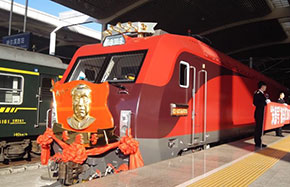
In about 10 years, China has established an extensive high-speed rail system nearly 20,000 kilometers in length, and plans to add another 10,000 kilometers over the next five years. This network, so far the world's largest, has connected mega metropolises such as Beijing, Shanghai and Guangzhou with economically underdeveloped regions.
Improving statewide logistics by transporting goods and commodities, the high-speed rail also carries tens of thousands rural immigrants on lower incomes to urban areas for job opportunities and a chance to better their lives.
In contrast, Spitaleri said, the US rail system "is slower than a snail and we even call it 'snail-rail'." Spitaleri visited China several times on the Silicon Valley mayors' trips and got first-hand experience riding China's high-speed trains.
According to the Ministry of Commerce, bilateral trade last year between China and the US reached $519 billion, 211 times what it was in 1979 when the two nations formalized relations. China is the largest trading partner of the US, its third-largest destination for exports and largest origin of imports.
In 2016, Chinese companies' direct investment in the US increased 132 percent, as compared to their American counterpart's 52.6 percent growth rate in China, and hit a record high of $19.5 billion.
According to joint research by the US-China Business Council and Oxford Economics, China-US bilateral trade and investment in 2015 created 2.6 million direct and indirect jobs in the US, as well as 1.2 percent of the US' yearly total GDP.
Real estate is one of the hottest investment fields. The San Francisco Bay area, the global center of new technology and innovation, draws dollars from global investors.
"San Francisco started revitalization about 10 years ago," said Darlene Chu, executive director of ChinaSF, an economic development agency under the San Francisco mayor's office. "We are very proud that we started introducing Chinese developers into San Francisco beginning with Vanke in 2013."
In December of the same year, ChinaSF held its first US investment summit in Beijing with a focus on the real estate market. The president of the Guangzhou Fuli Real Estate Group flew on his private jet to San Francisco two days later, and his company now has 10 projects throughout the state of California, four in the Bay Area alone, Chu recalled.
To date, approximately 50 Chinese developers have jumped into the white-hot real estate market of California, infusing it with their expertise and funding and upgrading local infrastructure, said Mike Liu, co-chair of the real estate committee of the Chinese Enterprises Association in North California, a sponsor of the conference.
Chinese investment in real estate not only creates government revenue and local jobs, but it helped the Bay Area housing market, severely damaged in the 2008 financial crisis, recover quickly, said Luo Linquan, China's consul general in San Francisco.
Contact the writer at junechang@chinadailyusa.com.