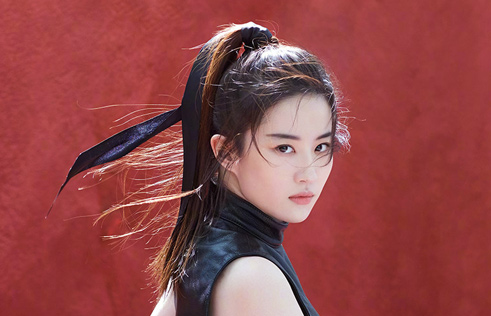
But in a country of 1.3 billion people, with 40 percent sharing 10 most-common surnames including Zhao, many parents seek a unique name for their children. More than 20 million babies are born every year, and parents rack their brains, turn to dictionaries and even the ancient classic I Ching, or the Book of Changes, for inspiration for an unusual name.
The case of Zhao C offered Xia Xueluan, a sociologist with Peking University, a chance to observe and interpret social changes.
As an old Chinese saying goes, you would rather teach your son a craft than leave him a mount of gold; but you would rather give your son a good name than teach him a craft.
The saying actually reflects the fact that names are highly valued in traditional Chinese culture. But this traditional importance attached to names has undergone changes with the evolution of society, Xia says.
The decades between 1949, when New China was founded, and the 1980s, when the country started to reform and open up, witnessed strong political overtones in people's names, with many going for Jiefang (Liberation), Jianguo (Founding of New China), Wenge (Cultural Revolution) and Weidong (Safeguard Mao Zedong).
Over the past 30 years, people have had more choices, like Yong (Brave) for a man and Na (Beautiful) for a woman. Exotic names such as Menglu, a hint at the American movie idol Marlyn Monroe, and Lisi, which sounds like Liza, became favorites with girls.
The search for uniqueness sent a father in Chongqing, southwest China, to the extreme in 2007 when he changed his son's name Ouyang Zumin to Ouyang Chenggongfenfatuqiang. The change was rejected by the local police for its unconventional length: six Chinese characters in the given name and two for the surname.
"Changing names indicate the trend of social evolution. The awareness of individuality when choosing names shows the country is evolving toward a more diversified society," Professor Xia says. "It's a reflection of social culture in an era of globalization and the Internet when people begin to use English letters or even @ in their names."
Zhao C's case also diverted criticism to China Central Television, whose logo with the English abbreviation CCTV was said to go against the country's regulations on language usage.
If Zhao has no right to use "C" for his name, then how can the state broadcaster continue to use the logo, critics argued, following media reports about Zhao's compromise.
China Central Television reportedly replied to the criticism by saying it was not easy for the state broadcaster to change a logo that had been in use for 20 years.
The country's regulations on hukou, or the residence registration system, were formulated in 1958 and are still in use today. It does not have a single rule on the use and registration of names, and the information on the ID card is based on the hukou.
This loophole should be partly blamed for the registration of the name Zhao C when he was born in 1986, says Liu Xiqiu, a lawyer based in Nanchang, provincial capital of Jiangxi. Also, the law on ID cards fails to clarify what "numerical symbols accord with national standards".
As a lawyer himself, Zhao Zhirong says he hasn't expected the case to attract so much attention.
"I'm glad it has aroused people's interests in the safeguarding of civil rights," he says.


Copyright 1995 - . All rights reserved. The content (including but not limited to text, photo, multimedia information, etc) published in this site belongs to China Daily Information Co (CDIC). Without written authorization from CDIC, such content shall not be republished or used in any form. Note: Browsers with 1024*768 or higher resolution are suggested for this site.
License for publishing multimedia online 0108263 Registration Number: 130349 










 Raymond Zhou:
 Pauline D Loh:
 Hot Pot
 Eco China
 China Dream
 China Face