Xiangba culture and “Kingdom of Women”
In order to get to Namling county from the urban area of Xigaze, one must proceed along a gentle flowing river with wide banks in a northerly direction after crossing the Brahmaputra Bridge. Although it is winter, the plains and forests on the two banks can still make people feel the vitality of the land brought by the river.
This river has a nice name “Xiangqu,” which was transliterated from its Tibetan name. It also has some other names that have the same pronunciation but different meanings in Chinese. However, according to the pronunciation and meaning of its name in the Tibetan language, perhaps the best translation of the river’s name should be “Xiangqu” (象曲), which means “elephant's nose,” because “xiang” means “nose” in the Tibetan language and the elephant has the most distinctive nose. However, if we carefully read some historical records about Namling county where the Xiangqu River is known as the "mother river," it seems that “xiang”(香) is more appropriate because the river has created and carried much history and culture that relates to women.
One of the important reasons the Xiangqu River has so many names is that this river has been repeatedly mentioned in many books including Tibetan historical records and Chinese historical books. It is closely related to Supi tribe, also known as “Sunbo,” a powerful regime on the Tibetan Plateau before Tibet was unified. It is the origin of the Supi Kingdom and therefore, the Xiangqu River is also known as the Supi River. Many historians believe the Supi tribe was a “Kingdom of Women” with unique customs.
The Supi tribe was one of the earliest tribes in Tibet, and they built their own cultural center in the Xiangqu River Basin (modern-day Namling county), even before the Tibetan people formed a tribe of their own. After unifying the Lhasa River Basin and surroundings areas at the end of the sixth century, the Supi tribe moved its political center to the Lhasa River Basin where there were larger fertile plains. There were three kingdoms in Tibet at that time, namely the Xiangxiong Kingdom in the west that was centered on Ngari, the Supi Kingdom in central and eastern Tibet to the west of the Brahmaputra River, and the Tibetan Empire to the east of the river which unified the entire Tibet during the reign of Songtsan Gampo in the seventh century. However, even after Tibet was unified, the Xiangqu River Basin remained an important regional political and economic center. It was written in many historical documents of the Tibetan Empire that Gampo often handled state affairs beside the Xiangqu River.
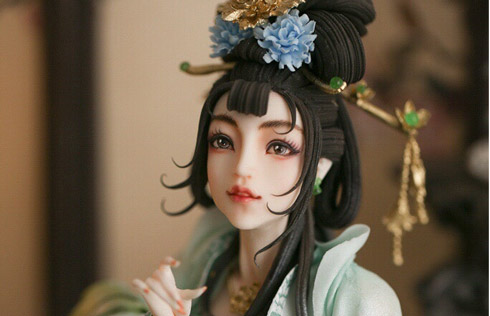
The Supi Kingdom was governed by women. According to historical records, the kingdom was ruled by a queen, and women officials assisted the queen in governing the country. The queen’s husband was known as the “Jin Ju,” which means “a family member,” and had no say in state affairs. Men mainly served as farmers and soldiers, while most officials were women, and children were given their mother’s surname. It was a remnant of the primitive matriarchal system and group marriage system. Xuanzang, a famous Chinese traveler and Buddhist monk in the Tang Dynasty, gave an account of Supi, also known as the “Kingdom of Women,” in his “Great Tang Records on the Western Regions” according to what he had heard about the kingdom from people in India. Maybe it is the model for the “Kingdom of Women” in the great mythological fiction “Journey to the West.”
The Xiangqu River Basin is the cradle of the “Kingdom of Women,” and interestingly enough, it seems to have a ceaseless predestined relationship with women.
Reporters visited the Xiongxiong Temple on a slope near the east bank of the Xiangqu River near Namling county. The temple was established by Khyungpo Naljor (900-1140), the founder of the famous Shangpa Kagyu sect in Tibet. Just like Xuanzang, Naljor traveled to India many times to increase his understanding of Buddhist teachings. He studied under several gurus in India, of whom two female gurus exerted the most significant impact on his future achievement. One was a dakini named Niguma, and the other was Sukhasiddhi. Niguma imparted a set of secret teachings called the “Nigu Six Teachings” to him. Naljor later founded the Shangpa Kagyu sect, which differs from other schools of Tibetan Buddhism based on Niguma’s teachings. As for Sukhasiddhi, Naljor once said, “I have received enlightening teachings from four root gurus, but the teacher to whom I owe the most is Sukhasiddhi.”
Naljor was born in today’s Nyemo county of Lhasa and first built a small temple near the Lhasa River. However, he remained unknown until he built 108 temples symbolized by the Shang-Shung Monastery after he walked west to the valley of Shang. Later, He was known as the Lama Shangpa and the Buddhist lineage he founded was called the Shangpa Kagyu School because he established it in the valley of Shang.
Thereafter, the Shangpa Kagyu School continued to expand based on Namling county. The school was divided into two branches after seven generations of transmission. One disciple of the Shangpa Kagyu School built the Samding Monastery near Yamdrok Lake and found the Samding Branch of the Shangpa Kagyu School. The Samding Monastery is distinctive because it is Tibet’s only temple in which the abbot is a female living Buddha and all Buddhists are male. Thangtong Gyalpo was also another famous Buddhist master of the Shangpa Kagyu School and was known for building 58 iron chain suspension bridges around Tibet. He was also the founder of Tibetan Opera or Ache Lhamo in Tibetan. As Ache means sister and Lhamo means goddess, both are associated with females. It remains unknown on whether this is a coincidence or has a profound meaning.
It was said that Naljor died at the age of 150. He told his disciples before dying, “If my sacred body is not cremated but rather put into a coffin coated with gold and silver, the Shang-Shung Monastery will be a site as sacred as India’s Bodh Gaya.” However, his disciples had him cremated and the Shangpa Kagyu School accordingly declined in the 17th century. The legend is just a legend and there must be political, economic and social reasons behind the decline of the Shangpa Kagyu School. Under the support of the local government, the Shang-Shung Monastery has been renovated. Unlike the dim and crowded halls of most monasteries in the Tibetan areas, the main hall of the monastery is wide and bright, and elegant Buddha statues shine within the light of surrounding lamps.
The Xiangba culture came into being in Namling county through its long history and is definitely worth studying. Qin Weiqiang, secretary of the Namling county Party Committee and one of the fourth and sixth batches of cadres dispatched by the central government to support Tibet’s development, said, “With the improved transportation conditions, particularly after the Lhasa–Xigaze Railway is put into operation in the future, the number of domestic and foreign tourists to Xigaze and Namling county will surge. We are exploring the profound value of the Xiangba culture including the ‘Kingdom of Women’ in an effort to attract more tourists to visit Namling as well as to contribute to the protection and development of the traditional Tibetan culture.”