
 Comments
  Print
Print  Mail
Mail  Large Medium Small
Peng Feng, chair of the Department of Art Theory, History and Criticism at the School of Arts with Peking University, says the development of private museums in China lags far behind that of Europe and the US.
"The Guggenheim Museum, for instance, has already extended its influence beyond the border and become the benchmark for contemporary private museums," he says. "They have established a reputation in this field and later museums have followed their display pattern and management style."
A modern private museum usually has a board of directors that deals with daily operations and income from donations and entrance fees.
In metropolitan areas of China such as Beijing and Shanghai, private museums are relatively mature, as the owners are mostly wealthy and can afford the daily expense of running them. But few have adopted a modern management style.
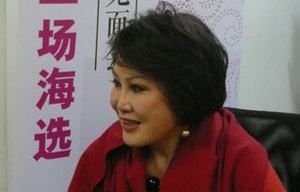
The Red Sandalwood Museum in Beijing, for example, is one of the biggest private museums in China, owned by real estate tycoon Chan Laiwa. The museum accommodates more than 2,300 pieces of red sandalwood furniture, and first opened to the public in 1999.
|
 |
China's first private museum was the Guanfu Museum, opened in 1997 in Beijing by writer Ma Weidu. It is divided into sections, showing furniture, oil paintings, porcelain and other items.
The Guanfu Museum operates with public donations, similar to many of its counterparts in the West. It is also one of the few private museums in China that have introduced a board system.
Most private museum owners in China collect objects related to Chinese contemporary or classical art, but there is a vast range of other collections, including vouchers and even stones.
Li Santai is a retired employee of the Supply and Marketing Cooperative near Liuzhou. Between the 1950s and the 1980s, the Chinese government rationed items such as candy, soap and meat using a token system.
Li began collecting the tokens as a purchaser in the cooperative during the 1970s. Thirty years on, he has spent around 3 million yuan ($480,000) buying tokens from across China.
His 150-square-meter apartment is now packed with stacks of tokens, which tell a tale of China's recent history.
|
|
Many of China's private museums are not driven by a mission to preserve the country's history, but by profit, as the owners believe the objects will appreciate in value, according to Luo Xiaojun, while in other cases they are simply a means for the owner to show off their wealth.
"That's why many private museums are affiliated properties of real estate companies, which can also build a good image of their company," he says.
Fortunately, this situation is changing, and the private museum sector is maturing and developing its management style, he says.
"Private museums should be unique enough to differentiate themselves from the bigger and stronger public museums," Peking University's Peng says.
"A good private museum should be a place to preserve the typical objects of a certain period, which are so common that they are often neglected by public museums, or else they will be gone forever."
wangchao@chinadaily.com.cn

Copyright 1995 - 2010 . All rights reserved. The content (including but not limited to text, photo, multimedia information, etc) published in this site belongs to China Daily Information Co (CDIC). Without written authorization from CDIC, such content shall not be republished or used in any form. Note: Browsers with 1024*768 or higher resolution are suggested for this site.
License for publishing multimedia online 0108263 Registration Number: 20100000002731