Consolidation is key to rebuilding as it is in the interest of local people as well as the world to avoid another Somalia
With Libyan opposition forces pouring into Tripoli and overwhelming Muammar Gadhafi's main compound, the opposition leaders announced the end of the Gadhafi era and the beginning of political transition.
However, without news of Gadhafi's death or capture, Libya will continue to be under the influence of Gadhafi for a long time. And in the post-Gadhafi era, Libya will confront more challenges.
In common with the situation in Iraq and Afghanistan, bringing about political reconstruction and reconciliation will be a long-term process.
The prospects for the political transition in Libya are not promising because of the possible long-term confrontation between Gadhafi's supporters and the opposition, and the political rivalries inside the opposition. Different armed factions fighting for power will lead to more chaos in Libya, and the country might become "a second Somalia", with a risk of falling into long-term anarchy.
At the very beginning of the war, Gadhafi opened the government's arsenal and distributed weapons to his supporters. The distribution of weapons among the population means the decentralization of state power. With their long accumulated military strength and wealth, Gadhafi's supporters might engage in a protracted war. Even if Gadhafi himself is killed or captured, remnants of forces loyal to him, with support from some tribes, are capable of playing the role of anti-government militants.
A new competent political power in the country will not be built overnight. Inside the opposition forces, the Libyan National Transitional Council (NTC), there are many factions. In order to overthrow the Gadhafi government and prevent Gadhafi from regaining power and hitting back at them, the opposition forces were united under one banner and maintained a semblance of political unity. However, once Tripoli is thoroughly stormed and regime reconstruction is put on the agenda, it remains to be seen whether all the parties of the opposition will continue to demonstrate political unity, and whether they will abide by the rules of democracy while resisting the temptation of fighting each other for power and gains.
In particular, all the factions are armed, and to persuade them to put down their weapons will not be easy. It seems inevitable that chaos and conflict will emerge as different factions of the opposition forces struggle for political leadership.
The international community is also less capable of restoring order in Libya through powerful outside interference as many governments are still bracing themselves against the debt crisis. It is uncertain whether NATO countries will be able to withstand the temptation of distributing benefits to their favorite factions after the war, and can refrain from pursuing their own interests, which will result in sectarian strife and more serious division among the warlords.
At a time when the prospects for Libya are still uncertain, the best way for China to protect its national interests is to strictly abide by the principle of non-interference in another country's internal affairs. China has no intention of influencing Libya's internal political balance and China will respect the political system and development path chosen by the Libyan people.
Of course, besides abiding by the non-interference principle, China should solemnly declare its existing legitimate rights and interests in Libya to all Libyan parties and demand all parties respect and perform their duties in protecting China's legitimate interests.
No matter which party comes to power, China will develop bilateral relations of equality and mutual benefit with it.
Meanwhile, in order to safeguard its legitimate rights and interests in Libya, China must also keep close contact with all parties in Libya, and keep abreast of the changing political situation. As one of the permanent members of the UN Security Council and a member of many international organizations, China should play an active role in promoting peace talks, and make the promotion of peace and stability in Libya a top priority.
Especially, in the matter of the Libyan people's interests, China will actively participate in post-war reconstruction, and provide humanitarian aid to Libya. It will also carry out public diplomacy and enhance China's national image in Libya, all of which are conducive to deepening friendship between the peoples of China and Libya and which are of great significance and far-reaching impact in promoting bilateral ties.
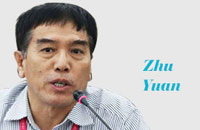
The author is deputy director of Centre for US-China Relations, Tsinghua University.
(China Daily 08/25/2011 page8)
 New type of urbanization is in the details

Copyright 1995 - . All rights reserved. The content (including but not limited to text, photo, multimedia information, etc) published in this site belongs to China Daily Information Co (CDIC). Without written authorization from CDIC, such content shall not be republished or used in any form. Note: Browsers with 1024*768 or higher resolution are suggested for this site.
License for publishing multimedia online 0108263 Registration Number: 130349