Japan's ever-changing prime ministers are a result of US influence and the country's flawed political system
Japanese Finance Minister Yoshihiko Noda replaced Naoto Kan as the leader of the ruling Democratic Party (DPJ) on Monday and became Japan's sixth prime minister in five years the next day.
The reason that the DPJ seized the reins of government in September 2009 was not because the Japanese people preferred the party, which lacked experience in governance, but because they had completely lost confidence in the Liberal Democratic Party (LDP) which had been in power for decades.
After the DPJ came to power, its first prime minister, Yukio Hatoyama, was in power for barely eight months before he resigned. His successor Naoto Kan was in office for 14 months before he too resigned. Now, the country is trying yet another prime minister.
From 1993 to 2011, Japan has had 13 prime ministers, while over the same period the United States has had three presidents. This demonstrates that Japan's political circumstances and institutional design are unsuited to keeping a long-term leader.
Outsiders might view Noda's election as the result of a power struggle and political deal within the DPJ, which is a mix of the left, middle and right. But it is worth pointing out that there is a "US factor" behind the revolving door for Japan's prime ministers.
From Tanaka Kakuei in the 1970s to Yukio Hatoyama in 2009, the country's leaders have fallen from power partly because they "were not obedient enough to the US".
The Japan-US alliance is an unequal alliance, and Japan's relationship with the US is a major political issue inside Japan.
Yukio Hatoyama, the first DPJ prime minister, criticized Japan's foreign policy for being excessively dependent on the US and advocated strengthening the country's relationship with Asian countries and discussing the Diaoyu Islands problem with China. He was heavily criticized by the hawkish politicians who fanned public indignation. Hatoyama eventually resigned as he was unable to fulfill his election pledge to relocate the deeply unpopular US military base off the island of Okinawa.
On leaving office Hatoyama said: "History will prove me right."
Naoto Kan, who succeeded Hatoyama, tactfully turned from idealism to realism. He debarred alien members inside the DPJ (especially supporters of influential former party leader Ichiro Ozawa), and won US favor by taking a hard line with China. But the Kan government's ineffective relief efforts after the massive earthquake and tsunami in March, and its inadequate response to the Fukushima Daiichi nuclear crisis resulted in people's disappointment turning to anger.
On Aug 26, Naoto Kan stepped down after three key pieces of legislation were passed to finance post-disaster reconstruction and promote renewable energy.
On Aug 27, five candidates entered the DPJ leadership election, although it was expected to be a contest between former foreign minister Seiji Maehara, who is popular with voters, and Economy, Trade and Industry Minister Banri Kaieda, who received support from the DPJ's largest intraparty group led by Ichiro Ozawa. Noda's win was something of a surprise.
Like Seiji Maehara, Noda is considered a hardliner toward China, but as prime minister he will have to make economic recovery his priority, so he might be more moderate in diplomacy.
Of course, whether Noda can stay in power depends on whether he can promote unity within DPJ (in particular dealing with Ozawa and Hatoyama); whether he can work with the opposition parties, especially the LDP, to create a "national salvation cabinet", rather than succumbing to a "twisted Diet"; and whether he can further boost the China-Japan relationship while consolidating Japanese-US ties.
There is a fundamental contradiction in Japan's public opinion, which is influenced to a large degree by the media. On the one hand, people welcome hawkish leaders who talk of safeguarding "national security and interests" by containing the supposed "China threat" and stand up to other neighboring countries that have territorial disputes with Japan. On the other hand, they hope their leaders can build cooperative relations with China, Russia and other countries so as to promote reconstruction and economic revitalization in the aftermath of the March disasters.
But neither the hawks, nor the doves, can simultaneously meet such contradictory expectations and demands, not to mention tackling the country's tough domestic problems, such as an aging population, the radiation leaks, and raising taxes to meet social security commitments. All of which will be a challenge. But as we know, when the going gets tough the Japanese simply try another prime minister.
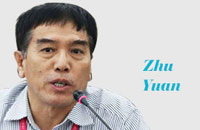
The author is a researcher with the Institute of Japanese Studies under the Chinese Academy of Social Sciences.
(China Daily 08/31/2011 page8)
 New type of urbanization is in the details

Copyright 1995 - . All rights reserved. The content (including but not limited to text, photo, multimedia information, etc) published in this site belongs to China Daily Information Co (CDIC). Without written authorization from CDIC, such content shall not be republished or used in any form. Note: Browsers with 1024*768 or higher resolution are suggested for this site.
License for publishing multimedia online 0108263 Registration Number: 130349