New taxes should be aimed at specific targets to curb speculation and help develop a healthy realty sector
News of an extension of the property tax pilot scheme has spread across China through both government and non-government channels. Amid signs of rising housing prices in recent months and the warming of the real estate market, the news was not totally unexpected.
According to recent China Index Academy data, prices of new houses in major cities continued to rise in August, with the average in 100 cities increasing for the third straight month to 8,738 yuan ($1,378) per square meter, an increase of 0.24 percent from July. In August, new housing prices in 10 first-tier cities such as Beijing and Shanghai increased 0.45 percent month-on-month.
Since China's economic slowdown has not been checked and government efforts to regulate the real estate market is at a crucial stage, an experiment to extend the property tax to other cities, if well designed and effectively implemented, will help free local governments of their long-time dependence on "land revenue".
Shanghai and Chongqing first introduced the property tax pilot scheme in early 2011 amid intense government efforts to curb skyrocketing property prices.
The implementation of a scientific property tax will also help lay a solid foundation for taxing the speculation-prone real estate sector and raise hopes of establishing a long-term and stable market to facilitate its healthy development. At the same time, an effective property tax system is also expected to create the right environment for phasing out the ongoing administrative measures aimed at curbing speculation in the housing market.
The government has tried to institutionalize property tax in the right direction to raise expectations of developing a doubt-free market, stabilizing housing prices and creating the main tax source for revenue-thirsty local governments.
However, the problem is that the public still wonders how the property tax will be imposed, who will it cover, what is its fundamental purpose and what will be the new relation between it and the long-existing land transfer fees that are added to the price of a house.
Under such circumstances, a reckless decision to extend the property tax experiment from Shanghai and Chongqing to the rest of the country may not only fail to ease public misgivings, but also widen the misinterpretation of the tax.
Before implementing the tax extensively, the government should clarify its purpose. Is such a tax aimed at curbing rising housing prices and speculation in the realty market or at creating a stable tax source for local governments? Without giving explicit answers to such questions, any reason or excuse cited to defend the implementation of the tax on more cities will be unconvincing and, more importantly, fail to ease public misgivings.
What concerns the public most now is how the government will handle the relation between the property tax and the land transfer fees. In China, developers have to pay a certain amount for using a plot of land, which is usually for 70 years or less, before they start work on a project. This amount is factored into the housing cost.
But theoretically, homebuyers have permanent property right over houses built on leased land. The international practice is that a country that charges property tax usually grants homeowners full property right over the houses they buy and the land on which the building stands.
Another problem with the property tax is whether the ongoing land transfer fees will be abolished in the new tax structure. If the government collects the land transfer fees even after imposing the new property tax, it would mean double taxation for homeowners, which would contradict the authorities' promise to "increase people's property income".
The housing market in China is subject to several taxes, from land appreciation tax and arable land occupation tax to stamp tax and business tax. And these are in addition to other assorted fees.
Given the excessive taxes and fees involved in real estate development and transaction, the Third Plenary of the 16th Central Committee of the Communist Party of China vowed in 2003 to adopt a uniform and standardized property tax system for fixed assets in due time and cancel other taxes and fees.
Therefore, the government should try to change the tax structure on the basis of its current tax level instead of simply introducing a new category of tax. If the property tax is imposed without abolishing some old taxes, it will surely add to the tax burden of homeowners.
Regrettably, policymakers have so far failed to explicitly expound the purpose of the property tax. If the government aims to improve the taxation system, it should slash or abolish the existing categories of taxes before implementing the property tax. Besides, it should target people buying or having more than one house, luxury homeowners and speculators, not all homeowners.
Imposing a tax indiscriminately may curb housing prices, but it will also cause greater social injustice.
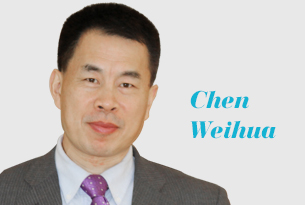
The author is a Beijing-based media commentator.
(China Daily 09/08/2012 page5)


Copyright 1995 - . All rights reserved. The content (including but not limited to text, photo, multimedia information, etc) published in this site belongs to China Daily Information Co (CDIC). Without written authorization from CDIC, such content shall not be republished or used in any form. Note: Browsers with 1024*768 or higher resolution are suggested for this site.
License for publishing multimedia online 0108263 Registration Number: 130349