China' new leadership will be unveiled at the 18th National Congress of the Communist Party of China at a time the country and the world are entering a phase of economic uncertainty.
The downturn in the developed economies is not likely to be over any time soon. The "fiscal cliff" on which the United States is perched, the mounting public debts of Japan and the continuing recession in Europe point to great downward risks the world economy faces. It may take a decade, even more, for the developed economies to put their economy back on track.
Against this background, China's exports, one of its important growth engines, may have to be content at growing around 10 percent a year. The contribution of exports to China's economic growth will drop from about 3 percentage points in the last decade to about 1 percentage point in the next decade. China, therefore, needs to find new engines of growth in its domestic markets.
Continuing institutional and economic reforms is one of the ways China could sustain its economic growth. The past 30-odd years saw three phases of progress. The 1980s, when reform and opening-up were launched, were the first phase.
The second phase started in 1992 and lasted until 2003, during which swift reforms were carried out in the urban sector. These reforms, no doubt, greatly improved the efficiency of the Chinese economy. But they also left the social safety network shattered and millions of workers jobless.
The third phase was the period of the current leadership's in office. One of the achievements of this leadership was rebuilding the social security system both in cities and rural areas. The leaders also abolished many of the policies that were discriminatory against migrant workers. But during this time, the government's intervention in the economy, most of the time warranted, also increased and the pace of reform somewhat slowed down.
The good news is that the call for further reforms has gained momentum in the country. On Nov 8, CPC General Secretary Hu Jintao said the economy should be driven more by domestic demand, and across-the-board economic reforms must be pushed forward.
The issue is what and how to reform. To me, three reforms are imperative for sustainable and equitable growth in the next decade.
The first is hukou (resident registration) reform that was mentioned in Hu's speech. In fact, a government policy was announced in as early as February 2012 allowing migrants in small cities to obtain local hukou once they have a stable job and place to live (including rented home). This reform is not just about restoring social justice, but also about making the Chinese economy healthier because it will significantly boost domestic consumption.
At present, migrants from rural areas save quite a lot of their earnings to return home. Giving them permanent residential rights in cities will stabilize their expectation and encourage them to consume more. The hukou reform will also expedite urbanization, and thus boost the growth of the service sector. The share of manufacturing in the economy will probably start declining by 2020 and the service sector has to fill that gap.
The second is financial reform. China's financial and banking system is not fully open to domestic capital - for example, private investors cannot open a commercial bank while foreign investors can. The government should expedite the "Wenzhou experiment" and come up with a concrete reform plan for the country soon. The crippled financial system is one of the key reasons why China has a large current account surplus - since it is not capable of processing domestic savings the country is forced to export capital to other countries.
The third is to reduce subsidies to producers. The government subsidizes producers by suppressing the costs of inputs and providing monetary incentives to selected industries. For example, interest rates are tightly controlled and a comfortable profit margin is guaranteed to banks on their loans. Also, environmental laws are loosely implemented so enterprises save costs by ignoring waste treatment.
None of the above reforms is an easy task. The hukou reform faces strong resistance both from local governments and residents. Local governments say migrants are a drag on public finance, and local residents feel migrants will narrow their chances of employment and reduce the options for their children's education.
When it comes to subsidy reform, interest groups strongly oppose any cut in government subsidies that they currently enjoy. Besides, many still believe that government subsidies are necessary to accelerate China's catching-up process.
The financial reform seems least conflicting, but the uncertainties that a more open financial system brings could be a strong impediment stalling the reform.
It will thus take great courage and political wisdom of the new leadership to push forward the reforms. But we have reason to be hopeful. The Party congress has sanctioned part of the three reforms; now it is a matter of implementation.
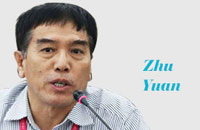
The author is director of
China Center for Economic Research, Peking University.
(China Daily 11/12/2012 page10)
 New type of urbanization is in the details

Copyright 1995 - . All rights reserved. The content (including but not limited to text, photo, multimedia information, etc) published in this site belongs to China Daily Information Co (CDIC). Without written authorization from CDIC, such content shall not be republished or used in any form. Note: Browsers with 1024*768 or higher resolution are suggested for this site.
License for publishing multimedia online 0108263 Registration Number: 130349