Ways to boost consumption
From building affordable houses to encouraging private funds in services, there are plenty of measures to expand demand
In the first half of this year, China's economic growth rate was 7.6 percent, with the main indexes all within the expected normal range. However, whether the economy can maintain stable growth for the rest of the year is uncertain.
The quandary is evident: there is surplus production, while the service sector cannot meet demand. To resolve this and prevent possible risks, it is necessary to expand domestic demand and adjust the economic structure to ensure stable development.
The first priority must be to raise the incomes of low-income families, thus increasing their consumption. After more than 30 years of development, most of the population are leading a better life, but there are still many people living in poverty and their living standards need to be raised.
The government is currently propelling distribution reform to raise the incomes of workers, but it needs to accelerate the process. Actually, the government could do more, such as raising pensions and offering better social security to cover more people in need, so that those who cannot benefit from rising wages can also afford higher consumption. Other measures, such as helping low-income families purchase new energy saving electronic devices and recycle their old ones, could also be introduced.
The real estate market is another field where the government can help raise people's living standards. If people's need for accommodation was satisfied, they would be in a position to consume more.
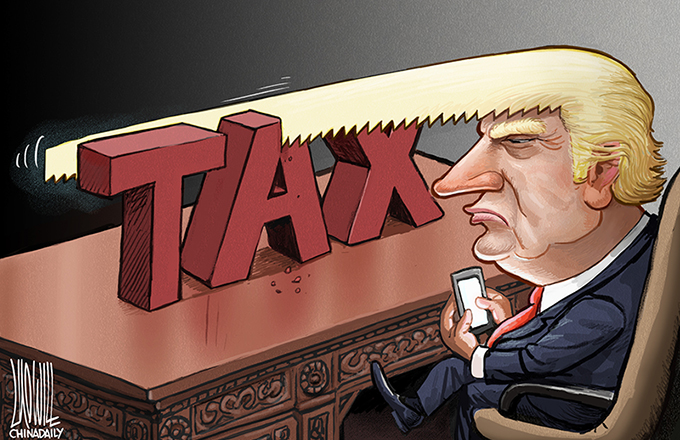
But the government has a lot of work to do in this field. It should, first of all, provide homes for low-income families by building more public housing and affordable houses. It can also consider lifting the limit on high-end villas and allowing rich people to spend more on housing. But to prevent the wealth gap widening, the government should introduce a nationwide property tax at the same time. The money derived from those enjoying bigger houses can be used to support the construction of housing for the less well-off.
Meanwhile, the process of urbanization is accelerating. However, the government needs to open up urban residence registration to migrant workers and college students from rural regions, and grant their families the same rights as urbanites to encourage their assimilation in cities. There also needs to be accelerating construction of infrastructure for transportation, so that people find it easier to travel.
More investments in education, healthcare and culture are necessary. In contrast to the availability of material things, the shortage of these services is astonishing. To change this, China should consider developing high-end service industries catering to the rich as this will promote employment and raise the general quality of services.
Actually, tight State control over the service sector is the main cause of the shortage in cultural products, and the natural solution is allowing more private capital to enter the market. The government can also encourage competition among different State-controlled service providers in order to deliver better services.
Opening the capital market will satisfy another domestic need that is easily ignored, namely the need for investment channels. By the end of June, residents' deposits totaled 100 trillion yuan ($16.3 trillion) and one of the main reasons for this was the lack of investment channels.
The government can deepen financial market reforms and help revive the stock market, together with measures like allowing more private capital to join the service sector; with more private capital there will be investment in schools, old people's homes and museums.
But a more important policy to widen investment channels in the long run should be further reducing the tax burden on small-and micro-sized enterprises, and encouraging more people to start their own businesses. After all, only when more people are sharing a bigger cake will they have the means to consume more.
The Chinese version of this article appears in Study Times.
(China Daily 08/22/2013 page8)