Announcing the landmark national healthcare reform in 2009, the government vowed to achieve universal health coverage by 2020. Despite the basic benefit package, major health insurance schemes have covered more than 95 percent of the country's population, getting closer to universalism.
However, healthcare reform means much more than the mere expansion of insurance coverage. Lessons learned from other countries should remind Chinese health policymakers of the importance of a well-functioning service delivery system. Sweeping commercialization of health services in the past three decades has given rise to and nurtured a multitude of perverse incentives in Chinese hospitals.
Over-prescribing medicines and tests, abusing expensive technologies, and irrational competition for state-of-the-art equipment are still rather common, fuelling costs and leading to massive inefficiency. Being aware of this, the government has come up with a clear set of solutions. The government's priority list includes reforming the mechanisms of paying hospitals and doctors, standardizing healthcare provision, and regulating the use of pharmaceuticals.
Healthcare is a very difficult policy area. Health policy problems often frustrate reform efforts, as seen in other countries. But despite its challenges, the Chinese approach to healthcare reform offers the developing world many valuable lessons.
First, the State has taken up some essential responsibilities, reflected not only in its strong political will, but also in the tangible financial resources it has provided. The increasingly strong financial muscle of the Chinese government has allowed it to undertake more meaningful health policy interventions.
Second, healthcare reform is inherently difficult, partly because of the deep involvement of too many actors, including bureaucracies. The bureaucratic fragmentation used to be described as "nine dragons governing one water (body)". But the healthcare reform has made significant progress by strengthening policy coordination.
Headed by Premier Li Keqiang, the central steering committee has been coordinating policy implementation and has overcome various institutional obstacles, paving the way for smooth reform.
Third, healthcare reform is a long process in which sequencing matters a great deal. The government started building the health financing framework in the 1990s in a systematic manner. After the establishment of three major social health insurance systems, it focused its efforts on reforming the service delivery system. Unlike the failures of healthcare reforms in some other countries, the Chinese reform is well concerted.
In the 1970s, China's healthcare system was lauded by WHO and the World Bank as a model for developing countries. Now, China's ongoing healthcare reform could again get global recognition as a model for the developing world. And it has to succeed because it is an important part of the Chinese Dream to improve Chinese people's livelihood and keep them physically fit.
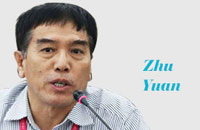
The author is assistant professor in the department of Asian and Policy Studies, Hong Kong Institute of Education.
(China Daily 09/24/2013 page9)
 New type of urbanization is in the details

Copyright 1995 - . All rights reserved. The content (including but not limited to text, photo, multimedia information, etc) published in this site belongs to China Daily Information Co (CDIC). Without written authorization from CDIC, such content shall not be republished or used in any form. Note: Browsers with 1024*768 or higher resolution are suggested for this site.
License for publishing multimedia online 0108263 Registration Number: 130349